
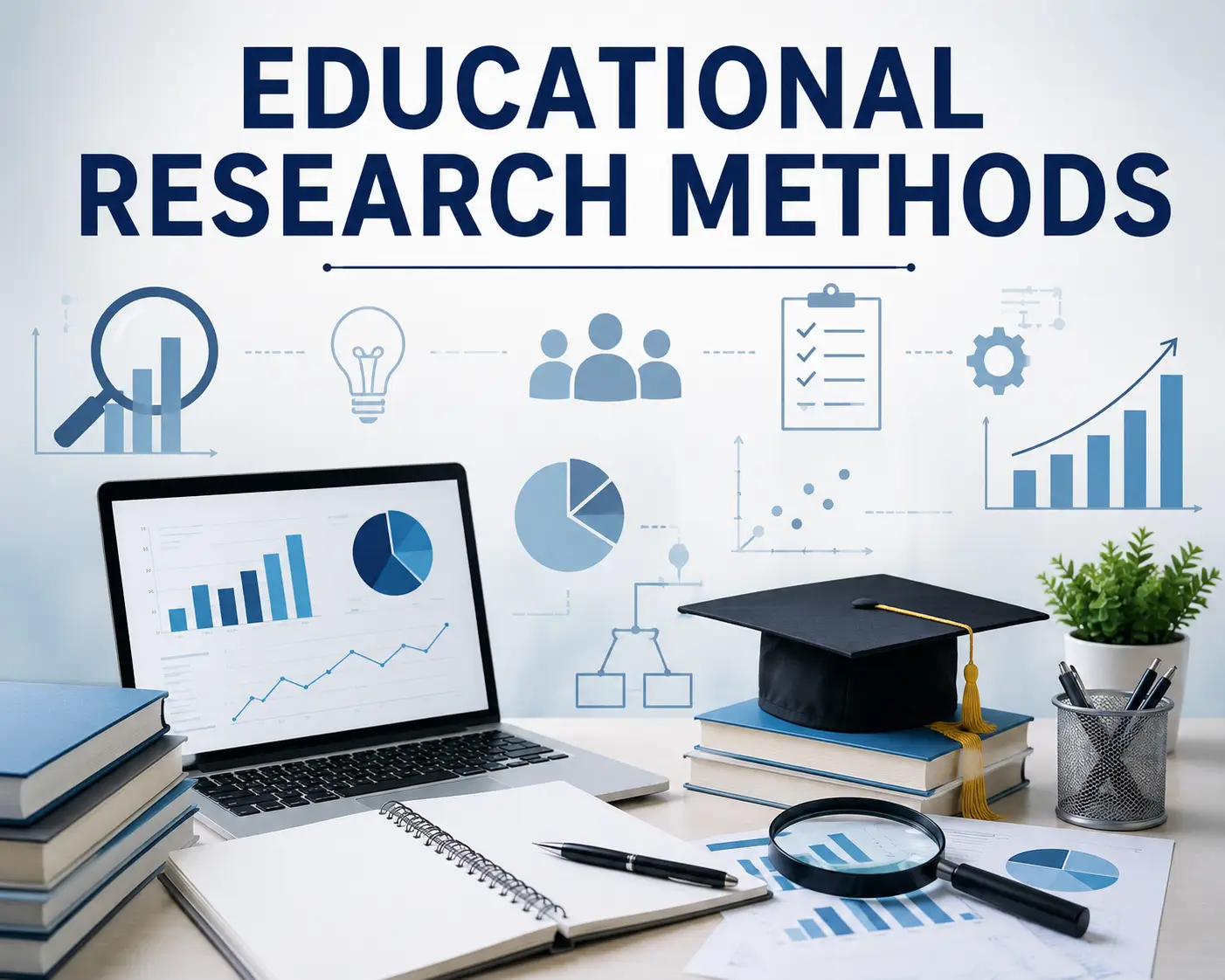
Introduction to Educational Research Methods
Educational Research Methods focuses on the systematic study of teaching, learning, educational policies, and classroom practices through structured research techniques. Researchers use educational research to investigate learning outcomes, evaluate instructional methods, improve curriculum design, and support informed educational decision-making.
This course provides practical knowledge of research planning, research design, data collection, educational analysis, ethical research practices, and research reporting. Learners develop a strong foundation for conducting reliable and meaningful educational research.
Understanding Educational Research
Educational research helps educators and institutions identify challenges, evaluate teaching strategies, and improve educational outcomes through evidence-based findings. A structured research process supports objective analysis and continuous improvement within schools, colleges, universities, and training organizations.
Learners explore important concepts including:
- Educational research principles
- Research design
- Qualitative research
- Quantitative research
- Mixed-method research
- Educational evaluation
These concepts establish the foundation for effective academic research.
Research Design and Data Collection
Successful educational research begins with a well-defined research problem, appropriate methodology, and reliable data collection techniques. Researchers carefully select methods that align with research objectives while maintaining ethical standards.
Learners study practical approaches for:
- Research planning
- Literature review
- Questionnaire design
- Surveys and interviews
- Observation methods
- Sampling techniques
These practices improve research quality and reliability.
Data Analysis and Research Reporting
After collecting data, researchers analyze findings, interpret results, and prepare professional research reports. Accurate analysis supports evidence-based recommendations that improve educational practices and institutional decision-making.
The course explains how research findings contribute to curriculum development, educational policy, teacher development, and student learning.
Ethics and Evidence-Based Education
Ethical research protects participants, ensures data accuracy, and promotes responsible academic practices. Organizations use educational research to improve learning environments, evaluate educational programs, and support continuous improvement through reliable evidence.
Learners understand the importance of integrity, transparency, and objectivity throughout the research process.
Skills You Will Develop
After completing this course, learners will understand:
- Educational research methods
- Research design
- Qualitative research
- Quantitative research
- Data collection
- Data analysis
- Literature review
- Educational evaluation
- Research ethics
- Research reporting
Who Should Enroll?
This course is suitable for:
- Students
- Teachers
- Lecturers
- Academic researchers
- Curriculum developers
- Education administrators
- Training professionals
- Anyone interested in educational research
No previous research experience is required.
Career Opportunities
This course supports careers such as:
- Educational Research Assistant
- Academic Researcher
- Curriculum Developer
- Education Consultant
- Training Specialist
- Instructional Designer
- Education Administrator
- Learning and Development Executive
FAQ Section
1. What is the Educational Research Methods Course?
The course teaches learners how to design, conduct, analyze, and report educational research using qualitative, quantitative, and mixed-method research approaches.
2. Is this course suitable for beginners?
Yes. The course is designed for beginners as well as educators, students, and professionals interested in educational research.
3. What topics are covered in this course?
Topics include research design, literature reviews, qualitative and quantitative research methods, sampling techniques, data collection, statistical analysis, research ethics, and academic writing.
4. Will I receive a certificate after completing the course?
Yes. Participants receive a certificate upon successful completion of the course.
5. Do I need prior research experience?
No. The course introduces educational research concepts in a practical and beginner-friendly manner.
6. Who should enroll in this course?
Teachers, postgraduate students, doctoral researchers, university faculty, education consultants, curriculum developers, instructional designers, and educational researchers can benefit from this course.
7. Is the course fully online?
Yes. The course offers flexible online learning, allowing participants to study at their own pace.
8. What skills will I gain?
You will gain skills in research design, literature review, qualitative and quantitative research, survey design, data analysis, research ethics, academic writing, and research reporting.
9. Can this course improve my career opportunities?
Yes. Educational research skills are highly valued in universities, research institutions, government agencies, educational consultancies, nonprofit organizations, and edtech companies.
10. Why are educational research methods important?
Educational research methods help educators generate reliable evidence, improve teaching practices, evaluate educational programs, inform policy decisions, enhance student learning outcomes, and support continuous improvement in education.





Reviews
There are no reviews yet.