
Introduction
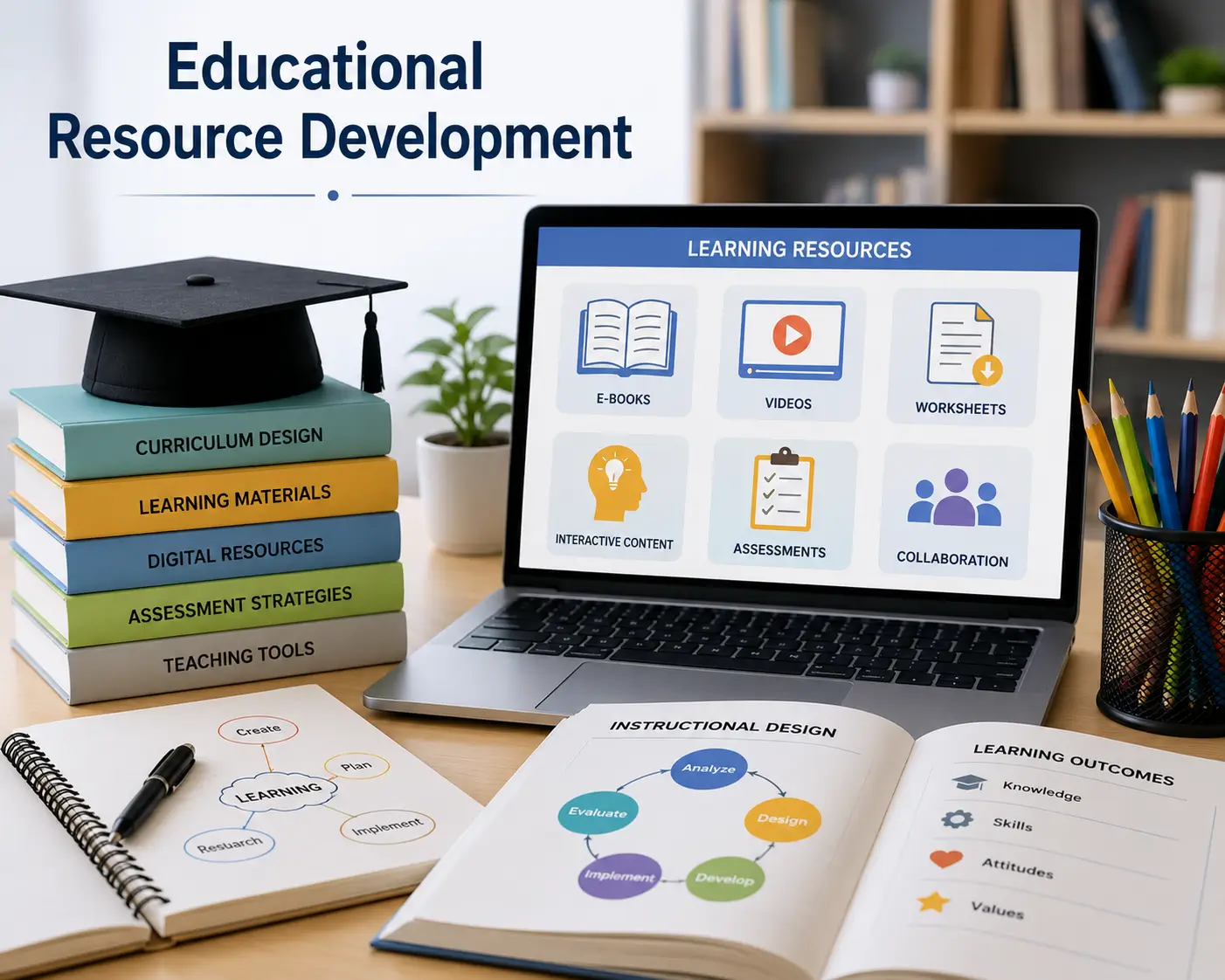
The Educational Resource Development Course is a comprehensive training program designed to equip learners with the knowledge and practical skills required to create high-quality educational resources for diverse learning environments. Effective learning materials play a vital role in helping students understand concepts, stay engaged, and achieve educational goals. Whether used in classrooms, online courses, corporate training programs, or self-paced learning, well-designed educational resources improve the overall learning experience.
Modern education requires more than traditional textbooks. Learners today benefit from interactive presentations, videos, worksheets, assessments, infographics, digital guides, simulations, and multimedia learning resources. Educational resource development combines instructional design principles, curriculum planning, learning psychology, and educational technology to produce engaging and accessible learning materials.
Whether you are a teacher, trainer, instructional designer, academic professional, corporate trainer, content creator, curriculum developer, or education enthusiast, this course provides practical knowledge to create impactful educational resources that support effective teaching and learning.
Why Educational Resource Development is Important
High-quality educational resources improve learning experiences, increase learner engagement, and support better educational outcomes.
Key benefits of educational resource development include:
- Improves teaching effectiveness
- Enhances learner engagement and participation
- Supports different learning styles
- Encourages active and independent learning
- Improves knowledge retention
- Promotes curriculum consistency and alignment
- Supports online, classroom, and blended learning
- Makes learning more interactive and accessible
- Strengthens assessment and feedback processes
- Contributes to continuous educational improvement
For example, a well-designed digital lesson that combines videos, quizzes, visuals, and practical activities can make complex topics easier to understand and more engaging for learners.
Course Overview
This course provides a structured understanding of educational resource development and instructional content creation.
Learners will explore:
- Introduction to educational resource development
- Learning theories and instructional principles
- Curriculum alignment and learning objectives
- Lesson planning and instructional design
- Development of teaching materials
- Digital learning resource creation
- Multimedia integration in education
- Assessment and evaluation resource design
- Accessibility and inclusive learning practices
- Interactive learning activities
- Educational technology tools
- Content quality assurance and review
- Resource adaptation for different learners
- Copyright and ethical use of educational materials
- Best practices in educational content development
What You Will Learn
By the end of this course, learners will be able to:
- Design engaging educational resources for different learning environments
- Develop instructional materials aligned with learning objectives
- Create lesson plans, worksheets, presentations, and digital learning content
- Integrate multimedia elements into educational resources
- Develop learner-centered instructional materials
- Design effective assessment and evaluation resources
- Apply accessibility and inclusive education principles
- Evaluate and improve educational content quality
- Support online and blended learning initiatives
- Contribute to curriculum development and educational innovation
Key Components of Educational Resource Development
1. Instructional Material Design
Learn how to develop lesson plans, teaching guides, worksheets, presentations, and supporting instructional materials.
2. Digital Learning Resources
Understand how digital tools, videos, interactive activities, presentations, and multimedia enhance learning experiences.
3. Curriculum Alignment
Explore methods for ensuring educational resources support curriculum standards, learning outcomes, and instructional goals.
4. Assessment Resource Development
Learn how to create quizzes, assignments, rubrics, feedback tools, and assessment materials that measure learning effectively.
5. Educational Quality and Accessibility
Understand how to design educational materials that are accurate, inclusive, accessible, and suitable for diverse learners.
Skills You Will Gain
After completing this course, learners will develop valuable professional skills, including:
- Educational resource development
- Instructional material design
- Curriculum support
- Lesson planning
- Educational content creation
- Digital learning design
- Multimedia integration
- Assessment development
- Instructional communication
- Educational technology awareness
- Creative thinking
- Content organization
- Learner engagement strategies
- Educational planning
- Quality assurance in learning resources
Benefits of This Course
Completing this course offers several professional advantages, including:
- Strong understanding of educational resource development principles
- Better career opportunities in education and training
- Improved instructional content creation skills
- Practical understanding of digital learning resource design
- Better knowledge of curriculum alignment and learner engagement
- Enhanced teaching and training capabilities
- Increased employability across educational institutions and corporate training organizations
- Competitive advantage in instructional design and educational content development careers
- Strong foundation for advanced instructional design and e-learning certifications
Who Should Enroll?
This course is suitable for:
- Teachers and educators
- School administrators
- Instructional designers
- Curriculum developers
- Corporate trainers
- Academic professionals
- E-learning content developers
- Education students
- Training coordinators
- Anyone interested in educational resource development
No previous instructional design experience is required, making this course suitable for beginners and experienced education professionals alike.
Career Opportunities
After completing this course, learners may pursue roles such as:
- Instructional Designer
- Educational Content Developer
- Curriculum Developer
- Teacher or Educator
- Corporate Trainer
- E-learning Specialist
- Learning Experience Designer
- Academic Content Writer
- Training Coordinator
- Education Consultant
- Learning Resource Developer
Certification
Upon successful completion of the Educational Resource Development Course, learners receive a professional certificate recognizing their knowledge of instructional material design, curriculum alignment, educational content development, digital learning resources, assessment design, learner engagement strategies, educational technology, accessibility principles, and instructional best practices. This certification enhances career opportunities across schools, colleges, universities, corporate training organizations, e-learning companies, educational publishers, NGOs, government education departments, and multinational learning organizations.
Conclusion
The Educational Resource Development Course provides learners with practical knowledge and professional skills to design engaging, effective, and learner-centered educational materials. By mastering instructional design principles, curriculum alignment, multimedia integration, lesson planning, assessment development, educational technology, and content quality assurance, learners will be well prepared for rewarding careers in education, instructional design, curriculum development, and e-learning.
Whether your goal is to become an Instructional Designer, create engaging digital learning materials, improve classroom teaching resources, or build a successful career in educational content development, this course provides a strong foundation for long-term professional success.
FAQ
1. What is the Educational Resource Development Course?
It is a course that teaches how to design, develop, and evaluate educational materials such as lesson plans, presentations, worksheets, digital learning resources, and assessment tools.
2. Who should enroll in this course?
Teachers, trainers, instructional designers, curriculum developers, education students, academic professionals, corporate trainers, e-learning developers, and anyone interested in creating educational resources.
3. Do I need prior teaching experience?
No. The course is beginner-friendly and suitable for both aspiring educators and experienced professionals.
4. What topics are covered in this course?
The course covers instructional material design, curriculum alignment, lesson planning, digital learning resources, multimedia integration, assessment development, educational technology, accessibility, and content quality assurance.
5. Will I learn how to create digital learning materials?
Yes. The course explains how to develop engaging digital learning resources, presentations, interactive activities, multimedia content, and online educational materials.
6. Does this course include instructional design principles?
Yes. You will learn learner-centered instructional design, curriculum planning, learning objectives, content organization, and effective teaching strategies.
7. Will I receive a certificate after completing the course?
Yes. A professional course completion certificate is awarded upon successful completion.
8. Is educational resource development an in-demand skill?
Yes. Professionals with expertise in educational resource development are in demand across schools, universities, corporate training organizations, e-learning companies, educational publishers, and government education sectors.
9. How does educational resource development improve learning?
It enhances learner engagement, supports different learning styles, improves understanding and knowledge retention, aligns learning with curriculum goals, and creates more interactive educational experiences.
10. What career opportunities are available after this course?
You can pursue roles such as Instructional Designer, Educational Content Developer, Curriculum Developer, Teacher, Corporate Trainer, E-learning Specialist, Learning Experience Designer, Academic Content Writer, Training Coordinator, Education Consultant, or Learning Resource Developer.


Reviews
There are no reviews yet.