
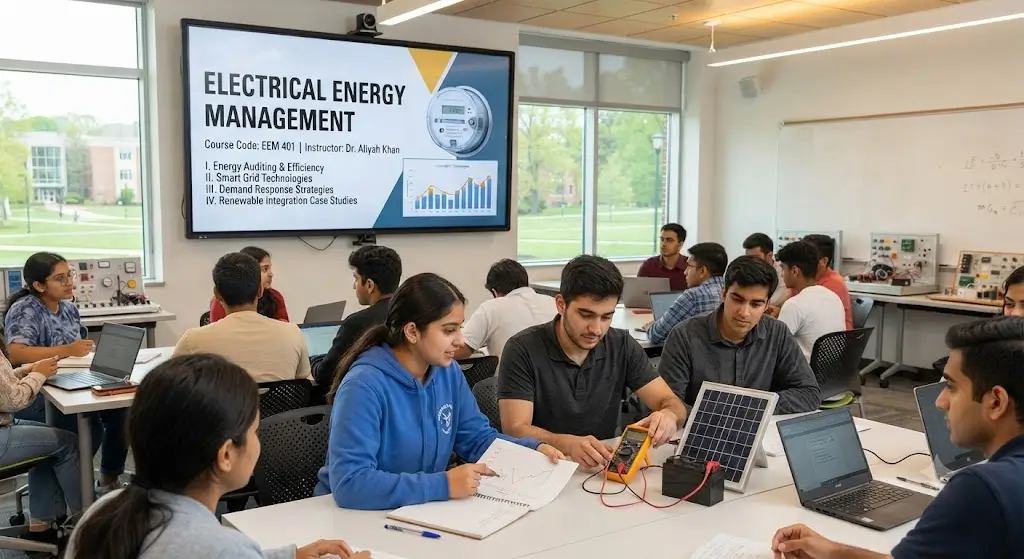
Introduction to Electrical Energy Management
The Electrical Energy Management Course is a professional training program designed to help learners understand the principles and practices of efficient electrical energy utilization. In modern industries and infrastructure systems, energy management plays a crucial role in reducing costs, improving efficiency, and supporting sustainability goals.
Electrical energy management involves monitoring power consumption, optimizing electrical systems, reducing energy losses, and implementing energy-saving strategies. Engineers and energy managers must ensure that electrical systems operate efficiently while meeting operational and environmental requirements.
This course combines electrical engineering, energy systems, sustainability practices, and industrial management to provide practical knowledge applicable across manufacturing plants, commercial buildings, infrastructure projects, and utility systems.
Why Electrical Energy Management Matters
Efficient energy management reduces electricity costs, minimizes environmental impact, improves system reliability, and enhances sustainability. Organizations worldwide are increasingly focusing on energy efficiency to meet regulatory standards and reduce carbon emissions.
Understanding electrical energy management enables professionals to optimize power usage, implement energy-saving technologies, and improve operational efficiency.
The Electrical Energy Management Course enables learners to develop expertise in energy optimization and sustainable electrical system operation.
Course Overview
The Electrical Energy Management Course introduces learners to modern techniques used to monitor and optimize electrical energy systems.
Participants begin by studying energy fundamentals, electrical load characteristics, and power consumption patterns. The course explores energy auditing, power factor correction, demand-side management, renewable integration, and smart energy systems.
Learners also study energy monitoring tools, efficiency improvement strategies, regulatory standards, and sustainability practices.
Practical case studies demonstrate how energy management is implemented in industries, buildings, and infrastructure systems.
Topics Covered
Throughout the Electrical Energy Management Course, learners will study:
Electrical Energy Fundamentals
Understand power generation, transmission, and consumption.
Load Analysis
Study electrical load patterns and demand behavior.
Energy Efficiency Techniques
Learn methods to reduce energy consumption.
Power Factor Correction
Improve electrical system efficiency.
Energy Auditing
Conduct electrical energy audits and assessments.
Demand-Side Management
Optimize energy usage during peak and off-peak hours.
Renewable Energy Integration
Understand solar, wind, and hybrid energy systems.
Smart Energy Systems
Explore smart grids and monitoring technologies.
Energy Monitoring Tools
Use systems for tracking energy consumption.
Sustainability Practices
Apply energy conservation and environmental strategies.
Skills You Will Gain
After completing the Electrical Energy Management Course, learners will develop valuable professional skills including:
- Electrical energy optimization
- Load analysis
- Energy auditing
- Power factor correction
- Energy efficiency planning
- Demand-side management
- Renewable integration
- Energy monitoring
- Sustainability analysis
- Technical reporting
- Problem-solving
- System optimization
- Cost reduction strategies
- Energy management planning
- Decision-making
These competencies are valuable across industries such as manufacturing, utilities, construction, infrastructure, commercial buildings, and government energy departments.
Benefits of the Course
The Electrical Energy Management Course provides practical knowledge for improving energy efficiency and reducing operational costs.
Participants gain confidence in analyzing energy systems, implementing optimization strategies, conducting audits, and improving sustainability performance. The course also strengthens analytical thinking and technical decision-making.
As energy efficiency becomes increasingly important globally, professionals with energy management skills are in high demand.
Who Should Enroll?
This course is suitable for:
- Electrical engineers
- Energy managers
- Facility managers
- Maintenance engineers
- Industrial engineers
- Project engineers
- Sustainability professionals
- Utility professionals
- Engineering consultants
- Engineering students
Basic knowledge of electrical systems is recommended.
Career Opportunities
After completing the Electrical Energy Management Course, learners may pursue careers such as:
- Energy Manager
- Electrical Engineer
- Energy Auditor
- Facility Manager
- Power Systems Engineer
- Sustainability Consultant
- Maintenance Engineer
- Electrical Consultant
- Industrial Energy Analyst
- Utility Engineer
- Project Engineer
- Energy Efficiency Specialist
- Technical Manager
- Renewable Energy Analyst
- Senior Energy Manager (future path)
Certification
Upon successful completion of the Electrical Energy Management Course, learners receive a professional certificate recognizing their expertise in energy optimization, load management, energy auditing, power factor correction, and sustainability practices. This certification supports career advancement across electrical engineering, energy management, utilities, and industrial sectors.
Frequently Asked Questions (FAQs)
1. What is the Electrical Energy Management Course?
It teaches how to monitor, control, and optimize electrical energy usage in systems and industries.
2. Who should enroll in this course?
Electrical engineers, energy managers, facility managers, maintenance engineers, and engineering students can benefit.
3. Do I need prior experience?
Basic knowledge of electrical systems is recommended.
4. What topics are covered?
Load analysis, energy auditing, power factor correction, renewable integration, smart grids, and energy efficiency.
5. Is this course practical?
Yes. It includes real-world energy optimization techniques and case studies.
6. Will I learn energy auditing?
Yes. Energy auditing is a key part of the course.
7. How does this help my career?
It develops skills needed for energy efficiency, sustainability, and industrial optimization roles.
8. Does it include renewable energy systems?
Yes. Solar, wind, and hybrid systems are covered.
9. Can this improve my job opportunities?
Yes. Energy management professionals are in high demand globally.
10. What industries use electrical energy management?
Manufacturing, utilities, construction, infrastructure, commercial buildings, government energy departments, and consulting firms.




Reviews
There are no reviews yet.