
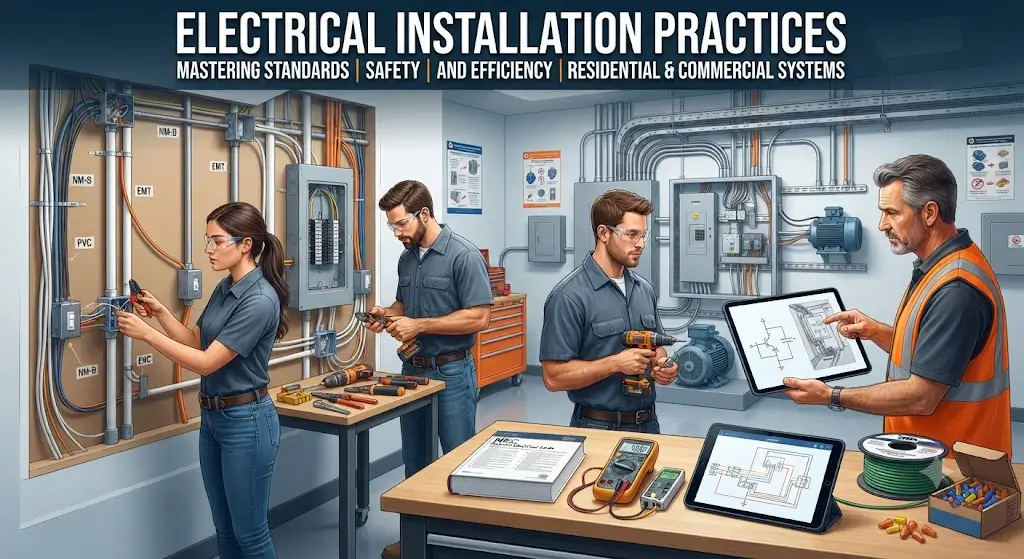
Introduction to Electrical Installation Practices
The Electrical Installation Practices Course is a professional training program designed to help learners understand how electrical systems are installed in buildings, factories, and infrastructure projects. Electrical installation is a fundamental skill in electrical engineering and construction, ensuring that power is delivered safely and efficiently to end users.
Electrical installation involves wiring circuits, setting up distribution systems, installing protective devices, and ensuring compliance with safety regulations and electrical codes. Proper installation practices help prevent faults, reduce risks, and ensure long-term system reliability.
This course combines electrical engineering fundamentals, practical installation techniques, wiring standards, and safety practices to provide hands-on knowledge applicable across residential buildings, commercial complexes, industrial plants, and infrastructure projects.
Why Electrical Installation Practices Matter
Proper electrical installation ensures safety, reduces electrical hazards, improves system reliability, and ensures compliance with regulations. Poor installation can lead to equipment damage, fire risks, and operational failures.
Understanding electrical installation practices enables professionals to design and execute safe wiring systems, install electrical equipment correctly, and maintain compliance with engineering standards.
The Electrical Installation Practices Course enables learners to develop essential hands-on skills required in the electrical installation field.
Course Overview
The Electrical Installation Practices Course introduces learners to standard methods used in electrical installation work.
Participants begin by studying basic electrical principles and installation safety. The course explores wiring systems, conduit installation, distribution boards, circuit protection, earthing systems, and load distribution.
Learners also study installation tools, testing procedures, troubleshooting techniques, and compliance with electrical codes.
Practical case studies demonstrate real-world electrical installation processes in buildings and industrial environments.
Skills You Will Gain
After completing the Electrical Installation Practices Course, learners will develop valuable professional skills including:
- Electrical wiring installation
- Circuit assembly and connection
- Conduit and cable laying
- Distribution board installation
- Load estimation
- Earthing and grounding
- Electrical safety compliance
- Installation testing
- Fault identification
- Use of electrical tools
- Technical documentation
- Problem-solving
- System setup
- Maintenance basics
- Decision-making
These competencies are valuable across construction companies, electrical contracting firms, manufacturing industries, infrastructure projects, and maintenance departments.
Benefits of the Course
The Electrical Installation Practices Course provides practical knowledge for performing safe and efficient electrical installations.
Participants gain confidence in wiring systems, installing electrical components, ensuring compliance, and performing basic troubleshooting. The course also strengthens practical electrical skills and safety awareness.
As construction and infrastructure development continue to grow, skilled electrical installers are in high demand.
Career Opportunities
After completing the Electrical Installation Practices Course, learners may pursue careers such as:
- Electrical Installer
- Electrician
- Electrical Technician
- Maintenance Technician
- Site Electrician
- Installation Engineer
- Electrical Supervisor
- Wiring Technician
- Project Engineer
- Electrical Contractor
- Service Technician
- Industrial Electrician
- Technical Assistant
- Electrical Consultant
- Senior Installation Technician (future path)
Certification
Upon successful completion of the Electrical Installation Practices Course, learners receive a professional certificate recognizing their expertise in electrical wiring, installation techniques, safety practices, and system setup. This certification supports career advancement across construction, electrical contracting, industrial maintenance, and infrastructure sectors.
Frequently Asked Questions (FAQs)
1. What is the Electrical Installation Practices Course?
It teaches how to install electrical systems safely in buildings and industrial environments.
2. Who should enroll in this course?
Electricians, electrical engineers, technicians, and construction workers can benefit.
3. Do I need prior experience?
Basic electrical knowledge is recommended.
4. What topics are covered?
Wiring, conduit systems, distribution boards, earthing, and installation testing.
5. Is this course practical?
Yes. It focuses on real-world electrical installation work.
6. Will I learn wiring techniques?
Yes. Wiring methods and cable installation are included.
7. How does this help my career?
It builds essential skills for electrical installation jobs.
8. Does it include safety training?
Yes. Electrical safety is a core part of the course.
9. Can this improve my job opportunities?
Yes. Skilled electricians are in high demand globally.
10. What industries use electrical installation practices?
Construction, infrastructure, manufacturing, electrical contracting, and maintenance services.





Reviews
There are no reviews yet.