
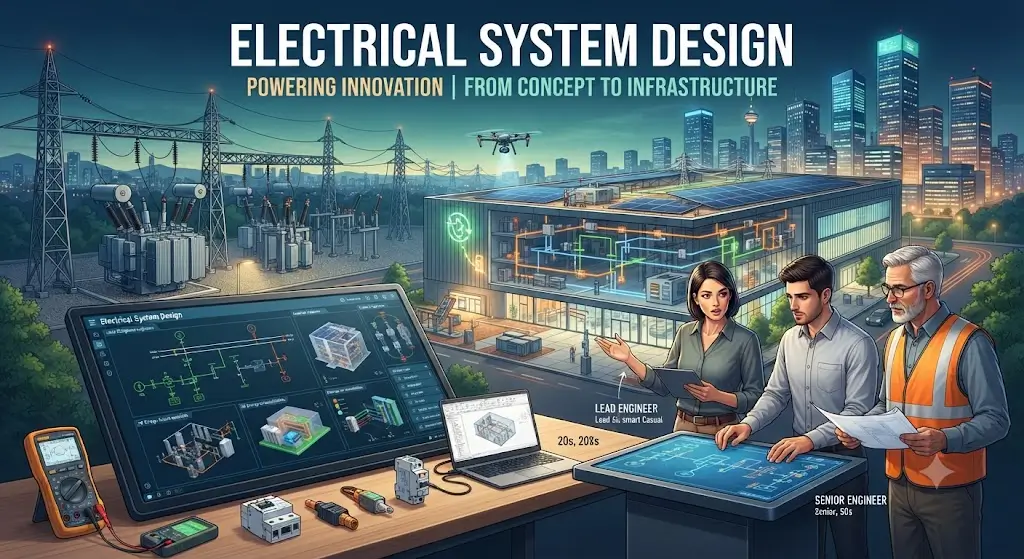
Introduction to Electrical System Design
The Electrical System Design Course is a professional training program designed to help learners understand how electrical systems are planned, designed, and implemented in modern infrastructure. Electrical system design is a core engineering discipline that ensures safe and efficient distribution of electrical power in buildings, industries, and infrastructure projects.
Electrical system design involves analyzing power requirements, selecting appropriate equipment, designing distribution networks, and ensuring compliance with safety and regulatory standards. Engineers must create systems that are efficient, reliable, and scalable.
This course combines electrical engineering principles, system design techniques, safety standards, and practical applications to provide comprehensive knowledge applicable across residential buildings, commercial complexes, industrial plants, and infrastructure developments.
Why Electrical System Design Matters
Proper electrical system design ensures safety, reduces energy losses, improves efficiency, and prevents system failures. Poor design can lead to overloads, equipment damage, and safety hazards.
Understanding electrical system design enables professionals to create efficient power distribution networks, optimize electrical performance, and ensure compliance with engineering codes.
The Electrical System Design Course enables learners to develop strong engineering design and analytical skills required in electrical engineering careers.
Course Overview
The Electrical System Design Course introduces learners to the principles and practices of designing electrical systems from concept to implementation.
Participants begin by studying electrical fundamentals and load analysis. The course explores system layout design, wiring design, cable sizing, protection coordination, and distribution planning.
Learners also study grounding systems, lighting design, single line diagram development, and electrical documentation.
Practical case studies demonstrate how electrical systems are designed for real-world projects.
Benefits of the Course
The Electrical System Design Course provides practical knowledge for designing safe and efficient electrical systems.
Participants gain confidence in creating electrical layouts, performing calculations, selecting equipment, and ensuring compliance with standards. The course also strengthens analytical thinking and engineering design skills.
As infrastructure and energy demand grow, professionals with electrical design expertise are highly valued.
Career Opportunities
After completing the Electrical System Design Course, learners may pursue careers such as:
- Electrical Design Engineer
- Electrical Engineer
- System Design Engineer
- Project Engineer
- Consultant Engineer
- Power System Designer
- Infrastructure Engineer
- Construction Engineer
- Technical Engineer
- Site Engineer
- MEP Engineer
- Electrical Drafting Engineer
- Senior Design Engineer (future path)
Certification
Upon successful completion of the Electrical System Design Course, learners receive a professional certificate recognizing their expertise in electrical system design, load analysis, cable sizing, protection design, and system planning. This certification supports career advancement across electrical engineering, consulting, construction, and infrastructure sectors.
Frequently Asked Questions (FAQs)
1. What is the Electrical System Design Course?
It teaches how to design safe and efficient electrical systems for buildings and industries.
2. Who should enroll in this course?
Electrical engineers, design engineers, consultants, and engineering students can benefit.
3. Do I need prior experience?
Basic electrical knowledge is recommended.
4. What topics are covered?
Load calculation, cable sizing, SLDs, grounding, and protection design.
5. Is this course practical?
Yes. It includes real-world electrical design applications and case studies.
6. Will I learn cable sizing?
Yes. Cable sizing and selection are included.
7. How does this help my career?
It builds essential skills for electrical design and engineering roles.
8. Does it include protection design?
Yes. Electrical protection system design is covered.
9. Can this improve my job opportunities?
Yes. Electrical design engineers are in high demand.
10. What industries use electrical system design?
Construction, infrastructure, consulting, manufacturing, energy, and electrical engineering firms.





Reviews
There are no reviews yet.