
Introduction
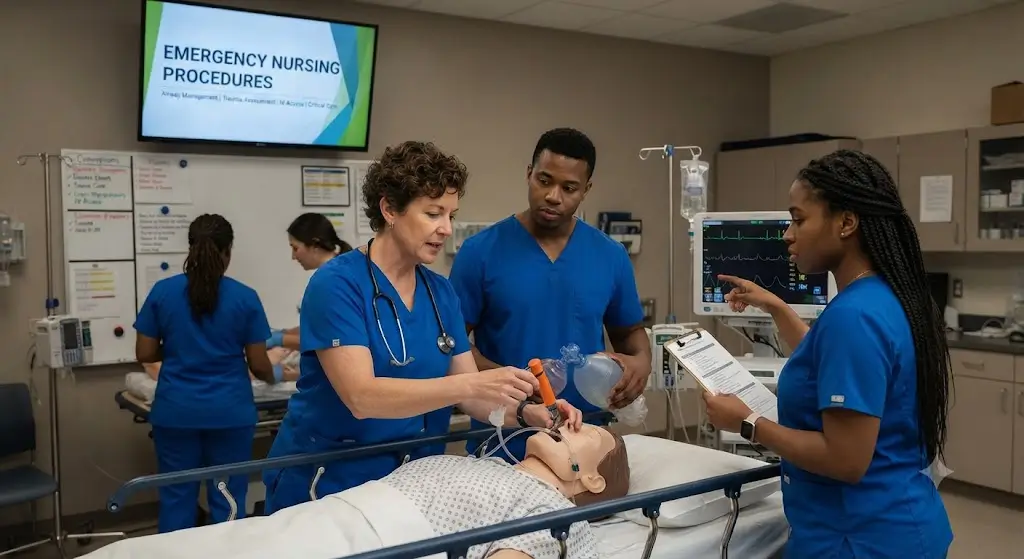
Emergency Nursing Procedures provides a practical understanding of the clinical knowledge, technical skills, and professional responsibilities required to deliver high-quality nursing care during medical emergencies. Emergency nurses are often the first healthcare professionals to assess patients, provide immediate care, stabilize critical conditions, and support treatment plans that improve patient outcomes.
This course introduces learners to the principles of emergency nursing, patient assessment, triage systems, trauma care, emergency interventions, infection prevention, communication, and documentation. It also highlights the importance of teamwork, ethical practice, and patient-centered care in emergency healthcare environments.
Understanding Emergency Nursing Practice
Emergency nursing requires rapid clinical decision-making, accurate patient assessment, and effective communication. Nurses working in emergency settings manage patients with a wide range of medical conditions, from minor injuries to life-threatening emergencies.
Learners explore essential topics including:
- Emergency patient assessment
- Nursing care priorities
- Triage procedures
- Trauma management
- Emergency documentation
- Clinical communication
These concepts establish a strong foundation for safe and effective emergency nursing practice.
Patient Assessment and Triage
Early assessment is one of the most important responsibilities of emergency nurses. Proper triage helps healthcare teams prioritize treatment according to the severity of a patient’s condition while ensuring efficient use of available resources.
The course explains how nurses evaluate vital signs, recognize urgent symptoms, identify high-risk patients, and communicate assessment findings clearly with the healthcare team.
Trauma and Critical Care Support
Emergency departments frequently manage patients experiencing trauma, cardiac emergencies, respiratory distress, neurological conditions, and other critical illnesses. Nurses play an essential role in monitoring patients, preparing equipment, assisting physicians, and supporting emergency interventions.
Learners develop an understanding of:
- Trauma nursing principles
- Emergency response procedures
- Cardiac emergency support
- Respiratory care assistance
- Patient stabilization
- Ongoing clinical monitoring
Infection Prevention and Patient Safety
Maintaining patient safety is a core responsibility in emergency healthcare. Nurses follow infection prevention protocols, use personal protective equipment appropriately, administer medications safely, and maintain accurate documentation throughout patient care.
The course also introduces quality improvement practices that contribute to safer healthcare delivery.
Professional Communication and Teamwork
Emergency care depends on effective collaboration among nurses, physicians, emergency medical personnel, laboratory staff, and other healthcare professionals. Clear communication improves coordination, reduces medical errors, and enhances patient outcomes.
Learners also explore ethical responsibilities, patient confidentiality, professional behavior, and compassionate communication during stressful situations.
Skills You Will Develop
After completing this course, learners will understand:
- Emergency nursing procedures
- Patient assessment
- Triage principles
- Trauma care
- Emergency documentation
- Clinical communication
- Infection prevention
- Medication safety
- Patient monitoring
- Emergency teamwork
Who Should Enroll?
This course is suitable for:
- Nursing students
- Registered nurses
- Healthcare assistants
- Emergency care professionals
- Hospital staff
- Clinical support staff
- Medical graduates
- Anyone interested in emergency healthcare
No previous emergency nursing experience is required.
Career Opportunities
Completing this course can support careers such as:
- Emergency Department Nurse
- Trauma Nurse
- Clinical Nurse
- Critical Care Assistant
- Emergency Care Coordinator
- Hospital Staff Nurse
- Triage Nurse
- Healthcare Support Professional
Developing emergency nursing skills can improve career opportunities while enhancing confidence in delivering safe and effective patient care in healthcare environments.
Frequently Asked Questions
1. What is the Emergency Nursing Procedures course about?
This course introduces the essential knowledge and practical skills required to assess, prioritize, and care for patients experiencing medical emergencies in hospitals and other healthcare settings.
2. Who should enroll in this course?
The course is suitable for nursing students, registered nurses, healthcare assistants, hospital staff, medical graduates, and anyone interested in emergency patient care.
3. Is this course suitable for beginners?
Yes. The course starts with the fundamentals of emergency nursing and gradually introduces practical clinical procedures and patient management techniques.
4. What topics are covered during the training?
Learners study patient assessment, triage systems, trauma care, emergency response, infection prevention, medication safety, communication, documentation, patient monitoring, and teamwork.
5. Why is triage important in emergency healthcare?
Triage helps healthcare professionals assess patients quickly, determine the urgency of treatment, prioritize care, and ensure that critical patients receive immediate medical attention.
6. What professional skills will I develop?
You will strengthen clinical observation, patient assessment, communication, teamwork, documentation, critical thinking, decision-making, infection control awareness, and emergency care coordination.
7. Which healthcare settings use these skills?
These skills are valuable in emergency departments, hospitals, trauma centers, urgent care clinics, ambulance services, community healthcare facilities, and specialty medical centers.
8. What career opportunities can this course support?
The course supports roles such as Emergency Department Nurse, Trauma Nurse, Clinical Nurse, Triage Nurse, Critical Care Assistant, Healthcare Support Professional, and Emergency Care Coordinator.
9. Does this course include patient safety and infection prevention?
Yes. Learners gain an understanding of patient safety practices, infection prevention measures, medication safety, documentation standards, and professional nursing responsibilities.
10. How will this course benefit my nursing career?
Completing this course strengthens your emergency care knowledge, improves clinical confidence, enhances patient management skills, and prepares you for professional opportunities in emergency and acute healthcare settings.





Reviews
There are no reviews yet.