
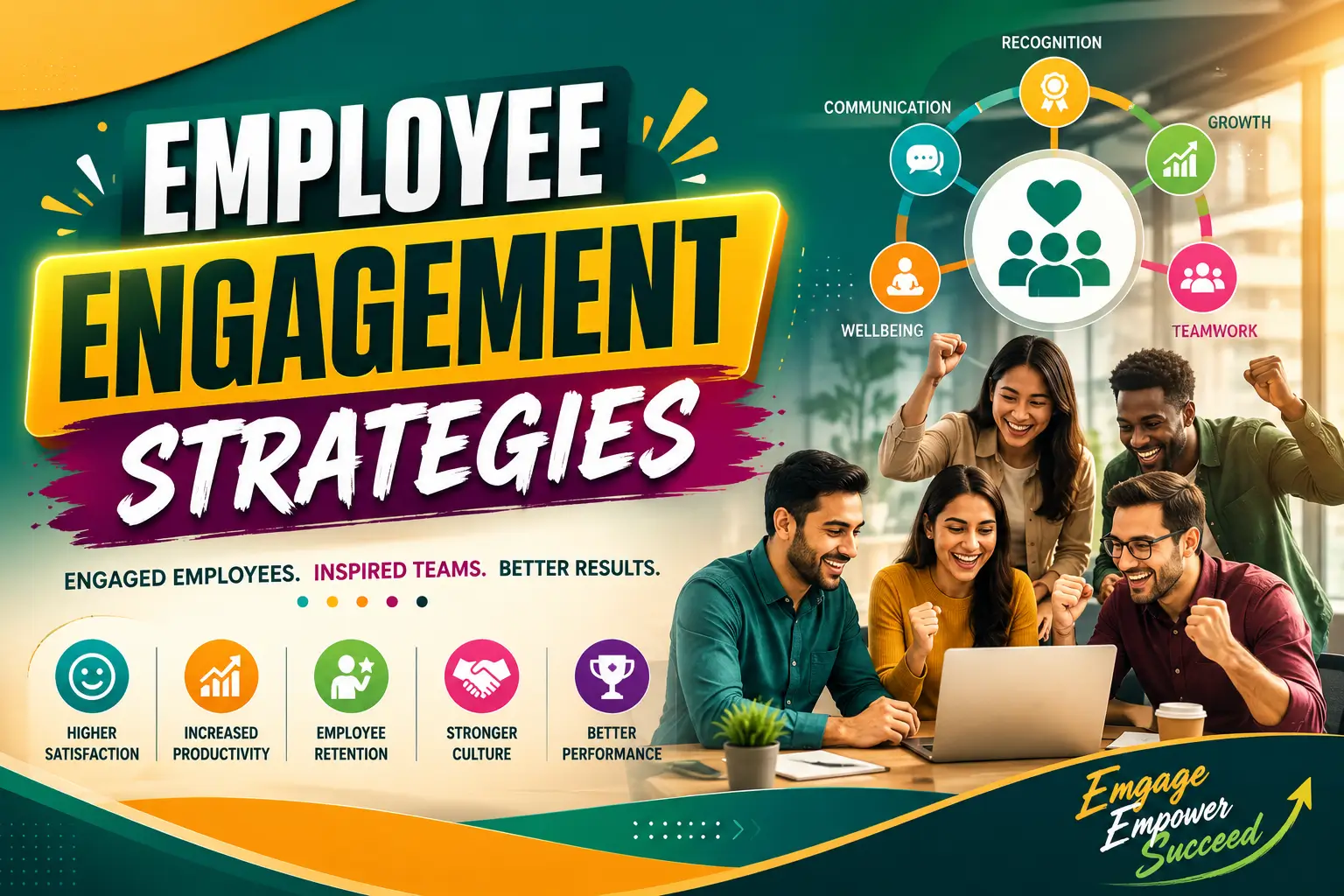
Employee Engagement Strategies Course
The Employee Engagement Strategies Course helps learners understand how organizations create motivated, committed, and high-performing teams through effective workplace engagement practices. Engaged employees are more productive, collaborate effectively, adapt to organizational change, and contribute to long-term business success. This course provides practical knowledge of engagement planning, leadership support, communication, recognition, employee development, and performance improvement.
Understanding Employee Engagement Strategies
Employee Engagement Strategies are structured approaches that help organizations build stronger relationships with employees while improving motivation, satisfaction, and overall performance.
Learners will understand:
- Employee engagement fundamentals
- Workplace motivation
- Organizational culture
- Leadership support
- Team collaboration
- Employee communication
Why Employee Engagement Matters
Organizations with engaged employees often experience higher productivity, improved innovation, and stronger employee retention.
Benefits include:
- Better employee satisfaction
- Increased productivity
- Higher retention rates
- Stronger teamwork
- Improved communication
- Better customer service
- Positive workplace culture
- Sustainable business growth
Building an Engaging Workplace
Creating a positive work environment requires continuous improvement and leadership commitment.
Topics include:
- Recognition programs
- Employee feedback
- Career development
- Workplace communication
- Team participation
- Inclusive work culture
Leadership and Employee Motivation
Managers and leaders play a vital role in encouraging employee participation and supporting professional growth.
Learners will explore:
- Coaching techniques
- Leadership communication
- Employee recognition
- Goal setting
- Performance support
- Trust building
Measuring Engagement Success
Organizations use measurable indicators to evaluate workforce engagement and identify improvement opportunities.
This section covers:
- Employee surveys
- Performance indicators
- Feedback analysis
- Retention metrics
- Productivity measurement
- Continuous improvement
Skills You Will Gain
After completing this course, learners will be able to:
- Apply Employee Engagement Strategies
- Improve workplace communication
- Increase employee motivation
- Build positive organizational culture
- Strengthen team collaboration
- Improve employee retention
- Support leadership initiatives
- Measure engagement performance
Who Should Enroll?
This course is ideal for:
- HR Professionals
- Managers
- Team Leaders
- Supervisors
- Business Owners
- Entrepreneurs
- Corporate Trainers
- Students
- Working Professionals
Career Opportunities
Completing this course supports careers such as:
- HR Executive
- HR Manager
- Employee Engagement Specialist
- Learning and Development Executive
- Organizational Development Executive
- Talent Management Executive
- Workplace Culture Consultant
- Human Capital Specialist
Certification Benefits
Completing this course demonstrates practical knowledge of workplace engagement, employee motivation, organizational culture, leadership practices, and workforce development. These skills are valuable for HR, business management, and organizational development roles.
Conclusion
The Employee Engagement Strategies Course prepares learners to create positive work environments that improve employee satisfaction, workplace performance, collaboration, and long-term organizational success. By applying modern engagement practices, professionals can strengthen workforce commitment and contribute to sustainable business growth.
Frequently Asked Questions (FAQs)
1. What are Employee Engagement Strategies?
Employee Engagement Strategies are practical methods used by organizations to improve employee motivation, workplace participation, job satisfaction, and overall organizational performance.
2. Who should enroll in this course?
This course is ideal for HR professionals, managers, supervisors, team leaders, entrepreneurs, business owners, students, and working professionals who want to improve workforce engagement and employee performance.
3. Is this course suitable for beginners?
Yes. The course begins with the fundamentals and gradually explains practical techniques for improving workplace participation, communication, and organizational culture.
4. What topics are covered in this course?
You will learn employee motivation, workplace communication, leadership, recognition programs, team collaboration, organizational culture, performance improvement, retention methods, and engagement measurement.
5. Why is workplace engagement important?
A highly engaged workforce improves productivity, strengthens teamwork, increases employee satisfaction, reduces turnover, and supports long-term business success.
6. Will I learn how to motivate employees effectively?
Yes. The course explains practical approaches such as employee recognition, constructive feedback, coaching, career development, leadership support, and performance management.
7. What skills will I gain after completing this course?
You will develop skills in engagement planning, workplace communication, leadership support, team collaboration, employee retention, organizational development, and performance improvement.
8. Does the course cover workplace culture?
Yes. You will understand how a positive work environment, trust, collaboration, inclusion, and effective leadership contribute to stronger employee commitment and business performance.
9. What career opportunities are available after completing this course?
After completing this course, you can pursue roles such as HR Executive, HR Manager, Employee Engagement Specialist, Talent Management Executive, Learning and Development Executive, Organizational Development Executive, and Workplace Culture Consultant.
10. How will this course support my professional growth?
This course helps you build practical HR and leadership skills, improve communication, create a positive work environment, enhance employee satisfaction, and contribute to organizational success.




Reviews
There are no reviews yet.