
Introduction
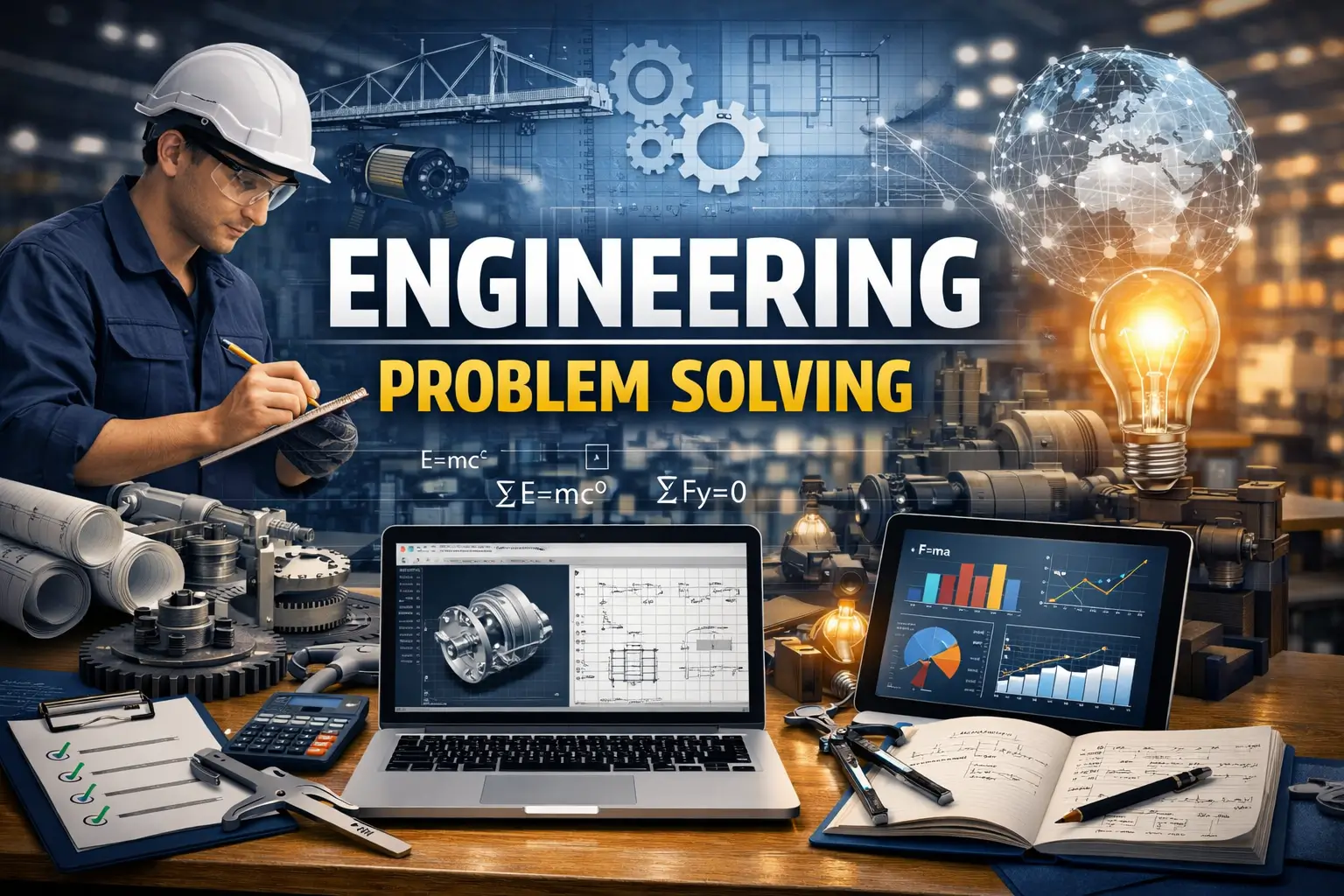
The Engineering Problem Solving Course is a comprehensive training program designed to help learners develop the knowledge, analytical skills, and practical techniques required to solve engineering problems effectively. In every engineering discipline, professionals are expected to identify challenges, analyze technical information, evaluate possible solutions, and make informed decisions that improve performance, safety, quality, and efficiency.
Engineering problems can occur during product design, manufacturing, construction, maintenance, production, quality control, and industrial operations. Therefore, engineers and technical professionals must follow structured problem-solving methods instead of relying on assumptions or trial-and-error approaches. A systematic approach helps reduce errors, minimize risks, improve productivity, and support long-term operational success.
This course introduces learners to proven engineering problem-solving techniques while combining technical analysis, critical thinking, decision-making, troubleshooting, and continuous improvement practices. Whether you are an engineering student, technician, maintenance professional, project engineer, manufacturing specialist, quality professional, or someone interested in engineering careers, this course provides practical knowledge that supports professional growth and technical excellence.
Course Overview
Engineering problem solving is a structured process used to identify, analyze, and resolve technical challenges across different industries. Rather than reacting to problems after they occur, engineering professionals use systematic methods to investigate root causes, evaluate alternatives, and implement reliable solutions.
First, learners explore the importance of structured problem solving in engineering. Next, they understand how analytical thinking, technical knowledge, and teamwork contribute to effective decision-making.
Additionally, the course explains common engineering problem-solving frameworks, root cause analysis methods, troubleshooting techniques, process improvement tools, and quality management practices. Learners also gain practical knowledge of engineering calculations, risk assessment, data analysis, and performance evaluation.
Furthermore, the curriculum combines engineering theory with practical applications, helping learners build confidence in solving real-world technical challenges across multiple engineering fields.
What You Will Learn
The Engineering Problem Solving Course covers a wide range of topics related to identifying, analyzing, and solving engineering challenges.
First, learners study the fundamentals of engineering problem solving and understand the importance of logical thinking, structured analysis, and evidence-based decision-making. They also explore the different types of engineering problems encountered in design, manufacturing, maintenance, construction, and industrial operations.
Next, participants learn how to define engineering problems clearly by gathering relevant information, identifying performance gaps, setting objectives, and understanding technical requirements. Proper problem definition helps engineers develop practical and effective solutions.
Additionally, the course introduces critical thinking techniques that help learners evaluate information objectively, identify assumptions, compare alternatives, and make informed engineering decisions.
Furthermore, participants explore systems thinking and learn how different components within an engineering system interact. This approach helps identify relationships between equipment, processes, people, and environmental factors that influence overall system performance.
The course also explains root cause analysis methods such as the 5 Whys, Fishbone Diagram, Failure Mode and Effects Analysis (FMEA), Pareto Analysis, and fault tree analysis. These techniques help learners identify the underlying causes of recurring engineering problems rather than simply treating symptoms.
Moreover, learners study engineering troubleshooting techniques used to diagnose equipment failures, production issues, system malfunctions, and operational inefficiencies. They understand how structured troubleshooting improves maintenance and operational reliability.
In addition, the course covers engineering calculations, technical measurements, data collection, performance monitoring, statistical analysis, and engineering data interpretation. Participants learn how data supports accurate decision-making and continuous improvement.
The curriculum also introduces brainstorming methods, creative problem-solving strategies, innovation techniques, design thinking principles, and collaborative decision-making processes that encourage teamwork and generate effective engineering solutions.
Participants gain knowledge of risk assessment, hazard identification, reliability analysis, quality control, and process improvement tools that help reduce failures and improve operational performance.
Additionally, learners study project planning, solution implementation, performance evaluation, documentation, reporting, and monitoring methods to ensure engineering solutions achieve desired results.
Finally, the course explores continuous improvement methodologies such as Lean principles, Six Sigma concepts, Kaizen, and performance optimization strategies that support long-term engineering excellence.
Skills You Will Gain
Upon successful completion of the course, learners will develop valuable professional skills, including:
- Engineering problem solving
- Critical thinking
- Root cause analysis
- Technical troubleshooting
- Systems thinking
- Engineering decision-making
- Process improvement
- Risk assessment
- Failure analysis
- Data interpretation
- Engineering calculations
- Quality improvement
- Technical communication
- Team collaboration
- Continuous improvement
These skills are highly valued across engineering firms, manufacturing industries, construction companies, utilities, energy organizations, automotive companies, aerospace industries, and industrial production facilities.
Benefits of the Course
The Engineering Problem Solving Course provides learners with practical techniques for solving technical challenges using structured engineering methods.
First, the course helps learners develop analytical thinking and systematic problem-solving skills that improve engineering decision-making.
Additionally, participants strengthen their ability to identify root causes, evaluate alternatives, and implement effective technical solutions.
Furthermore, learners gain practical experience in troubleshooting, engineering analysis, risk management, quality improvement, and process optimization.
The course also improves communication, teamwork, planning, and documentation skills that are essential for engineering professionals.
As engineering industries continue adopting advanced technologies and automation systems, employers increasingly value professionals who can solve technical problems efficiently and support continuous improvement.
Finally, learners gain the confidence to contribute to engineering projects, maintenance operations, manufacturing processes, and quality improvement initiatives.
Who Should Enroll?
This course is ideal for:
- Engineering students
- Mechanical engineers
- Electrical engineers
- Civil engineers
- Industrial engineers
- Manufacturing engineers
- Maintenance technicians
- Production supervisors
- Quality assurance professionals
- Project engineers
- Technical consultants
- Plant operators
- Engineering graduates
- Technical team leaders
- Anyone interested in engineering problem solving
No prior professional engineering experience is required. Therefore, beginners and experienced technical professionals can both benefit from this course.
Career Opportunities
After completing the course, learners may pursue opportunities such as:
- Engineering Technician
- Project Engineer
- Manufacturing Engineer
- Maintenance Engineer
- Process Improvement Specialist
- Quality Engineer
- Reliability Engineer
- Production Engineer
- Technical Support Engineer
- Industrial Engineer
- Operations Engineer
- Engineering Consultant
- Continuous Improvement Coordinator
- Engineering Analyst
- Technical Project Coordinator
Additionally, learners can apply these skills across manufacturing, construction, automotive, aerospace, energy, utilities, industrial maintenance, and engineering consulting organizations.
Certification
Upon successful completion of the Engineering Problem Solving Course, participants receive a certification recognizing their understanding of engineering analysis, critical thinking, root cause analysis, troubleshooting, process improvement, risk assessment, quality management, and technical decision-making. This certification enhances professional credibility and supports career advancement across engineering and technical industries.
Why Choose This Course?
The Engineering Problem Solving Course combines engineering principles with practical problem-solving techniques to provide a comprehensive learning experience.
First, learners develop strong analytical and decision-making skills that support engineering success.
Additionally, the curriculum focuses on root cause analysis, troubleshooting, engineering calculations, process improvement, technical communication, and continuous improvement.
Furthermore, participants gain industry-relevant knowledge that supports careers in engineering, manufacturing, maintenance, construction, utilities, and industrial operations.
Whether your goal is to become an engineer, maintenance specialist, project coordinator, quality professional, or technical consultant, this course provides the knowledge, practical skills, and confidence needed to solve engineering challenges effectively.
Enroll today and build a strong foundation in engineering problem solving, technical analysis, critical thinking, and continuous improvement.
FAQ Section
1. What is the Engineering Problem Solving Course?
The course teaches structured methods for identifying, analyzing, and solving engineering problems using technical analysis, critical thinking, and systematic decision-making.
2. Is this course suitable for beginners?
Yes. The course is designed for beginners as well as engineering professionals who want to improve their analytical and problem-solving skills.
3. What topics are covered?
Topics include root cause analysis, troubleshooting, engineering calculations, critical thinking, systems thinking, risk assessment, quality improvement, process optimization, and continuous improvement.
4. Will I receive a certificate?
Yes. Participants receive a certificate upon successful completion of the course.
5. Do I need prior engineering experience?
No. The course introduces engineering problem-solving concepts in a clear and beginner-friendly format.
6. Who should enroll in this course?
Engineering students, technicians, engineers, production supervisors, maintenance professionals, quality specialists, and technical managers can benefit from this course.
7. Is the course fully online?
Yes. The course offers flexible online learning that allows participants to study at their own pace.
8. What skills will I gain?
You will gain skills in engineering problem solving, critical thinking, troubleshooting, root cause analysis, decision-making, process improvement, technical communication, and quality management.
9. Can this course help my career?
Yes. Engineering problem-solving skills are highly valued across manufacturing, construction, energy, automotive, aerospace, utilities, and industrial engineering sectors.
10. Why is engineering problem solving important?
Engineering problem solving helps professionals identify root causes, improve system




Reviews
There are no reviews yet.