
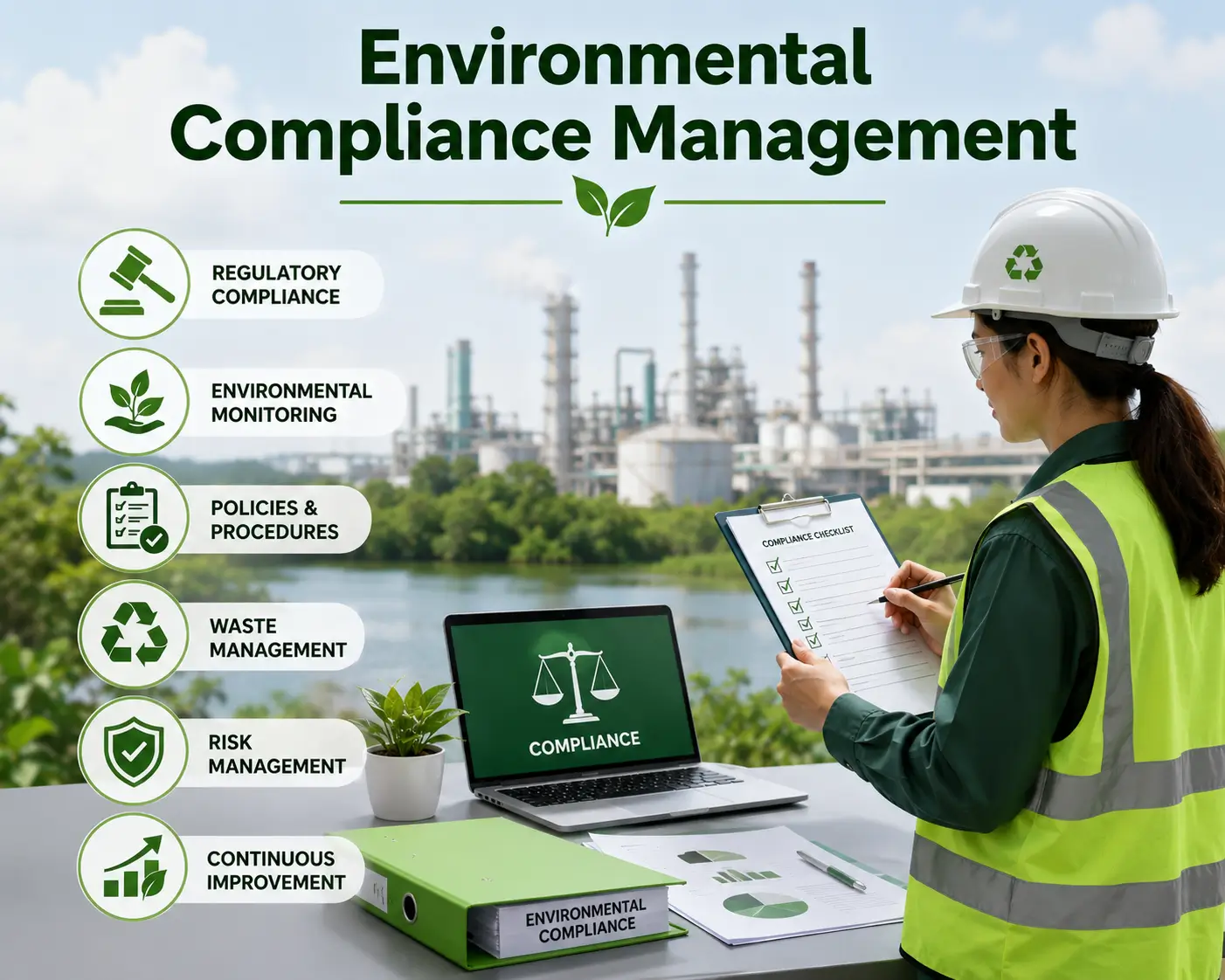
Introduction to Environmental Compliance Management
The Environmental Compliance Management Course is a professional training program designed to help learners understand how organizations meet environmental regulations while minimizing their environmental impact. Compliance management is essential for maintaining legal obligations, reducing environmental risks, and supporting sustainable business practices.
Environmental compliance involves identifying applicable regulations, implementing environmental management systems, monitoring operational performance, conducting audits, and maintaining proper documentation. Professionals in this field play a key role in ensuring organizations operate responsibly and meet regulatory expectations.
This course combines environmental management, regulatory compliance, risk assessment, auditing, and sustainability principles to provide practical knowledge applicable across manufacturing, energy, construction, mining, healthcare, government, transportation, and corporate sectors.
Why Environmental Compliance Management Matters
Organizations face increasing environmental regulations and stakeholder expectations regarding sustainability and environmental performance. Effective compliance management reduces legal risks, improves operational efficiency, enhances corporate reputation, and supports long-term sustainability.
Understanding environmental compliance enables professionals to implement effective environmental policies, manage compliance risks, and ensure continuous improvement across organizational operations.
The Environmental Compliance Management Course enables learners to build expertise in environmental governance and regulatory compliance.
Course Overview
The Environmental Compliance Management Course introduces learners to the principles, frameworks, and best practices used to manage environmental compliance.
Participants begin by studying environmental laws, regulations, and environmental management systems. The course explores pollution prevention, waste management, environmental monitoring, compliance auditing, and ISO 14001 requirements.
Learners also study environmental risk assessments, documentation practices, sustainability reporting, corrective actions, and continuous improvement strategies.
Practical case studies demonstrate how organizations implement effective compliance programs across different industries.
Topics Covered
Throughout the Environmental Compliance Management Course, learners will study:
Environmental Regulations
Understand environmental laws and regulatory frameworks.
Environmental Management Systems (EMS)
Implement structured environmental management programs.
ISO 14001 Requirements
Learn internationally recognized environmental management standards.
Pollution Prevention
Reduce air, water, and soil pollution.
Waste Management Compliance
Ensure proper waste handling and disposal practices.
Environmental Risk Assessment
Identify and mitigate environmental risks.
Environmental Auditing
Conduct internal and external environmental audits.
Compliance Documentation
Maintain accurate compliance records and reports.
Sustainability Reporting
Support environmental and ESG reporting initiatives.
Continuous Improvement
Develop strategies for ongoing environmental performance enhancement.
Skills You Will Gain
After completing the Environmental Compliance Management Course, learners will develop valuable professional skills including:
- Environmental compliance management
- Regulatory compliance
- Environmental auditing
- ISO 14001 implementation
- Environmental risk assessment
- Pollution prevention strategies
- Waste management compliance
- Sustainability reporting
- Environmental documentation
- Compliance monitoring
- Environmental policy implementation
- Corrective action planning
- Risk management
- Environmental performance evaluation
- Continuous improvement practices
These competencies are valuable across manufacturing, construction, energy, mining, transportation, healthcare, government, consulting, and sustainability-focused organizations.
Benefits of the Course
The Environmental Compliance Management Course provides practical knowledge for ensuring regulatory compliance while improving environmental performance.
Participants gain confidence in environmental auditing, compliance monitoring, documentation, and risk management. The course also strengthens analytical thinking, decision-making, and sustainability leadership skills.
As environmental regulations continue to evolve, professionals with compliance expertise remain highly sought after.
Who Should Enroll?
This course is suitable for:
- Environmental managers
- Compliance officers
- Environmental engineers
- Sustainability professionals
- EHS professionals
- Quality managers
- Consultants
- Operations managers
- Engineering students
- Government and regulatory professionals
No prior compliance experience is required, though a basic understanding of environmental management is beneficial.
Career Opportunities
After completing the Environmental Compliance Management Course, learners may pursue careers such as:
- Environmental Compliance Officer
- Environmental Manager
- EHS Manager
- Environmental Consultant
- Sustainability Manager
- Compliance Specialist
- Environmental Auditor
- Environmental Risk Analyst
- Regulatory Affairs Specialist
- Environmental Engineer
- ESG Compliance Specialist
- Corporate Sustainability Advisor
- Environmental Project Manager
- Compliance Consultant
- Chief Sustainability Officer (future path)
Certification
Upon successful completion of the Environmental Compliance Management Course, learners receive a professional certificate recognizing their expertise in environmental compliance, regulatory management, ISO 14001, environmental auditing, and sustainability practices. This certification supports career advancement across environmental management, compliance, ESG, and sustainability roles.
Frequently Asked Questions (FAQs)
1. What is the Environmental Compliance Management Course?
It teaches how to manage environmental regulations, compliance programs, and sustainability requirements.
2. Who should enroll in this course?
Environmental professionals, compliance officers, engineers, consultants, and sustainability managers can benefit.
3. Do I need prior experience?
No. The course is suitable for beginners and experienced professionals.
4. What topics are covered?
Environmental regulations, ISO 14001, auditing, pollution prevention, waste management, risk assessment, and compliance reporting.
5. Is this course practical?
Yes. It includes real-world case studies, compliance processes, and environmental management practices.
6. Will I learn ISO 14001 and environmental audits?
Yes. Both are core components of the course.
7. How does this help my career?
It develops in-demand environmental compliance and sustainability management skills.
8. Does it include sustainability reporting?
Yes. The course covers environmental reporting and compliance documentation.
9. Can this improve my job opportunities?
Yes. Environmental compliance professionals are in demand across public and private sectors.
10. What industries use environmental compliance management?
Manufacturing, construction, energy, mining, transportation, healthcare, government, consulting, and corporate sustainability.




Reviews
There are no reviews yet.