
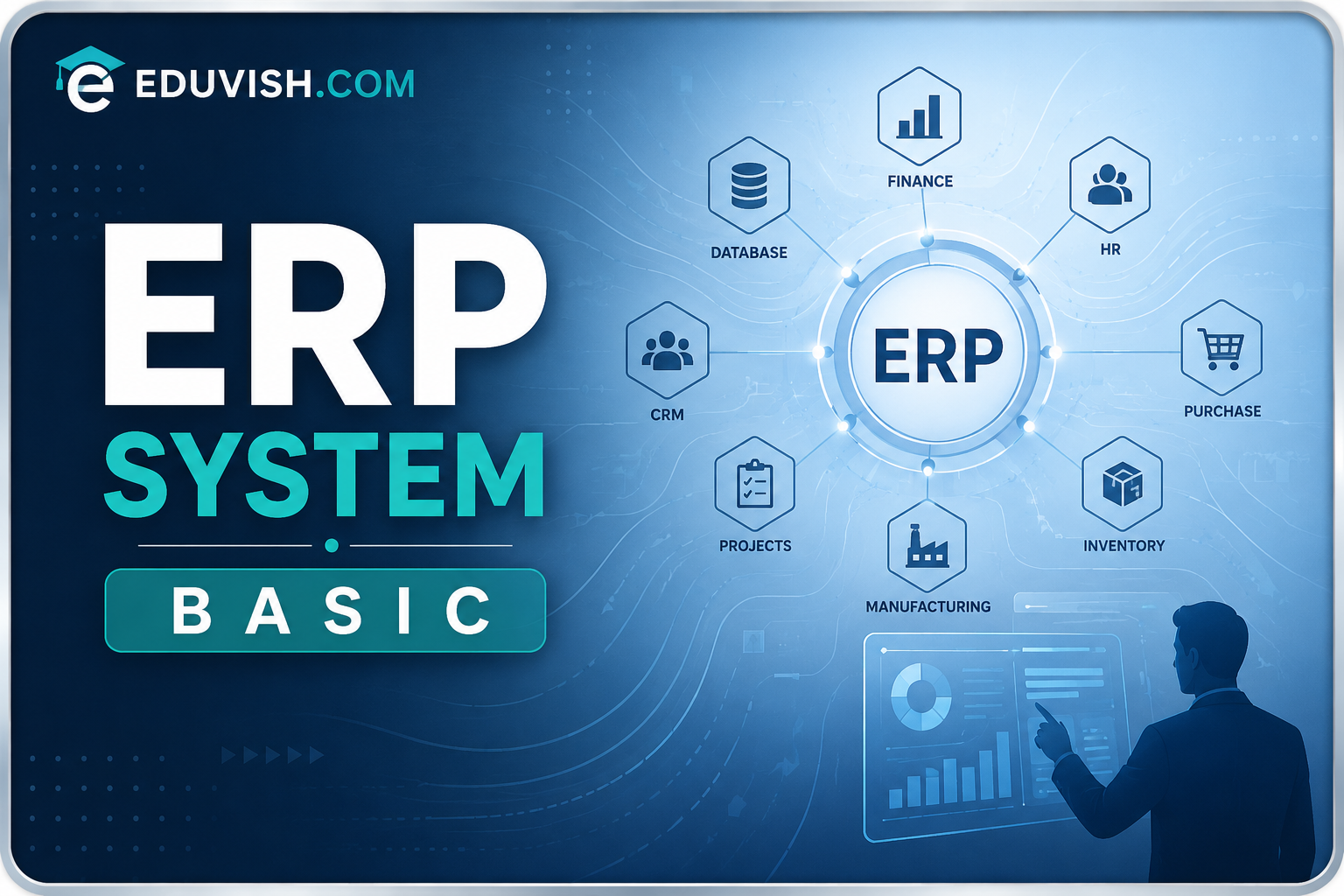
ERP System Basic: Streamlining Business Operations with Integrated Solutions
The ERP System Basic course introduces learners to the fundamentals of Enterprise Resource Planning (ERP), a powerful tool that integrates core business processes into a unified system. ERP systems are widely used across industries to improve efficiency, reduce costs, and provide real‑time insights for better decision‑making. This course is designed for beginners who want to understand how ERP works, its modules, and its impact on modern business management.
What You’ll Learn
- ERP Fundamentals: Understand the concept of ERP and its role in business transformation.
- Core Modules: Explore modules such as finance, HR, supply chain, inventory, and customer relationship management.
- System Integration: Learn how ERP connects different departments into one centralized platform.
- Data Management: Discover how ERP systems handle large volumes of business data securely.
- Workflow Automation: See how ERP automates repetitive tasks to save time and reduce errors.
- Reporting & Analytics: Gain insights into dashboards, KPIs, and decision‑support tools.
- Implementation Basics: Learn the steps involved in adopting ERP systems in organizations.
- Career Opportunities: Explore roles such as ERP consultant, system analyst, and business process manager.
Why This Course Matters
ERP systems are the backbone of modern enterprises, enabling seamless communication between departments and ensuring data accuracy. By mastering ERP basics, learners will:
- Understand how businesses streamline operations with ERP.
- Gain practical knowledge of ERP modules and workflows.
- Build a foundation for advanced ERP training and certifications.
- Improve employability in industries like manufacturing, retail, healthcare, and IT.
Career Opportunities
Completing this course prepares learners for entry‑level roles such as:
- ERP Support Specialist
- Business Process Analyst
- ERP Implementation Assistant
- Junior ERP Consultant
FAQ SECTION
1. What is an ERP system?
An ERP (Enterprise Resource Planning) system is integrated software that helps organizations manage business processes through a centralized platform.
2. Who should enroll in this course?
Students, business professionals, managers, entrepreneurs, finance staff, and operations specialists can benefit from this course.
3. Do I need technical knowledge to learn ERP?
No, the course is beginner-friendly and focuses on ERP concepts and business applications.
4. What ERP modules will I learn about?
You will learn finance, inventory management, supply chain, human resources, customer management, and reporting modules.
5. Why are ERP systems important?
ERP systems improve efficiency, streamline operations, centralize data, and support better business decision-making.
6. Does the course include practical examples?
Yes, learners explore real-world ERP applications and business case studies.
7. Is certification provided?
Yes, participants receive a certificate upon successful completion of the course.
8. Can ERP systems help small businesses?
Yes, ERP solutions can improve operational efficiency and resource management for businesses of all sizes.
9. Does the course cover ERP implementation?
Yes, learners are introduced to ERP implementation processes and best practices.
10. What career opportunities are available after completing this course?
Career opportunities include ERP Executive, Business Operations Associate, ERP Support Specialist, Process Analyst, Administrative Coordinator, and ERP Consultant Trainee.


Reviews
There are no reviews yet.