
Introduction
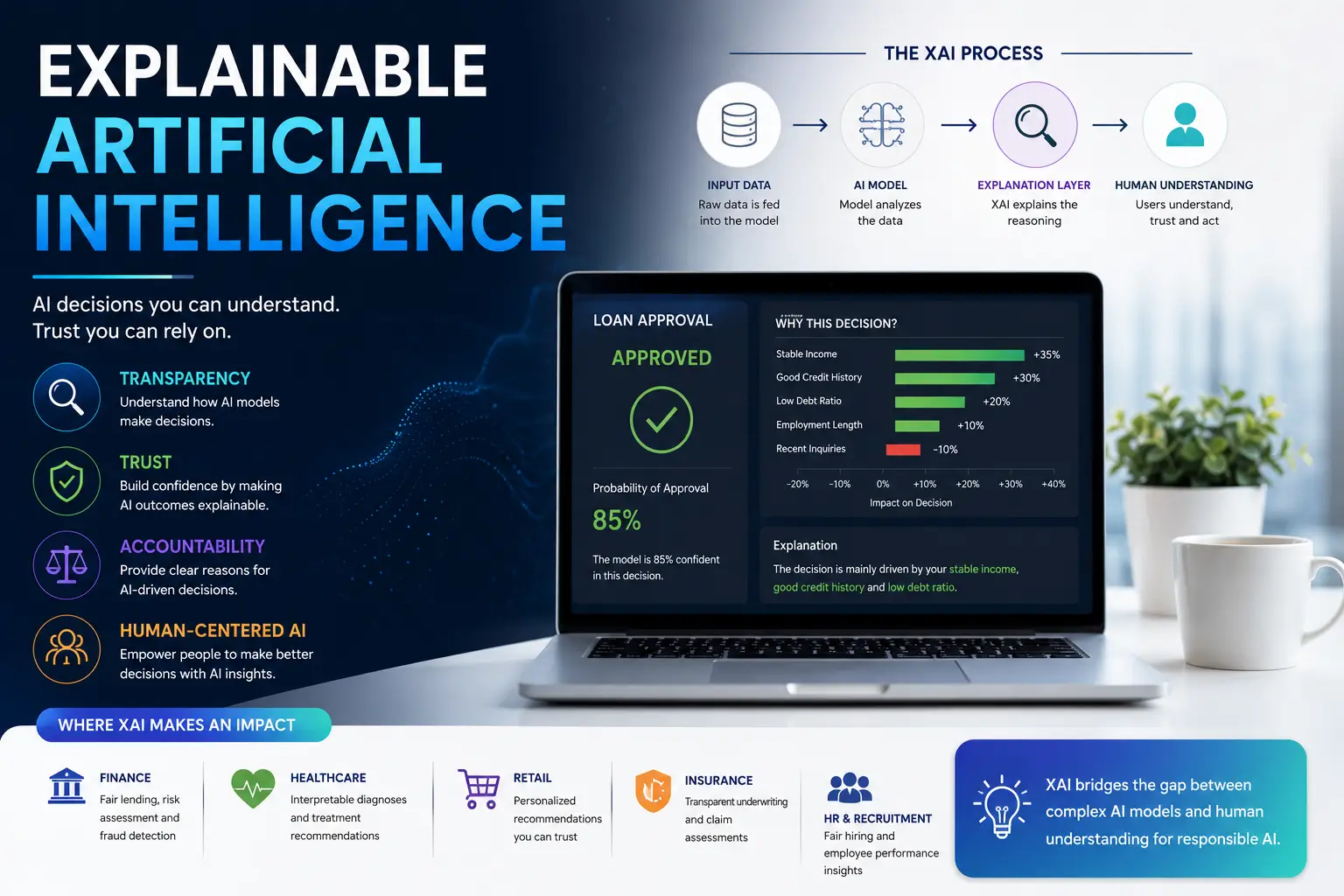
Artificial intelligence systems are becoming increasingly powerful and are being used for important decisions in healthcare, finance, business, education, security, and many other fields. However, many AI models operate as complex systems where users cannot easily understand how decisions are generated. Therefore, explainability has become an essential requirement for building trustworthy AI solutions.
The Explainable Artificial Intelligence Course introduces learners to the concepts, techniques, and practices used to make AI systems more transparent and understandable. The course explains how explainable AI helps organizations analyze model behavior, identify errors, reduce bias, and improve decision-making.
Moreover, explainable AI plays an important role in responsible artificial intelligence development. It enables professionals to understand why an AI system produces a specific result and whether that outcome is fair, accurate, and reliable.
Throughout this course, learners explore AI transparency, interpretable models, explanation methods, model visualization, fairness evaluation, bias detection, and responsible AI frameworks. Additionally, they understand how explainability techniques are applied in real-world AI applications.
The course also focuses on practical skills such as analyzing AI models, interpreting predictions, improving model trust, and communicating AI decisions effectively. These abilities help learners contribute to ethical and reliable AI development.
By completing this course, learners will gain a strong foundation in explainable AI and understand how transparency can improve the future of artificial intelligence.
Course Overview
The Explainable Artificial Intelligence Course provides comprehensive training on AI transparency, model interpretation, explainability techniques, responsible AI, and machine learning analysis. Furthermore, the course explains how organizations create trustworthy AI systems.
Fundamentals of Explainable Artificial Intelligence
The course begins with the basics of explainable AI, including AI transparency, interpretability concepts, machine learning challenges, and the importance of understandable AI decisions.
Understanding AI Transparency
Learners explore why transparency matters, how AI decisions are evaluated, and how explainability improves trust between humans and intelligent systems.
Interpretable Machine Learning Models
This section explains interpretable models, model behavior analysis, prediction interpretation, and techniques for understanding machine learning outcomes.
AI Explanation Techniques
Learners study various explanation approaches, including feature importance, model visualization, prediction analysis, and explanation frameworks.
Model Evaluation and Interpretation
The course covers AI model performance analysis, accuracy evaluation, reliability testing, and understanding model limitations.
AI Bias Detection and Fairness
Learners understand algorithmic bias, fairness evaluation, responsible AI practices, and methods for creating unbiased AI systems.
Explainable AI Frameworks and Tools
This section introduces explainability frameworks, visualization tools, analytical methods, and technologies used for interpreting AI models.
Responsible AI Development
Learners explore ethical AI principles, accountability, privacy considerations, security practices, and trustworthy AI implementation.
Explainable AI Applications
The course explains how explainable AI is used in healthcare, finance, cybersecurity, business analytics, and automated decision-making systems.
Future Trends in Explainable AI
Finally, learners explore emerging explainability methods, human-centered AI, AI regulations, and future developments in transparent artificial intelligence.
Overall, this course combines artificial intelligence concepts with transparency and ethical practices. Therefore, learners develop the skills required to understand, evaluate, and support trustworthy AI systems.
What You Will Learn
The Explainable Artificial Intelligence Course equips learners with practical knowledge and skills required to understand and interpret AI systems.
Understand Explainable AI Concepts
Learners will understand AI transparency, interpretability, explainability principles, and the importance of trustworthy AI.
Analyze AI Model Decisions
Participants will learn how AI models generate predictions and how those decisions can be interpreted effectively.
Apply AI Explanation Techniques
Learners will explore methods for explaining machine learning outputs, analyzing features, and visualizing model behavior.
Evaluate AI Model Performance
The course teaches model analysis, accuracy evaluation, reliability assessment, and identifying AI limitations.
Identify AI Bias
Learners will understand bias detection methods, fairness principles, and approaches for developing responsible AI systems.
Use Explainability Tools
Participants will explore AI visualization tools, interpretation frameworks, and analytical techniques for explaining AI models.
Understand Responsible AI Practices
Learners will gain knowledge of ethical AI development, transparency requirements, privacy, and accountability.
Explore Real-World AI Applications
The course helps learners understand how explainable AI supports industries such as healthcare, finance, business, and technology.
Skills You Will Gain
After completing the Explainable Artificial Intelligence Course, learners will develop valuable AI, analytical, and technology skills.
AI Explainability Skills
Develop the ability to understand, analyze, and explain artificial intelligence model decisions.
Machine Learning Interpretation Skills
Learn how to evaluate model behavior, analyze predictions, and interpret machine learning results.
AI Transparency Skills
Gain knowledge of creating understandable, reliable, and trustworthy AI systems.
Model Evaluation Skills
Understand performance analysis, accuracy assessment, reliability testing, and AI improvement methods.
Responsible AI Skills
Learn ethical AI practices, fairness evaluation, bias detection, and accountability principles.
Data Analysis Skills
Develop analytical thinking, visualization abilities, data interpretation, and AI-based decision-making skills.
AI Research Skills
Improve understanding of emerging AI methods, explainability techniques, and future AI developments.
Problem-Solving Skills
Strengthen critical thinking, analytical reasoning, and solution development abilities for AI-related challenges.
Benefits of the Course
The Explainable Artificial Intelligence Course helps learners understand how AI systems make decisions and how those decisions can become more transparent and reliable. Moreover, the course develops practical skills required to build trustworthy and responsible AI solutions.
Understand AI Decision-Making Processes
First, learners gain knowledge of how artificial intelligence models generate predictions and decisions. As a result, they can better analyze AI outputs and understand model behavior.
Improve AI Transparency Skills
Transparency is important for building user trust. Therefore, this course teaches learners how explainable AI methods improve clarity, accountability, and confidence in AI systems.
Develop Machine Learning Interpretation Skills
AI models often contain complex processes. Additionally, learners develop the ability to interpret model results, analyze features, and understand prediction outcomes.
Support Responsible AI Development
Responsible AI helps organizations create fair and ethical systems. Furthermore, learners explore AI fairness, bias detection, privacy considerations, and responsible technology practices.
Enhance Model Evaluation Abilities
Effective evaluation improves AI performance. Consequently, learners understand model analysis, performance measurement, reliability testing, and improvement techniques.
Identify and Reduce AI Bias
AI systems can sometimes produce unfair results. Therefore, learners gain knowledge of bias identification methods and strategies for developing more balanced AI solutions.
Learn Industry-Relevant AI Practices
Explainable AI is becoming important across many sectors. Moreover, learners understand how transparency techniques are applied in healthcare, finance, business, cybersecurity, and research.
Improve Data-Driven Decision-Making
Explainable AI provides valuable insights from complex data. In addition, learners develop skills to support better decisions using AI analysis and interpretation.
Prepare for Future AI Technologies
AI continues to evolve rapidly. Therefore, this course helps learners understand emerging trends in trustworthy AI, human-centered AI, and intelligent systems.
Expand Career Opportunities
Organizations require professionals who can develop and manage transparent AI solutions. As a result, learners can explore career opportunities in artificial intelligence, data science, machine learning, and technology management.
Who Should Enroll
The Explainable Artificial Intelligence Course is designed for individuals who want to understand AI transparency, model interpretation, and responsible artificial intelligence practices.
AI Professionals
AI professionals can improve their understanding of explainability methods, model interpretation, and trustworthy AI development.
Data Scientists
Data scientists can learn techniques for analyzing models, explaining predictions, and improving AI reliability.
Machine Learning Engineers
Machine learning engineers can develop knowledge of model transparency, evaluation methods, bias detection, and AI optimization.
Software Developers
Developers can understand how explainable AI supports the creation of reliable and user-friendly intelligent applications.
Data Analysts
Data analysts can gain insights into AI interpretation, visualization methods, and data-driven decision-making.
Researchers and Academics
Researchers can explore explainable AI concepts, emerging technologies, and responsible AI development approaches.
Technology Professionals
IT and technology professionals can understand AI governance, transparency requirements, and modern AI implementation practices.
Students and Graduates
Students pursuing artificial intelligence, computer science, data science, or technology fields can develop valuable industry-focused skills.
Career Opportunities
As artificial intelligence becomes more widely adopted, organizations need professionals who can create transparent, reliable, and responsible AI systems. Therefore, completing the Explainable Artificial Intelligence Course can help learners explore various career opportunities.
Potential career roles include:
- Explainable AI Specialist
- Artificial Intelligence Engineer
- Machine Learning Engineer
- Data Scientist
- AI Research Associate
- AI Ethics Specialist
- Machine Learning Analyst
- Data Analyst
- AI Consultant
- Responsible AI Specialist
- AI Product Manager
- Business Intelligence Analyst
- Research Scientist
- Technology Consultant
- Data Science Associate
Professionals can find opportunities in:
- Artificial intelligence companies
- Software development organizations
- Healthcare technology companies
- Financial institutions
- Research laboratories
- Consulting firms
- Cybersecurity organizations
- Manufacturing industries
- Educational technology companies
- Government technology projects
Furthermore, this course provides a strong foundation for advanced learning in artificial intelligence, machine learning, data science, AI ethics, automation, and responsible technology development.
Certification
Upon successfully completing the Explainable Artificial Intelligence Course, learners will receive a Course Completion Certificate that recognizes their knowledge of AI explainability, model interpretation, responsible AI practices, transparency methods, and machine learning analysis.
Moreover, the certificate demonstrates your commitment to developing advanced artificial intelligence skills. It can strengthen your resume and showcase your ability to understand and support trustworthy AI systems.
Additionally, the certification validates your understanding of AI transparency, explanation techniques, bias evaluation, model performance analysis, and ethical AI development. Consequently, it supports career growth in artificial intelligence, data science, machine learning, and technology innovation roles.
Conclusion
Artificial intelligence is transforming industries by improving automation, decision-making, and business operations. However, understanding how AI systems make decisions has become equally important. Therefore, explainable artificial intelligence helps organizations build transparent, reliable, and responsible AI solutions.
The Explainable Artificial Intelligence Course provides comprehensive knowledge of AI transparency, model interpretation, bias detection, responsible AI, evaluation methods, and explanation techniques. Moreover, learners develop practical skills that help them analyze AI systems and improve their reliability.
Throughout the course, participants strengthen their understanding of machine learning models, data analysis, ethical AI practices, and technology management. In addition, they learn how explainable AI supports better communication between humans and intelligent systems.
Whether your goal is to build a career in artificial intelligence, improve machine learning knowledge, understand AI decisions, or contribute to responsible technology development, this course provides the foundation required for success. Ultimately, it prepares learners to support transparent AI solutions and contribute to the future of trustworthy artificial intelligence.
FAQ SECTION
1. What is the Explainable Artificial Intelligence Course?
The Explainable Artificial Intelligence Course teaches learners how to understand, analyze, and interpret AI decisions using transparency and explainability techniques.
2. Who should enroll in this course?
This course is suitable for AI professionals, data scientists, machine learning engineers, developers, researchers, students, and technology professionals.
3. Do I need prior AI experience?
No. The course is suitable for beginners as well as professionals who want to improve their understanding of explainable AI concepts.
4. What topics are covered in this course?
The course covers AI transparency, model interpretation, explanation methods, machine learning analysis, bias detection, responsible AI, and AI applications.
5. What skills will I gain after completing this course?
You will develop skills in AI explainability, model analysis, machine learning interpretation, responsible AI, data analysis, and decision-making.
6. Why is explainable AI important?
Explainable AI helps users understand AI decisions, improves trust, reduces bias, supports accountability, and enables responsible AI development.
7. What career opportunities are available after completing this course?
Graduates can pursue careers as AI Specialists, Machine Learning Engineers, Data Scientists, AI Consultants, AI Ethics Specialists, and Research Associates.
8. Will I receive a certificate after completing this course?
Yes. Learners who successfully complete the course will receive a Course Completion Certificate validating their knowledge of explainable AI.
9. How does explainable AI improve artificial intelligence systems?
Explainable AI improves systems by making decisions easier to understand, identifying errors, reducing bias, and improving reliability.
10. How can this course benefit my career?
This course enhances your AI expertise, improves your professional profile, and prepares you for emerging opportunities in artificial intelligence and responsible technology.





Reviews
There are no reviews yet.