
Introduction
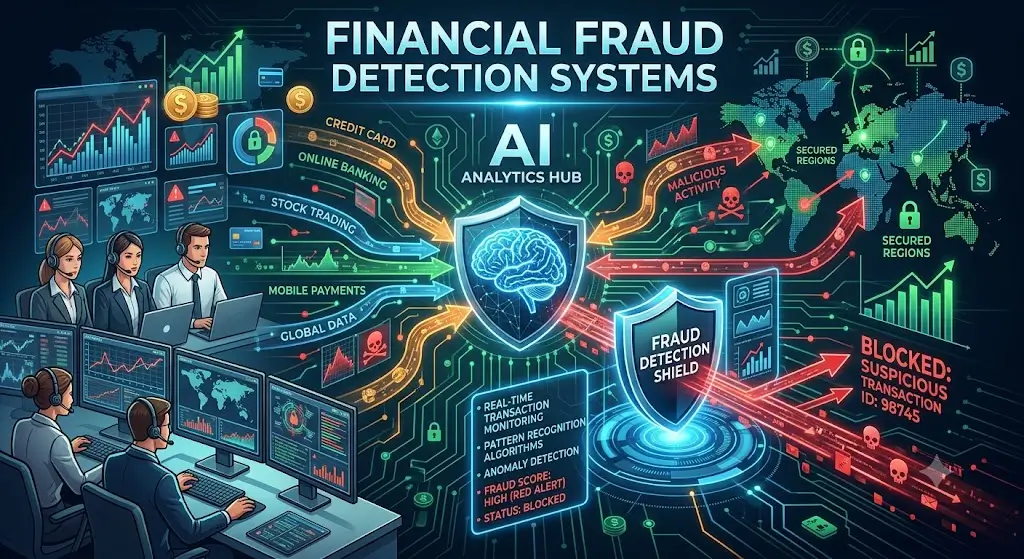
The Financial Fraud Detection Systems Course is a comprehensive training program designed to help learners understand how fraud detection systems protect financial institutions from illegal activities. In the digital banking era, fraud prevention has become a critical part of financial security.
Fraud detection systems use artificial intelligence, machine learning, and data analytics to identify suspicious transactions. Therefore, professionals must understand both financial systems and data-driven security methods.
This course introduces learners to fraud analytics, transaction monitoring systems, cybersecurity principles, and AI-based detection models. Moreover, participants gain practical knowledge of how financial fraud is identified and prevented in real time.
Whether you are a student, analyst, or fintech professional, this course provides essential skills for financial fraud detection systems.
Course Overview
In modern banking and fintech systems, fraud risks are increasing rapidly. Consequently, advanced detection systems are required to protect users and institutions.
The Financial Fraud Detection Systems Course provides learners with a structured understanding of anomaly detection, risk scoring, transaction analysis, and machine learning models for fraud prevention. Additionally, participants explore how financial institutions secure digital transactions.
The course combines data science, cybersecurity, and financial systems to help learners understand modern fraud prevention technologies.
What You Will Learn
The Financial Fraud Detection Systems Course covers a wide range of security and analytics topics. First, learners study the fundamentals of financial fraud types and detection methods.
Next, participants explore transaction monitoring, anomaly detection techniques, risk scoring models, and AI-based fraud detection systems. Furthermore, the course explains cybersecurity principles, AML (anti-money laundering) systems, and compliance frameworks.
In addition, learners gain knowledge of data analytics, machine learning models, and real-time fraud monitoring systems. These topics provide a complete understanding of financial security systems.
Moreover, learners also analyze real-world fraud detection case studies.
Skills You Will Gain
Upon successful completion of the course, learners will develop valuable skills, including:
- Financial fraud detection techniques
- Transaction monitoring systems
- Risk analysis and scoring
- AI-based fraud detection
- Data analytics for finance
- Cybersecurity fundamentals
- AML compliance systems
- Machine learning for fraud detection
- Anomaly detection modeling
- Financial security systems design
Moreover, these skills are highly valuable across banks, fintech companies, cybersecurity firms, and financial institutions.
Benefits of the Course
The Financial Fraud Detection Systems Course offers numerous benefits for learners interested in fintech and cybersecurity. First, it builds strong understanding of fraud prevention technologies.
Additionally, the course improves analytical and risk assessment skills. Furthermore, participants gain practical knowledge that helps detect and prevent financial crimes.
Because digital transactions are rapidly increasing, professionals with fraud detection skills are highly in demand. As a result, learners can improve career opportunities in banking, fintech, cybersecurity, and data analytics industries.
The course also develops problem-solving, analytical thinking, and technical skills.
Who Should Enroll?
This course is ideal for:
- Data analysts
- FinTech professionals
- Cybersecurity enthusiasts
- Students
- Banking professionals
- Risk analysts
- Software developers
- Compliance officers
- AI/ML learners
- Finance professionals
No prior experience is required. Therefore, beginners can confidently enroll and build foundational fraud detection skills.
Career Opportunities
After completing the course, learners may pursue opportunities such as:
- Fraud Analyst
- Financial Security Analyst
- Risk Management Specialist
- Cybersecurity Analyst
- AML Compliance Officer
- Data Scientist (Finance)
- Fraud Detection Engineer
- FinTech Security Specialist
- Transaction Monitoring Analyst
- Risk Modeling Specialist
Additionally, learners can apply these skills across banks, fintech companies, insurance firms, and cybersecurity organizations.
Certification
Upon successful completion of the Financial Fraud Detection Systems Course, participants receive a certification recognizing their understanding of fraud detection systems, financial security, and data-driven risk analysis.
This certification can strengthen professional credibility and support career growth in fintech and cybersecurity industries.
Why Choose This Course?
The Financial Fraud Detection Systems Course combines finance, cybersecurity, and data science to provide a practical, future-focused learning experience. Moreover, it equips learners with skills essential for modern financial security systems.
The curriculum focuses on fraud analytics, AI detection models, and transaction monitoring. Furthermore, learners gain insights into real-world financial crime prevention techniques.
Whether your goal is to become a fraud analyst, cybersecurity expert, or fintech professional, this course provides the knowledge and confidence needed to succeed.
Conclusion
The Financial Fraud Detection Systems Course provides a strong foundation in fraud analytics, AI-based detection, and financial security systems. Through topics such as anomaly detection, risk analysis, and transaction monitoring, learners gain valuable knowledge applicable across modern financial industries.
Moreover, as financial fraud continues to grow in digital systems, professionals with fraud detection expertise are becoming highly valuable. Therefore, this course serves as an excellent starting point for individuals seeking careers in fintech, cybersecurity, and financial analytics.
FAQ SECTION
1. What is the Financial Fraud Detection Systems Course?
It teaches how to detect and prevent fraud in financial systems using data and AI.
2. Is this course suitable for beginners?
Yes. Beginners can easily understand fraud detection and analytics concepts.
3. What topics are covered in this course?
It includes AI fraud detection, AML, and transaction monitoring.
4. Will I receive a certificate?
Yes. A certificate is provided after completion.
5. Do I need coding experience?
No. Basic understanding is enough to start.
6. Who should enroll in this course?
Students, analysts, and fintech professionals.
7. Is this course practical?
Yes. It includes real fraud detection case studies.
8. What skills will I gain?
You will gain skills in fraud analytics and financial security systems.
9. Can this course help my career?
Yes. It improves opportunities in fintech and cybersecurity.
10. Why is fraud detection important?
It protects financial systems from fraud and illegal transactions.





Reviews
There are no reviews yet.