
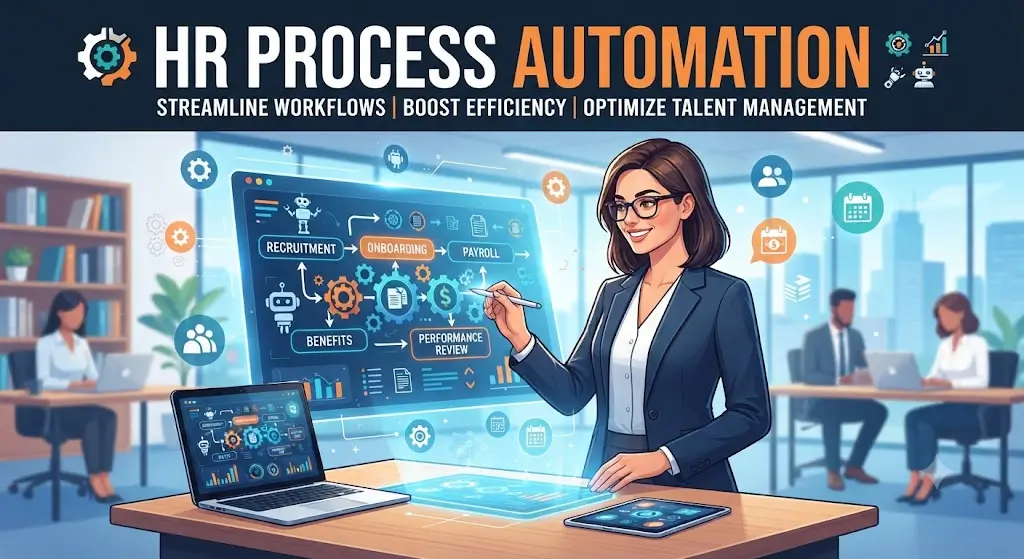
HR Process Automation Course Overview
The HR Process Automation Course provides practical knowledge of how organizations automate Human Resources processes to improve efficiency, reduce manual work, enhance employee experience, and support business growth. Modern HR departments rely on digital technologies and automation tools to streamline repetitive tasks, minimize errors, and deliver faster, more consistent services.
Automation has become an essential part of Human Resources management. From recruitment and onboarding to payroll coordination, attendance tracking, performance management, and employee record management, automated HR processes help organizations save time while improving compliance and operational accuracy.
Understanding HR Process Automation
HR Process Automation refers to the use of digital technologies and workflow automation to simplify routine Human Resources activities. It enables HR teams to focus more on strategic initiatives and employee development rather than repetitive administrative work.
Learners will understand:
- HR automation concepts
- Digital HR workflows
- Employee self-service systems
- HR information management
- Workflow standardization
- Process optimization
Importance of HR Automation
Organizations that automate HR operations improve productivity, reduce administrative effort, and provide better employee support.
Key benefits include:
- Faster HR processes
- Reduced manual errors
- Improved employee experience
- Better compliance
- Higher operational efficiency
- Standardized workflows
- Cost savings
- Better decision-making
Recruitment and Onboarding Automation
Automation simplifies recruitment activities and creates a smoother onboarding experience for new employees.
Topics covered include:
- Applicant tracking
- Digital recruitment workflows
- Online interview scheduling
- Document collection
- Employee onboarding
- Automated notifications
Employee Records and Document Management
Digital systems help HR teams maintain accurate employee information while ensuring data security and compliance.
Learners will explore:
- Digital employee files
- Document management
- Secure data storage
- HR documentation
- Information accuracy
- Record maintenance
Payroll, Attendance, and Leave Automation
Automated HR solutions improve the accuracy and efficiency of workforce administration.
This section explains:
- Attendance tracking
- Leave management
- Payroll coordination
- Timesheet automation
- Shift scheduling
- Workforce reporting
Performance and Employee Development
Automation supports continuous performance management and employee growth.
Topics include:
- Goal tracking
- Performance reviews
- Learning management
- Employee feedback
- Skills development
- Career planning
HR Analytics and Reporting
Organizations use HR data to evaluate workforce performance and improve decision-making.
Learners will understand:
- HR dashboards
- Workforce analytics
- Performance metrics
- Employee reports
- Data visualization
- Decision support
Compliance and Data Security
HR professionals must ensure that automated systems follow legal requirements and protect employee information.
This section covers:
- HR compliance
- Data privacy
- Access controls
- Information security
- Audit readiness
- Policy implementation
Skills You Will Gain
After completing this course, learners will be able to:
- Understand HR Process Automation
- Improve HR operational efficiency
- Automate routine HR workflows
- Support digital HR transformation
- Manage employee records effectively
- Improve workforce administration
- Use HR analytics for decision-making
- Strengthen compliance and data security
Who Should Enroll?
This course is suitable for:
- HR Professionals
- HR Executives
- HR Managers
- Business Owners
- Office Administrators
- Team Leaders
- Students
- Working Professionals
Career Opportunities
This course supports careers such as:
- HR Executive
- HR Operations Executive
- HR Automation Specialist
- HRIS Administrator
- HR Technology Analyst
- HR Coordinator
- People Operations Specialist
- Human Resources Officer
Certification Benefits
Completing this course demonstrates practical knowledge of digital HR operations, workflow automation, employee lifecycle management, HR analytics, and modern Human Resources practices. These skills are valuable for professionals working in organizations adopting digital transformation.
Conclusion
The HR Process Automation Course equips learners with practical skills to automate HR operations, improve employee services, reduce administrative effort, and support digital transformation initiatives. By applying automation tools and efficient workflows, professionals can help organizations build modern, productive, and employee-focused Human Resources functions.
Frequently Asked Questions (FAQs)
1. What is HR Process Automation?
HR Process Automation is the use of digital tools and automated workflows to manage Human Resources tasks such as recruitment, onboarding, payroll, attendance, employee records, leave management, and performance tracking more efficiently.
2. Who should enroll in this course?
This course is ideal for HR professionals, HR executives, HR managers, HR coordinators, business owners, office administrators, students, and working professionals interested in modern HR operations.
3. Is this course suitable for beginners?
Yes. The course starts with the fundamentals of HR operations before introducing automation concepts, digital workflows, and practical HR technology solutions.
4. What topics are covered in this course?
The course covers HR workflow automation, recruitment automation, employee onboarding, payroll coordination, attendance management, leave administration, HR analytics, HR information systems (HRIS), compliance, and data security.
5. Why is HR automation important?
Automation helps organizations reduce manual work, improve process accuracy, increase operational efficiency, enhance employee experience, minimize administrative errors, and support better business decisions.
6. Will I learn about HR software and HRIS platforms?
Yes. The course introduces HR Information Systems (HRIS), employee self-service portals, workflow automation tools, digital document management, HR dashboards, and reporting systems.
7. What skills will I gain after completing this course?
You will learn to automate HR workflows, improve HR operations, manage employee records, analyze workforce data, strengthen compliance, support digital HR transformation, and improve service delivery.
8. Does the course cover payroll and attendance automation?
Yes. You will understand attendance tracking, leave management, payroll coordination, shift scheduling, timesheet automation, and workforce reporting using digital HR systems.
9. What career opportunities are available after completing this course?
After completing the course, you can pursue roles such as HR Executive, HR Operations Executive, HR Automation Specialist, HRIS Administrator, HR Technology Analyst, HR Coordinator, People Operations Specialist, and Human Resources Officer.
10. How will this course support my professional growth?
This course develops practical skills in digital HR operations, workflow automation, HR technology, workforce management, compliance, and process improvement, preparing you for modern Human Resources and HR technology roles.




Reviews
There are no reviews yet.