
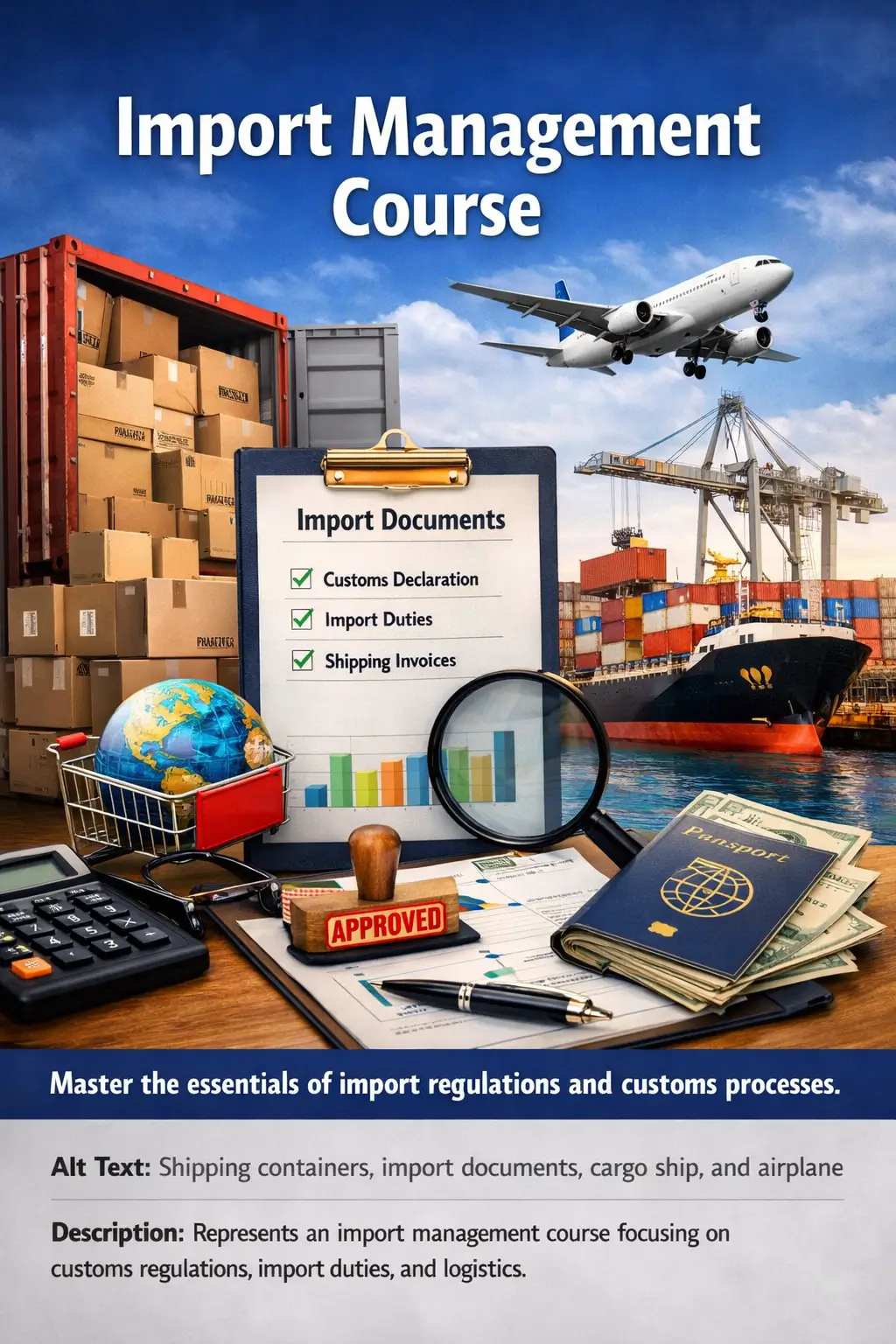
Import Management Course
The Import Management Course is designed to help learners understand the processes, regulations, and strategies involved in international importing activities. Moreover, the course provides practical knowledge of import documentation, customs procedures, logistics coordination, and trade compliance. As a result, learners develop the skills needed to manage import operations efficiently in today’s global marketplace.
Course Overview
Import management plays a crucial role in international trade and supply chain operations. Therefore, businesses require professionals who can handle import procedures, coordinate shipments, and ensure regulatory compliance. This Import Management Course provides a comprehensive understanding of global trade practices and import operations.
In addition, learners explore import regulations, customs requirements, and documentation processes. Furthermore, they gain insights into international sourcing and supply chain management.
Fundamentals of Import Management
The course begins with the fundamentals of import management. Therefore, students learn the principles of international trade, import processes, and global business operations. Moreover, they understand the role of import management in business growth and international commerce.
These foundations help learners build strong trade management skills.
Import Documentation Procedures
Accurate documentation is essential for successful import operations. Consequently, learners study invoices, bills of lading, certificates of origin, import licenses, and shipping documents. In addition, they understand how documentation supports customs clearance and regulatory compliance.
As a result, students gain practical knowledge of import paperwork and procedures.
Customs Clearance and Compliance
Customs regulations affect every import transaction. Therefore, the course covers customs procedures, import duties, tariffs, and compliance requirements. Furthermore, learners understand how businesses avoid delays and maintain compliance with international trade laws.
These skills help organizations manage imports effectively.
International Trade Regulations
Import activities must comply with international trade rules. Consequently, students explore trade agreements, import policies, and legal frameworks. In addition, they learn how governments regulate imports and international business transactions.
These concepts support successful global trade operations.
Import Logistics and Supply Chain Management
Logistics management is a key part of importing. Therefore, learners study transportation methods, warehousing, inventory management, and supply chain coordination. Moreover, they understand how efficient logistics improve import performance and customer satisfaction.
As a result, students develop practical logistics management skills.
Risk Management in Imports
Import operations involve financial and operational risks. Consequently, the course introduces risk assessment, supplier evaluation, and contingency planning. In addition, learners explore strategies to minimize disruptions and improve supply chain reliability.
These skills support effective business decision-making.
Trade Finance and Payment Methods
International trade requires secure payment systems. Therefore, students learn about letters of credit, international payments, trade finance, and foreign exchange considerations. Furthermore, they understand how businesses manage financial transactions in global trade.
These concepts prepare learners for professional trade environments.
Practical Learning and Case Studies
The Import Management Course includes practical assignments, case studies, and real-world trade scenarios. Moreover, learners apply import management concepts to business situations and operational planning exercises.
As a result, students gain hands-on experience and industry-relevant knowledge.
Learning Outcomes
By the end of this course, learners will be able to:
- Understand import management principles and procedures.
- Prepare and manage import documentation.
- Apply customs compliance and trade regulations.
- Coordinate import logistics and supply chain activities.
- Assess risks in international trade operations.
- Manage trade finance and payment methods.
- Support efficient import operations within organizations.
Who Should Enroll?
This course is ideal for students, entrepreneurs, supply chain professionals, logistics managers, import-export executives, and business owners. Moreover, it benefits anyone interested in international trade and import operations.
Conclusion
The Import Management Course provides comprehensive training in import procedures, customs regulations, logistics management, and trade compliance. Furthermore, it combines theoretical knowledge with practical applications. As a result, learners gain the expertise needed to manage import operations successfully and support global business growth.
9. FAQ SECTION
What is an Import Management Course?
An Import Management Course teaches import procedures, customs regulations, trade documentation, and logistics management.
Who can enroll in this course?
Students, business owners, logistics professionals, and beginners can enroll.
Do I need prior trade experience?
No, beginners can join and learn import management fundamentals.
What skills will I learn?
You will learn import documentation, customs compliance, logistics coordination, and international trade operations.
Is practical training included?
Yes, the course includes projects, case studies, and practical assignments.
Will I receive a certificate?
Yes, learners receive a course completion certificate.
Does the course cover customs clearance?
Yes, customs procedures and compliance requirements are important parts of the curriculum.
What career opportunities are available?
Career options include Import Manager, Trade Compliance Officer, Logistics Coordinator, Supply Chain Executive, and Import-Export Specialist.
Can entrepreneurs benefit from this course?
Yes, entrepreneurs can learn how to manage import operations and expand international business activities.
Why should I study Import Management?
The course helps develop international trade, logistics, and compliance skills that are valuable across industries.




Reviews
There are no reviews yet.