
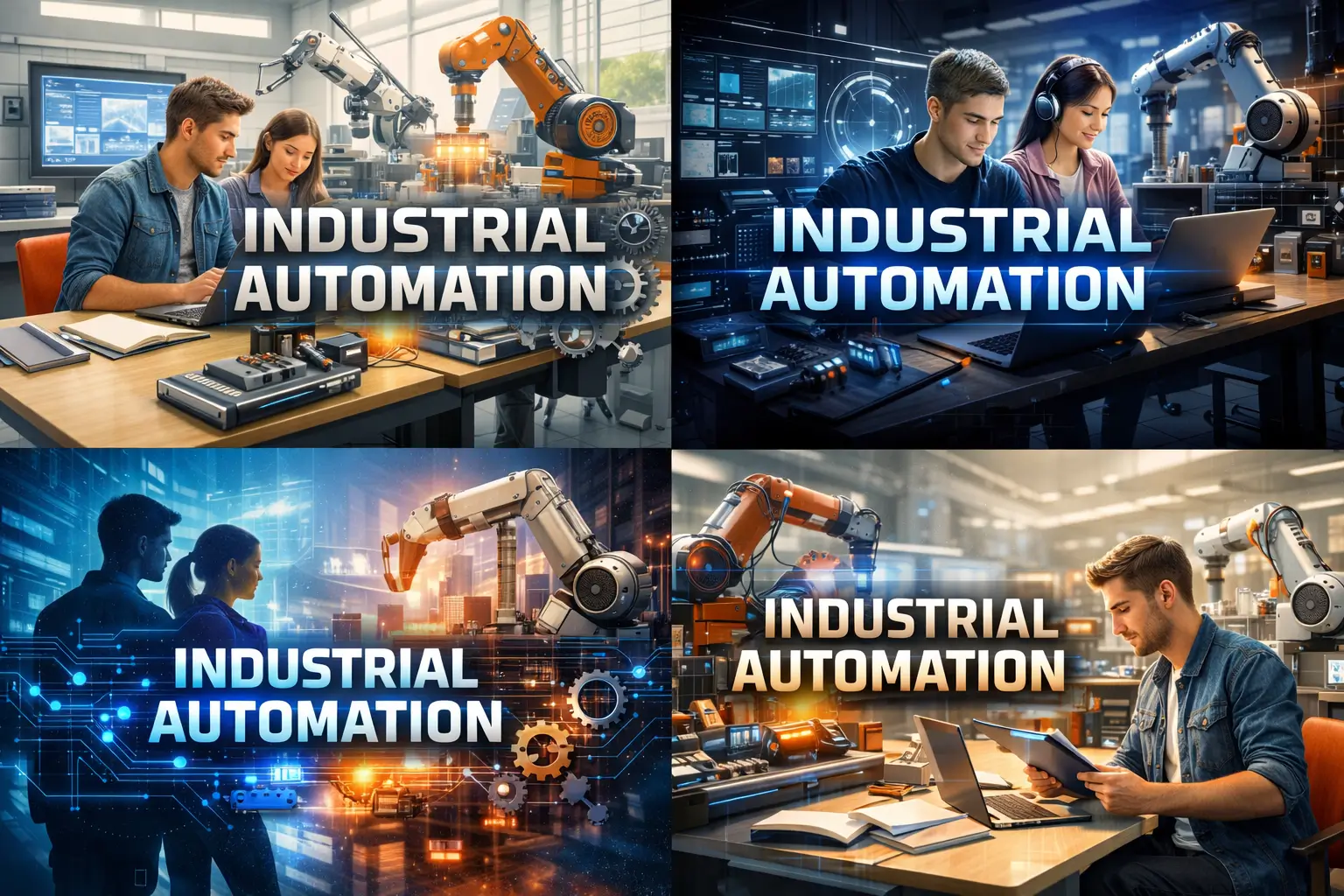
Introduction to Industrial Automation Course
The Industrial Automation Course is a specialized training program designed to introduce learners to modern automation technologies used across manufacturing, production, and industrial facilities. Automation has transformed industries by improving productivity, reducing operational errors, and enhancing process efficiency.
Today, organizations increasingly rely on automated systems to optimize production and maintain quality standards. Therefore, professionals with automation knowledge are highly valued across engineering and manufacturing sectors.
Industrial Automation Course Overview
Industrial automation involves the use of control systems, software, sensors, and automated equipment to manage industrial processes with minimal human intervention. Additionally, automation technologies help organizations improve operational efficiency while reducing production costs.
Furthermore, automation supports consistent product quality, enhanced workplace safety, and faster decision-making. As a result, industries worldwide continue to invest heavily in automation solutions and smart manufacturing technologies.
This Industrial Automation Course provides a strong foundation in automation principles, industrial control systems, process monitoring, and manufacturing automation concepts.
Why Choose an Industrial Automation Course?
Modern industries require professionals who understand automated systems and industrial technologies. Moreover, automation skills are increasingly important as organizations adopt Industry 4.0 practices and digital manufacturing solutions.
Consequently, individuals with automation expertise can access a wide range of career opportunities in manufacturing, engineering, energy, infrastructure, and industrial operations.
This training program focuses on practical concepts and industry-relevant knowledge that support professional development and long-term career growth.
What You Will Learn
Industrial Automation Fundamentals
Understand the principles and applications of automation in industrial environments.
PLC Systems and Applications
Learn how programmable logic controllers are used to control industrial processes.
SCADA Concepts
Explore the role of supervisory control and data acquisition systems in process monitoring.
Industrial Control Systems
Understand how control systems improve operational efficiency and process reliability.
Process Automation
Learn how automation technologies support manufacturing and production operations.
Smart Manufacturing Concepts
Develop an understanding of modern digital manufacturing and Industry 4.0 technologies.
Skills You Will Gain
After completing this training, learners will develop skills in:
- Industrial automation fundamentals
- PLC system understanding
- SCADA awareness
- Process monitoring
- Industrial control concepts
- Manufacturing automation
- Operational efficiency analysis
- Automation system evaluation
- Technical troubleshooting awareness
- Smart manufacturing knowledge
Benefits of an Industrial Automation Course
The Industrial Automation Course helps learners build valuable technical knowledge and automation skills required in modern industries.
Additionally, automation expertise supports career growth in manufacturing and engineering sectors. Furthermore, organizations continue to seek professionals who can contribute to digital transformation and operational excellence.
Benefits include:
- Improved technical knowledge
- Better understanding of automation systems
- Enhanced industrial process awareness
- Increased employability
- Strong manufacturing industry exposure
- Industry-relevant technical skills
- Career advancement opportunities
- Foundation for advanced automation studies
Who Should Enroll?
This course is suitable for:
- Engineering students
- Automation technicians
- Manufacturing professionals
- Electrical engineers
- Mechanical engineers
- Maintenance professionals
- Production supervisors
- Individuals interested in industrial technologies
Career Opportunities
Upon completion, learners may pursue opportunities such as:
- Automation Technician
- PLC Technician
- Industrial Automation Engineer
- Control Systems Assistant
- Manufacturing Automation Executive
- Process Control Technician
- Production Engineer
- Maintenance Engineer
- Industrial Operations Executive
- Automation Support Specialist
Certification Details
Upon successful completion of the Industrial Automation Course, participants receive certification demonstrating their understanding of automation technologies, industrial control systems, process automation, and manufacturing operations.
Conclusion
The Industrial Automation Course provides learners with valuable knowledge of automation systems, industrial controls, and smart manufacturing technologies. Furthermore, automation continues to shape the future of industrial operations and production environments. Therefore, professionals with automation expertise remain highly sought after across manufacturing, engineering, and technology-driven industries. This course serves as an excellent foundation for career growth in industrial automation and advanced manufacturing.
FAQ SECTION
1. What is an Industrial Automation Course?
An Industrial Automation Course teaches learners the fundamentals of automation systems, PLCs, SCADA, industrial controls, and manufacturing technologies.
2. Who should enroll in this course?
This course is ideal for engineering students, technicians, manufacturing professionals, and individuals interested in automation careers.
3. Do I need prior automation experience?
No. The course is suitable for beginners as well as professionals seeking foundational automation knowledge.
4. What skills will I learn?
You will learn industrial automation concepts, PLC systems, SCADA applications, process monitoring, and industrial control fundamentals.
5. Is certification provided after completion?
Yes. Participants receive certification upon successful completion of the course.
6. Why is industrial automation important?
Industrial automation improves productivity, efficiency, quality, and operational reliability in manufacturing and industrial facilities.
7. What are PLC and SCADA systems?
PLC systems control industrial processes, while SCADA systems monitor and manage industrial operations.
8. Is Industrial Automation a good career option?
Yes. Automation professionals are in high demand across manufacturing, engineering, energy, and technology sectors.
9. Can I take this course online?
Yes. Many Industrial Automation Courses are available online for flexible learning.
10. What career opportunities are available after this course?
Career opportunities include Automation Technician, PLC Technician, Industrial Automation Engineer, Process Control Technician, and Automation Support Specialist.




Reviews
There are no reviews yet.