
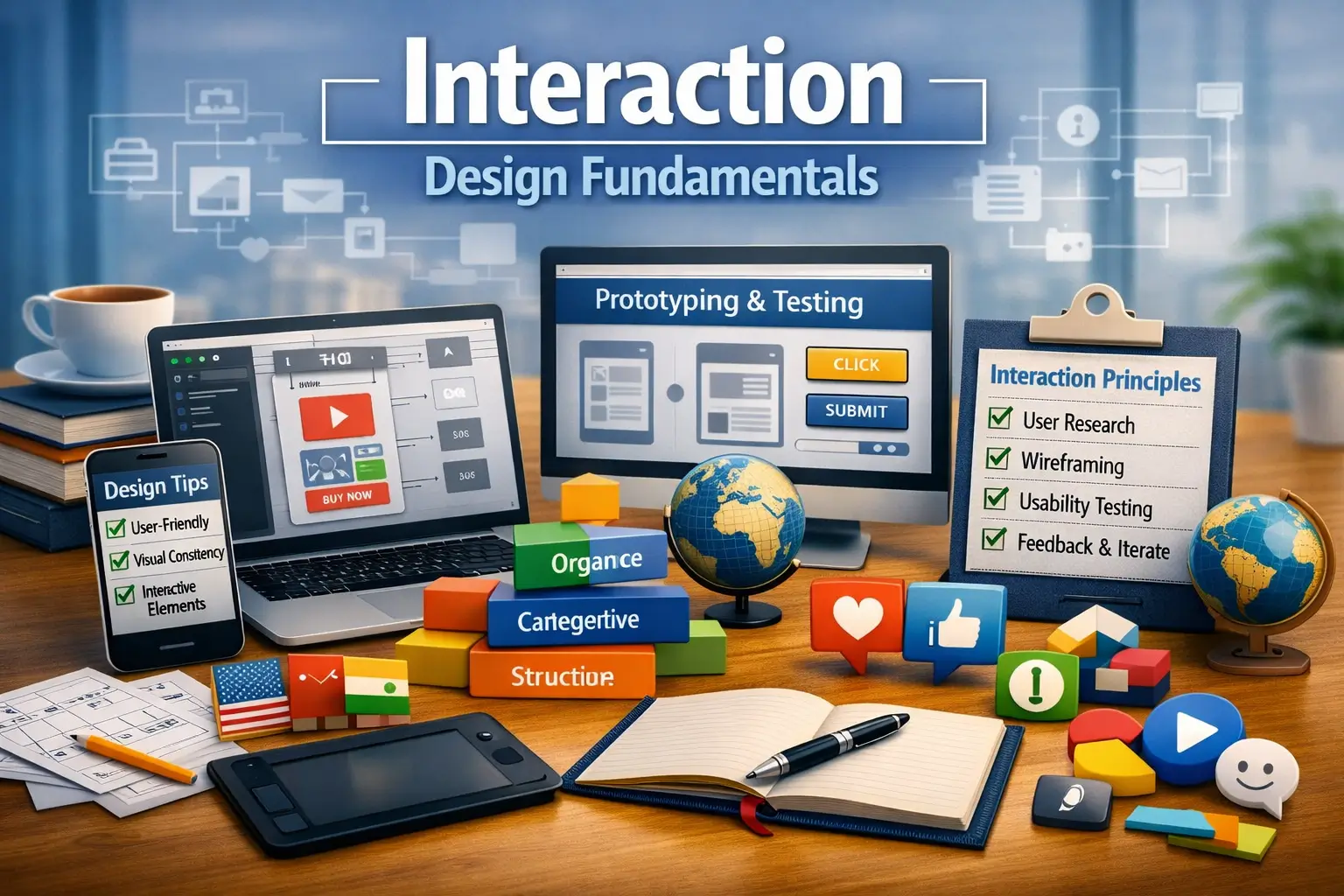
Interaction Design Fundamentals Course
The Interaction Design Fundamentals Course is designed to help learners understand the principles of creating intuitive, engaging, and user-friendly digital experiences. As websites, mobile apps, and digital products continue to shape how people interact with technology, interaction design has become a critical skill for delivering exceptional user experiences.
This course introduces the core concepts of interaction design, including user-centered design, UX principles, user research, information architecture, wireframing, prototyping, usability testing, accessibility, interface design, and design systems. Learners will gain practical knowledge of how to design digital products that are functional, visually appealing, and easy to use.
Whether you are an aspiring UX designer, UI designer, web designer, product designer, developer, entrepreneur, student, or creative professional, this course provides a strong foundation in interaction design and user experience.
Course Overview
The course explores how users interact with digital products and how thoughtful design decisions improve usability, accessibility, and overall user satisfaction. Learners will discover how to transform user needs into intuitive interfaces through research, design thinking, and iterative testing.
The curriculum combines design theory with hands-on projects and real-world examples, enabling learners to build practical interaction design skills for websites, mobile applications, and software products.
What You Will Learn
By completing this course, you will be able to:
- Understand interaction design principles.
- Apply user-centered design methods.
- Conduct basic user research.
- Create user personas and journey maps.
- Organize information effectively.
- Design wireframes for digital products.
- Build interactive prototypes.
- Improve interface usability.
- Apply accessibility best practices.
- Conduct usability testing.
- Design responsive user experiences.
- Understand design systems.
- Collaborate with development teams.
- Solve real-world UX challenges.
- Create engaging digital experiences.
Course Curriculum
The curriculum begins with UX and interaction design fundamentals before progressing through user research, personas, journey mapping, information architecture, wireframing, prototyping, usability testing, accessibility, visual design, design systems, collaboration, and practical design projects.
Learners will build a portfolio of design exercises that demonstrate their understanding of modern UX and interaction design principles.
Skills You Will Gain
After completing the course, you will develop skills in:
- Interaction Design
- User Experience (UX)
- User Interface (UI) Design
- User Research
- Wireframing
- Interactive Prototyping
- Information Architecture
- User Journey Mapping
- Usability Testing
- Accessibility Design
- Human-Centered Design
- Visual Design Principles
- Design Thinking
- Design Systems
- Digital Product Design
Benefits of the Course
This course helps learners create user-friendly digital products that improve customer satisfaction and business success. By understanding how users think and interact with technology, you’ll be able to design experiences that are intuitive, accessible, and engaging.
Interaction design skills are highly valued across technology companies, startups, digital agencies, e-commerce businesses, healthcare, education, and financial services, making this course an excellent investment in your design career.
Who Should Enroll
This course is ideal for:
- Aspiring UX Designers
- UI Designers
- Product Designers
- Web Designers
- Graphic Designers
- Front-End Developers
- Mobile App Developers
- Product Managers
- Entrepreneurs
- Digital Marketers
- Students
- Creative Professionals
- Freelancers
- Business Owners
- Anyone interested in UX design
Career Opportunities
After completing the Interaction Design Fundamentals Course, learners may pursue roles such as:
- UX Designer
- UI Designer
- Interaction Designer
- Product Designer
- UX Researcher
- Information Architect
- Visual Designer
- Digital Experience Designer
- Mobile App Designer
- Web Designer
These roles are in demand across software companies, technology startups, design agencies, e-commerce businesses, financial institutions, healthcare organizations, educational technology companies, and consulting firms.
Certification Details
Upon successful completion, learners receive a Certificate of Completion recognizing their expertise in Interaction Design Fundamentals, UX principles, and user-centered design. This certification strengthens your professional portfolio and supports career advancement in UX design, UI design, product design, web design, digital product development, and human-centered innovation.
If you want to create intuitive digital experiences that delight users and solve real-world problems, the Interaction Design Fundamentals Course provides practical, industry-relevant knowledge to help you succeed in today’s digital design landscape.
FAQ SECTION
1. What is the Interaction Design Fundamentals Course?
It teaches the principles of designing intuitive, user-friendly digital products using user-centered design and UX best practices.
2. Is this course suitable for beginners?
Yes. The course starts with UX and interaction design fundamentals, making it suitable for beginners.
3. What topics are covered?
Interaction design, UX, UI design, user research, wireframing, prototyping, usability testing, accessibility, and design systems.
4. Do I need design experience?
No. The course is suitable for beginners as well as professionals looking to strengthen their UX design skills.
5. Is the course online?
Yes. It is fully online and self-paced.
6. Will I receive a certificate?
Yes. A certificate is awarded after successfully completing the course.
7. Who should enroll?
Students, UX designers, UI designers, developers, entrepreneurs, product managers, freelancers, and anyone interested in user experience design.
8. What skills will I gain?
Interaction design, UX research, wireframing, prototyping, usability testing, accessibility, design thinking, and user-centered design.
9. Can this course help my career?
Yes. Interaction design and UX skills are highly sought after in technology, software development, digital agencies, e-commerce, healthcare, finance, and product design industries.
10. Why is Interaction Design important?
Interaction Design helps create intuitive, accessible, and engaging digital experiences that improve user satisfaction, increase product usability, and contribute to business success



Reviews
There are no reviews yet.