
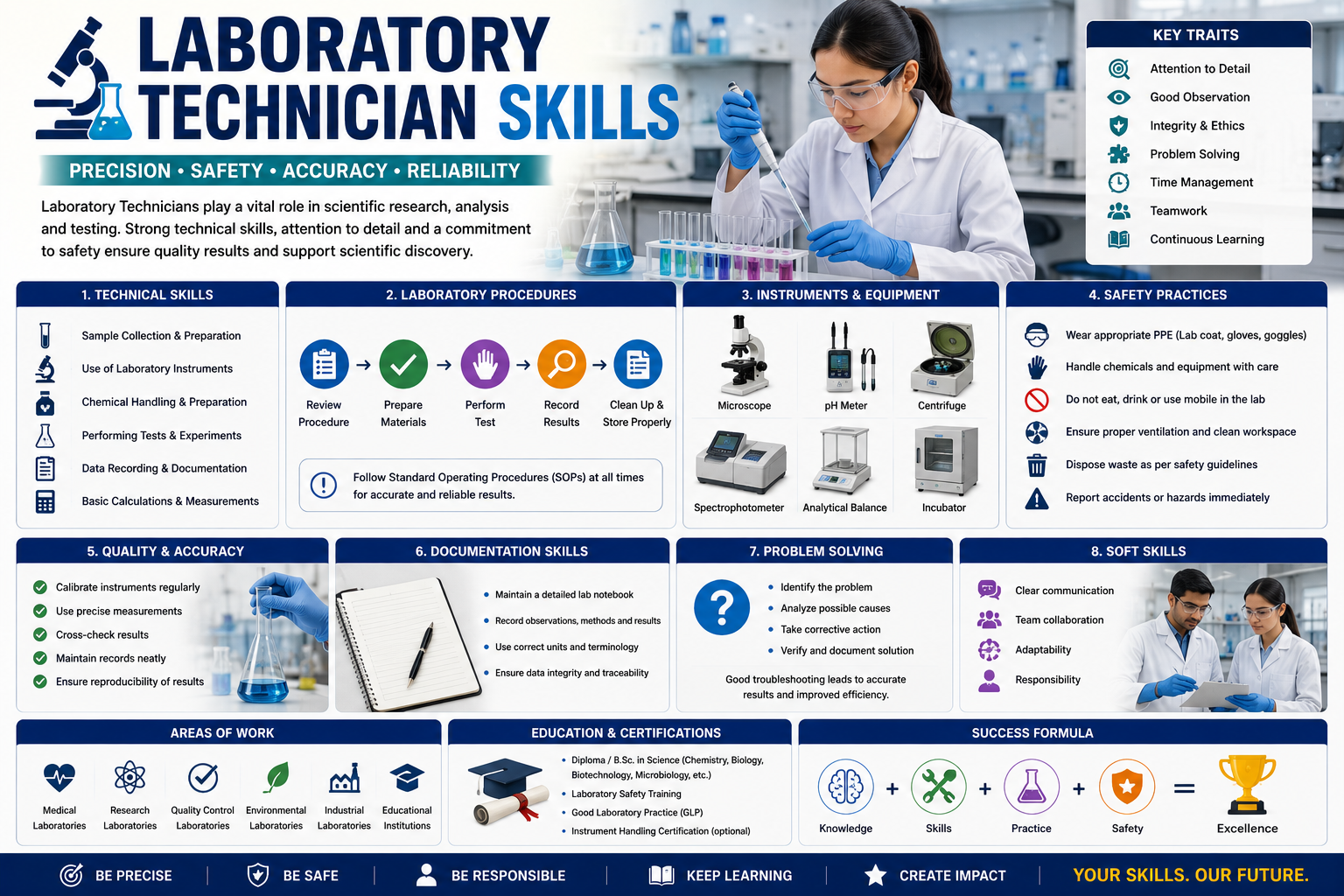
Laboratory Technician Skill: Essential Training for Modern Diagnostics
The Laboratory Technician Skill course is designed to prepare learners with the technical expertise required to work in medical, research, and industrial laboratories. Laboratory technicians play a vital role in diagnostics, scientific discovery, and quality assurance. This course provides hands‑on knowledge of laboratory procedures, equipment handling, and safety standards, making it ideal for students and professionals seeking a career in laboratory sciences.
What You’ll Learn
- Lab Safety: Understand safety protocols, chemical handling, and emergency procedures.
- Sample Collection: Learn methods for collecting and preparing biological and chemical samples.
- Equipment Handling: Gain expertise in microscopes, centrifuges, spectrophotometers, and other lab instruments.
- Testing Procedures: Explore diagnostic tests, chemical assays, and microbiological techniques.
- Data Recording: Learn how to document results accurately and maintain laboratory records.
- Quality Control: Understand calibration, standardization, and compliance with laboratory standards.
- Research Support: Assist scientists in experiments, data collection, and analysis.
- Career Pathways: Explore opportunities in hospitals, pharmaceutical companies, and research institutions.
Why This Course Matters
Laboratory technicians are the backbone of scientific and medical progress. By mastering these skills, learners will:
- Support accurate diagnostics in healthcare.
- Contribute to scientific research and innovation.
- Ensure compliance with laboratory standards and regulations.
- Build a strong foundation for advanced laboratory certifications.
Career Opportunities
Graduates of this course can pursue roles such as:
- Medical Laboratory Technician
- Research Assistant
- Quality Control Analyst
- Clinical Laboratory Specialist
- Pharmaceutical Lab Technician
FAQ SECTION
1. What does a laboratory technician do?
A laboratory technician performs laboratory tests, handles specimens, operates laboratory equipment, and supports diagnostic and research activities.
2. Who should enroll in this course?
Students, aspiring laboratory technicians, healthcare support staff, and individuals interested in diagnostic laboratory careers can enroll.
3. Do I need prior healthcare experience?
No. The course is designed for beginners and provides foundational laboratory knowledge.
4. What skills will I learn?
You will learn specimen collection, laboratory safety, diagnostic testing procedures, equipment handling, quality control, and laboratory documentation.
5. Is laboratory safety covered in the course?
Yes. Laboratory safety, infection control, and biosafety practices are major components of the curriculum.
6. Does the course include practical laboratory training?
The course includes practical exercises, laboratory simulations, and case-study-based learning activities.
7. Is certification provided?
Yes. Participants receive a certificate upon successful completion of the course.
8. What industries hire laboratory technicians?
Hospitals, pathology laboratories, diagnostic centers, pharmaceutical companies, research institutions, and healthcare organizations hire laboratory technicians.
9. Can this course help me start a healthcare career?
Yes. It provides essential laboratory and diagnostic skills valuable in healthcare support roles.
10. What career opportunities are available after this course?
Medical Laboratory Technician, Laboratory Assistant, Diagnostic Technician, Pathology Lab Assistant, Clinical Laboratory Technician, Research Lab Assistant, and Healthcare Support Technician.



Reviews
There are no reviews yet.