
Introduction
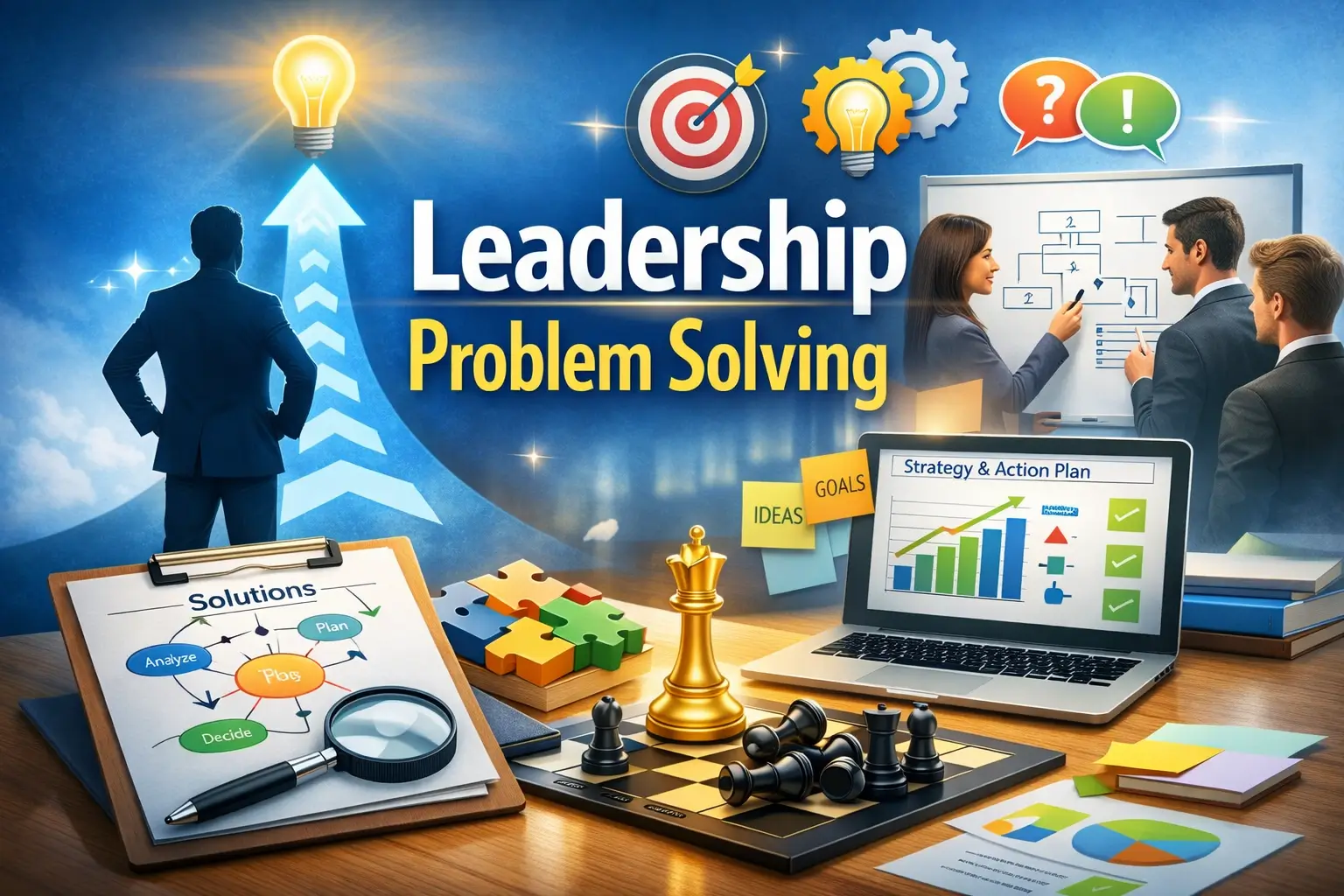
Effective leaders are not only responsible for managing teams but also for solving problems and making decisions in challenging situations. Organizations need leaders who can analyze problems, identify opportunities, and create practical solutions. The Leadership Problem Solving Course introduces learners to the skills and techniques required to become confident problem solvers and effective decision-makers.
Problem-solving is a critical leadership skill because workplace challenges often require quick thinking, creativity, and strategic judgment. Therefore, leaders must understand how to evaluate situations, identify root causes, consider different perspectives, and implement suitable solutions.
This course focuses on developing a structured approach to problem-solving. Learners explore decision-making frameworks, analytical thinking, creative problem-solving methods, conflict resolution strategies, and leadership communication techniques. Moreover, they understand how effective leaders handle uncertainty and guide teams toward successful outcomes.
Throughout the course, participants develop skills in critical thinking, collaboration, negotiation, planning, and decision-making. In addition, they learn how leadership approaches influence problem resolution and organizational success.
By completing this course, learners will gain the confidence to handle complex challenges, support team performance, and make informed decisions. As a result, they will be better prepared for leadership roles in various professional environments.
Course Overview
The Leadership Problem Solving Course provides comprehensive training in leadership decision-making, analytical thinking, problem identification, solution development, and strategic problem management. Furthermore, the course helps learners understand how effective leaders overcome challenges and improve performance.
Fundamentals of Leadership Problem Solving
The course begins with the basics of leadership problem-solving, including problem identification, leadership responsibilities, decision-making principles, and effective solution development.
Understanding Problem Identification
Learners explore methods for recognizing challenges, analyzing situations, collecting information, and defining problems accurately before creating solutions.
Root Cause Analysis Techniques
This section explains techniques such as cause analysis, critical evaluation, problem investigation, and identifying the main factors behind workplace issues.
Decision-Making Strategies
Learners understand different decision-making approaches, risk evaluation methods, strategic choices, and techniques for selecting effective solutions.
Creative Problem-Solving Methods
The course introduces brainstorming techniques, innovative thinking, alternative solutions, and creative approaches for handling complex challenges.
Leadership Communication Skills
Learners develop communication techniques required for discussing problems, sharing ideas, managing feedback, and building team cooperation.
Conflict Resolution and Negotiation
This section covers workplace conflicts, negotiation methods, mediation approaches, and strategies for maintaining positive team relationships.
Team-Based Problem Solving
Learners understand collaboration methods, team decision-making, group analysis, and creating a problem-solving culture within organizations.
Strategic Thinking and Planning
The course explains how leaders use strategic thinking, planning methods, and analytical approaches to solve business challenges.
Digital Tools for Problem Solving
Learners explore digital collaboration tools, data analysis platforms, project management software, and technology-based solutions for improving decision-making.
Overall, this course combines leadership principles with practical problem-solving techniques. Therefore, learners develop the ability to manage challenges, support teams, and make effective decisions in professional environments.
What You Will Learn
The Leadership Problem Solving Course equips learners with practical skills to analyze challenges, make decisions, and develop effective solutions.
Understand Leadership Problem-Solving Principles
Learners will understand leadership responsibilities, problem-solving approaches, decision-making concepts, and solution development processes.
Identify and Analyze Problems
Participants will learn how to recognize challenges, evaluate situations, collect information, and identify root causes.
Develop Decision-Making Skills
The course teaches learners how to compare options, evaluate risks, and make informed leadership decisions.
Apply Creative Thinking Techniques
Learners will explore brainstorming, innovation methods, analytical thinking, and creative approaches to problem resolution.
Improve Communication Skills
Participants will develop skills in discussion, feedback management, collaboration, and communicating solutions effectively.
Manage Workplace Conflicts
Learners will understand conflict resolution methods, negotiation strategies, and techniques for maintaining team harmony.
Strengthen Team Problem-Solving
The course helps learners build collaboration skills and create effective team-based problem-solving approaches.
Use Strategic Problem-Solving Methods
Learners will develop strategic thinking abilities to handle complex challenges and support organizational growth.
Skills You Will Gain
After completing the Leadership Problem Solving Course, learners will develop valuable leadership and analytical skills.
Critical Thinking Skills
Develop the ability to analyze situations, evaluate information, and identify effective solutions.
Decision-Making Skills
Learn how to make confident decisions using structured approaches and logical analysis.
Problem Analysis Skills
Gain expertise in identifying problems, understanding causes, and developing practical solutions.
Leadership Skills
Improve team management, communication, motivation, and leadership effectiveness.
Conflict Resolution Skills
Learn negotiation techniques, conflict management, collaboration methods, and relationship-building strategies.
Creative Thinking Skills
Develop innovative thinking abilities to solve challenges and generate new ideas.
Strategic Planning Skills
Strengthen planning, evaluation, goal setting, and long-term decision-making capabilities.
Communication Skills
Enhance professional communication, teamwork, presentation, and solution-sharing abilities.
Benefits of the Course
The Leadership Problem Solving Course helps learners develop practical leadership abilities required to handle challenges, improve decisions, and create effective solutions. Moreover, the course focuses on real-world problem-solving techniques that support professional growth and organizational success.
Develop Strong Problem-Solving Abilities
First, learners understand how to identify challenges, analyze situations, and develop suitable solutions. As a result, they become more confident while handling complex workplace problems.
Improve Decision-Making Skills
Effective decisions help organizations achieve better outcomes. Therefore, this course teaches learners how to evaluate information, compare options, assess risks, and make logical decisions.
Enhance Leadership Effectiveness
Strong leaders require both management and problem-solving skills. Additionally, learners develop leadership qualities such as confidence, strategic thinking, communication, and team coordination.
Build Critical Thinking Skills
Critical thinking helps leaders understand problems from different perspectives. Furthermore, learners improve their ability to analyze situations, identify patterns, and create practical solutions.
Strengthen Conflict Resolution Skills
Workplace conflicts can affect productivity and teamwork. Therefore, learners gain knowledge of negotiation methods, communication techniques, and conflict management strategies.
Encourage Creative Thinking
Innovative solutions often help organizations overcome difficult challenges. Moreover, learners explore brainstorming methods, creative approaches, and new ways of solving problems.
Improve Team Collaboration
Successful problem-solving requires teamwork. In addition, learners understand how to encourage collaboration, share ideas, manage discussions, and support team-based solutions.
Develop Strategic Thinking
Leaders must consider both current challenges and future goals. Consequently, learners develop strategic planning skills that help them make better long-term decisions.
Increase Workplace Confidence
The course improves confidence by providing practical problem-solving frameworks. As a result, learners become better prepared to handle professional challenges.
Support Career Growth
Organizations value professionals who can lead teams and solve problems effectively. Therefore, this course helps learners prepare for leadership, management, and business development opportunities.
Who Should Enroll
The Leadership Problem Solving Course is designed for individuals who want to improve leadership abilities, decision-making skills, and professional problem-solving techniques.
Managers and Team Leaders
Managers can improve their ability to handle workplace challenges, guide teams, and make effective decisions.
Business Professionals
Professionals can develop leadership thinking, analytical skills, communication abilities, and solution-focused approaches.
Entrepreneurs and Business Owners
Entrepreneurs can learn how to manage business challenges, evaluate opportunities, and make strategic decisions.
Project Managers
Project managers can strengthen problem-solving skills required for managing risks, conflicts, and project-related challenges.
Supervisors and Department Heads
Supervisors can improve team management, communication, conflict handling, and operational decision-making.
Students and Graduates
Students interested in management, leadership, business, and professional development can build valuable career skills through this course.
Consultants and Trainers
Consultants and trainers can enhance their ability to analyze problems, provide solutions, and guide organizations effectively.
Professionals Seeking Leadership Roles
Individuals preparing for leadership positions can develop the confidence and skills needed to manage responsibilities successfully.
Career Opportunities
Leadership and problem-solving skills are valuable across almost every industry. Therefore, completing the Leadership Problem Solving Course can help learners explore various career opportunities in management, business, and organizational development.
Potential career roles include:
- Team Leader
- Project Manager
- Business Manager
- Operations Manager
- Leadership Development Specialist
- Management Consultant
- Business Analyst
- Department Supervisor
- Entrepreneur
- Human Resource Manager
- Strategy Consultant
- Program Manager
- Training and Development Specialist
- Organizational Development Specialist
Professionals can find opportunities in:
- Information technology companies
- Manufacturing organizations
- Financial institutions
- Healthcare companies
- Consulting firms
- Education organizations
- Retail businesses
- Government organizations
- Startups
- Multinational corporations
Furthermore, this course provides a strong foundation for advanced learning in leadership management, business strategy, project management, organizational development, and executive skills.
Certification
Upon successfully completing the Leadership Problem Solving Course, learners will receive a Course Completion Certificate that recognizes their knowledge of leadership strategies, decision-making methods, critical thinking, conflict resolution, and problem-solving techniques.
Moreover, the certificate demonstrates your commitment to professional development and continuous learning. It can strengthen your resume and showcase your ability to handle challenges, support teams, and make effective decisions.
Additionally, the certification validates your understanding of leadership approaches, analytical methods, creative thinking techniques, communication strategies, and solution development processes. Consequently, it supports career advancement in leadership, management, business operations, and professional development roles.
Conclusion
Effective problem-solving is one of the most important skills for successful leadership. Organizations need leaders who can analyze challenges, make informed decisions, and guide teams toward practical solutions. Therefore, developing leadership problem-solving skills helps professionals improve performance and achieve long-term success.
The Leadership Problem Solving Course provides comprehensive knowledge of critical thinking, decision-making, conflict management, strategic planning, creative solutions, and team collaboration. Moreover, learners develop practical abilities that help them manage workplace challenges with confidence.
Throughout the course, participants improve their leadership mindset, communication skills, analytical thinking, and decision-making abilities. In addition, they learn how effective problem-solving supports teamwork, innovation, and organizational growth.
Whether your goal is to become a better leader, manage teams effectively, improve decision-making, or advance your professional career, this course provides the knowledge and skills required for success. Ultimately, it prepares learners to solve problems confidently, lead effectively, and create positive results in professional environments.
FAQ SECTION
1. What is the Leadership Problem Solving Course?
The Leadership Problem Solving Course teaches learners how to identify challenges, analyze situations, make decisions, and develop effective solutions using leadership principles.
2. Who should enroll in this course?
This course is ideal for managers, team leaders, project managers, entrepreneurs, business professionals, students, and individuals who want to improve leadership skills.
3. Do I need prior leadership experience?
No. The course is suitable for beginners as well as experienced professionals who want to strengthen their leadership and problem-solving abilities.
4. What topics are covered in this course?
The course covers critical thinking, decision-making, root cause analysis, creative problem-solving, conflict resolution, communication, teamwork, and strategic thinking.
5. What skills will I gain after completing this course?
You will develop skills in leadership, problem analysis, decision-making, communication, conflict management, strategic planning, and creative thinking.
6. Why is problem-solving important for leaders?
Problem-solving helps leaders manage challenges, make better decisions, improve teamwork, and achieve organizational goals effectively.
7. What career opportunities are available after completing this course?
Graduates can pursue careers as Team Leaders, Project Managers, Business Managers, Consultants, Operations Managers, Strategy Specialists, and Leadership Development Professionals.
8. Will I receive a certificate after completing this course?
Yes. Learners who successfully complete the course will receive a Course Completion Certificate validating their leadership and problem-solving knowledge.
9. How does this course improve leadership skills?
This course improves leadership skills by teaching decision-making, communication, conflict resolution, strategic thinking, and effective problem-solving approaches.
10. How can this course benefit my career?
This course strengthens leadership capabilities, improves professional confidence, enhances decision-making skills, and prepares learners for management and leadership opportunities.





Reviews
There are no reviews yet.