
Introduction
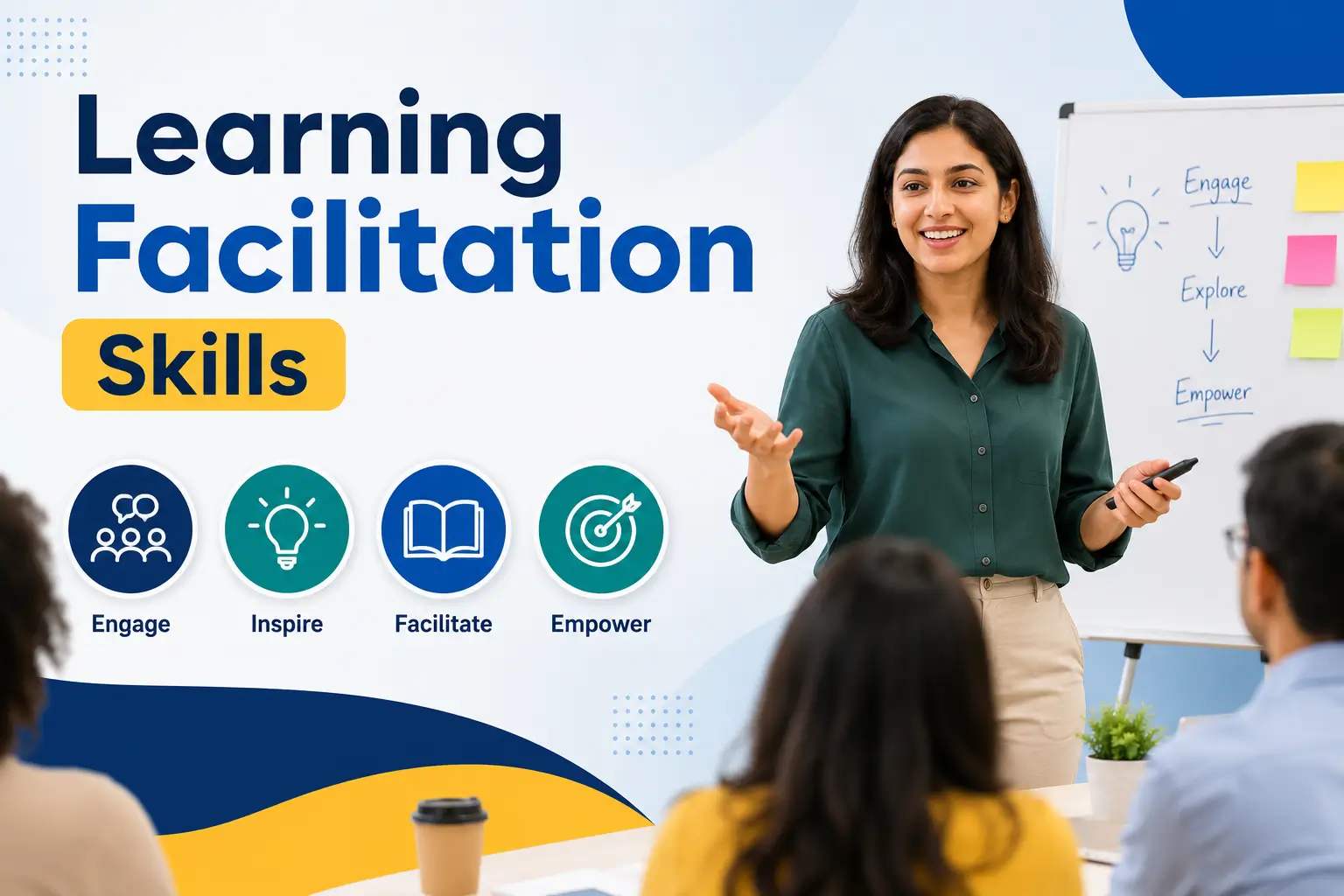
The Learning Facilitation Skills Course is a comprehensive professional development program designed to equip learners with the knowledge, techniques, and practical skills required to effectively facilitate learning in educational, corporate, and training environments. Facilitation goes beyond delivering information—it involves creating interactive, engaging, and learner-centered experiences that encourage participation, collaboration, critical thinking, and knowledge application.
As education and workplace learning continue to evolve, facilitators are expected to guide discussions, encourage active participation, support diverse learners, and create environments where individuals feel comfortable sharing ideas and learning from one another. Effective learning facilitators play a crucial role in improving learner engagement, increasing knowledge retention, promoting teamwork, and helping participants achieve their learning objectives.
This course provides learners with a strong foundation in learning facilitation by combining adult learning principles, instructional strategies, communication techniques, group management, and educational technology. Whether you are a teacher, corporate trainer, instructional designer, academic professional, workshop leader, education consultant, or aspiring facilitator, this course provides practical knowledge to support your professional development.
Course Overview
Learning facilitation focuses on guiding learners through meaningful educational experiences rather than simply presenting information. Successful facilitators encourage participation, ask thought-provoking questions, manage discussions, adapt to learner needs, and create supportive learning environments that promote continuous improvement.
This course introduces learners to facilitation models, instructional planning, learner engagement strategies, collaborative learning, communication techniques, group dynamics, conflict resolution, digital facilitation tools, and assessment methods. Participants gain practical insights into facilitating both face-to-face and online learning sessions effectively.
The curriculum combines educational theory with practical applications, enabling learners to facilitate workshops, classrooms, seminars, professional development programs, corporate training sessions, and virtual learning experiences.
What You Will Learn
The Learning Facilitation Skills Course covers a broad range of topics related to planning, delivering, and evaluating learner-centered educational experiences.
Learners begin by understanding the role of a learning facilitator and the differences between teaching, training, coaching, mentoring, and facilitation. They explore how facilitators support learning through guidance, interaction, and collaboration rather than traditional lectures.
The course introduces adult learning principles, learning styles, motivation theories, and learner-centered instructional approaches that help facilitators design engaging learning experiences for diverse audiences.
Participants study effective communication techniques, including active listening, verbal and non-verbal communication, questioning strategies, storytelling, presentation skills, and constructive feedback. These communication skills help facilitators create positive learning environments and encourage meaningful participation.
A major component of the course focuses on group facilitation techniques. Learners explore methods for managing discussions, encouraging collaboration, handling difficult participants, building trust, resolving conflicts, promoting teamwork, and maintaining productive group dynamics.
The course also examines active learning methodologies such as brainstorming, problem-based learning, case studies, role-playing, simulations, peer learning, collaborative projects, reflective activities, and experiential learning techniques that enhance learner engagement.
Participants gain practical knowledge of instructional planning, session design, learning objectives, lesson sequencing, activity development, time management, and resource preparation. These planning skills help facilitators organize effective and well-structured learning sessions.
Additionally, learners study digital facilitation strategies, including virtual classrooms, Learning Management Systems (LMS), video conferencing platforms, online collaboration tools, digital whiteboards, interactive polls, breakout rooms, and multimedia learning resources used in online education and remote training.
The curriculum also covers learner assessment, observation techniques, formative and summative evaluation, participant feedback, reflective practice, and continuous improvement methods that help facilitators measure learning effectiveness and enhance future sessions.
Finally, participants explore inclusive facilitation practices, accessibility, cultural awareness, emotional intelligence, ethical facilitation, and strategies for creating safe, respectful, and supportive learning environments for diverse groups.
Skills You Will Gain
Upon successful completion of the course, learners will develop valuable professional skills, including:
- Learning facilitation
- Group facilitation techniques
- Learner engagement strategies
- Active learning methods
- Adult learning principles
- Communication and presentation skills
- Active listening
- Questioning and discussion facilitation
- Conflict resolution
- Team collaboration
- Workshop planning
- Virtual facilitation
- Digital learning tools
- Learner assessment
- Feedback and continuous improvement
These skills are highly valued across schools, universities, corporate training organizations, government agencies, nonprofit organizations, consulting firms, and professional development programs.
Benefits of the Course
The Learning Facilitation Skills Course provides learners with practical techniques to lead engaging and effective learning experiences in educational and workplace settings.
Participants develop expertise in learner engagement, communication, instructional planning, collaborative learning, digital facilitation, and group management. These competencies improve learning effectiveness, participant satisfaction, and knowledge retention.
The course also strengthens leadership, interpersonal communication, critical thinking, coaching, and organizational skills that support career advancement in education, training, and learning and development.
As organizations increasingly adopt learner-centered approaches and collaborative training models, professionals with strong facilitation skills remain highly valued across industries.
Learners also gain confidence in adapting facilitation techniques to different audiences, learning environments, and educational objectives.
Who Should Enroll?
This course is ideal for:
- Teachers
- Trainers
- Corporate facilitators
- Instructional designers
- Learning and development professionals
- Academic coordinators
- Workshop facilitators
- Education consultants
- School administrators
- University faculty
- HR professionals
- Team leaders
- Coaches and mentors
- Nonprofit educators
- Anyone interested in improving facilitation skills
No prior facilitation experience is required. The course is suitable for beginners as well as experienced educators and trainers.
Career Opportunities
After completing the course, learners may pursue opportunities such as:
- Learning Facilitator
- Corporate Trainer
- Instructional Designer
- Learning and Development Specialist
- Workshop Facilitator
- Training Coordinator
- Education Consultant
- Faculty Trainer
- Academic Skills Coach
- Professional Development Facilitator
- Organizational Learning Specialist
- Employee Training Manager
- Community Education Facilitator
- Leadership Development Trainer
- Learning Experience Facilitator
Professionals with learning facilitation expertise are employed by educational institutions, corporate organizations, government agencies, nonprofit organizations, consulting firms, training providers, and online learning platforms.
Certification
Upon successful completion of the Learning Facilitation Skills Course, participants receive a certification recognizing their knowledge of learning facilitation, adult learning principles, communication strategies, learner engagement, group management, instructional planning, digital facilitation, and assessment techniques. This certification enhances professional credibility and supports career advancement in education, corporate training, instructional design, and learning and development.
Why Choose This Course?
The Learning Facilitation Skills Course combines learner-centered education principles with practical facilitation techniques to provide a comprehensive learning experience.
The curriculum focuses on communication, group facilitation, active learning, instructional planning, digital learning tools, assessment, inclusive education, and continuous improvement. Learners gain practical skills that help them facilitate engaging, interactive, and meaningful learning experiences across classrooms, workplaces, and virtual learning environments.
Whether your goal is to become a trainer, teacher, facilitator, instructional designer, learning consultant, or learning and development professional, this course provides the knowledge, practical skills, and confidence needed to succeed.
Enroll today and build a strong foundation in learning facilitation, learner engagement, instructional communication, collaborative learning, and professional training.
FAQ Section
1. What is the Learning Facilitation Skills Course?
The course teaches learners how to facilitate engaging, learner-centered educational and training sessions using effective communication, collaboration, and active learning techniques.
2. Is this course suitable for beginners?
Yes. The course is designed for beginners as well as experienced educators, trainers, and facilitators.
3. What topics are covered in this course?
Topics include learning facilitation, adult learning principles, communication skills, group facilitation, learner engagement, instructional planning, digital facilitation, assessment, and feedback.
4. Will I receive a certificate after completing the course?
Yes. Participants receive a certificate upon successful completion of the course.
5. Do I need prior teaching or facilitation experience?
No. The course introduces facilitation concepts in a practical and beginner-friendly manner.
6. Who should enroll in this course?
Teachers, trainers, facilitators, instructional designers, HR professionals, learning and development specialists, education consultants, and workshop leaders can benefit from this course.
7. Is the course fully online?
Yes. The course offers flexible online learning, allowing participants to study at their own pace.
8. What skills will I gain?
You will gain skills in learning facilitation, communication, learner engagement, group management, active learning, workshop planning, digital facilitation, assessment, and constructive feedback.
9. Can this course improve my career opportunities?
Yes. Learning facilitation skills are highly valued in schools, universities, corporate training departments, nonprofit organizations, consulting firms, and professional development programs.
10. Why are learning facilitation skills important?
Learning facilitation skills help create engaging, interactive, and inclusive learning experiences that improve participation, collaboration, critical thinking, knowledge retention, and overall learning outcomes.


Reviews
There are no reviews yet.