
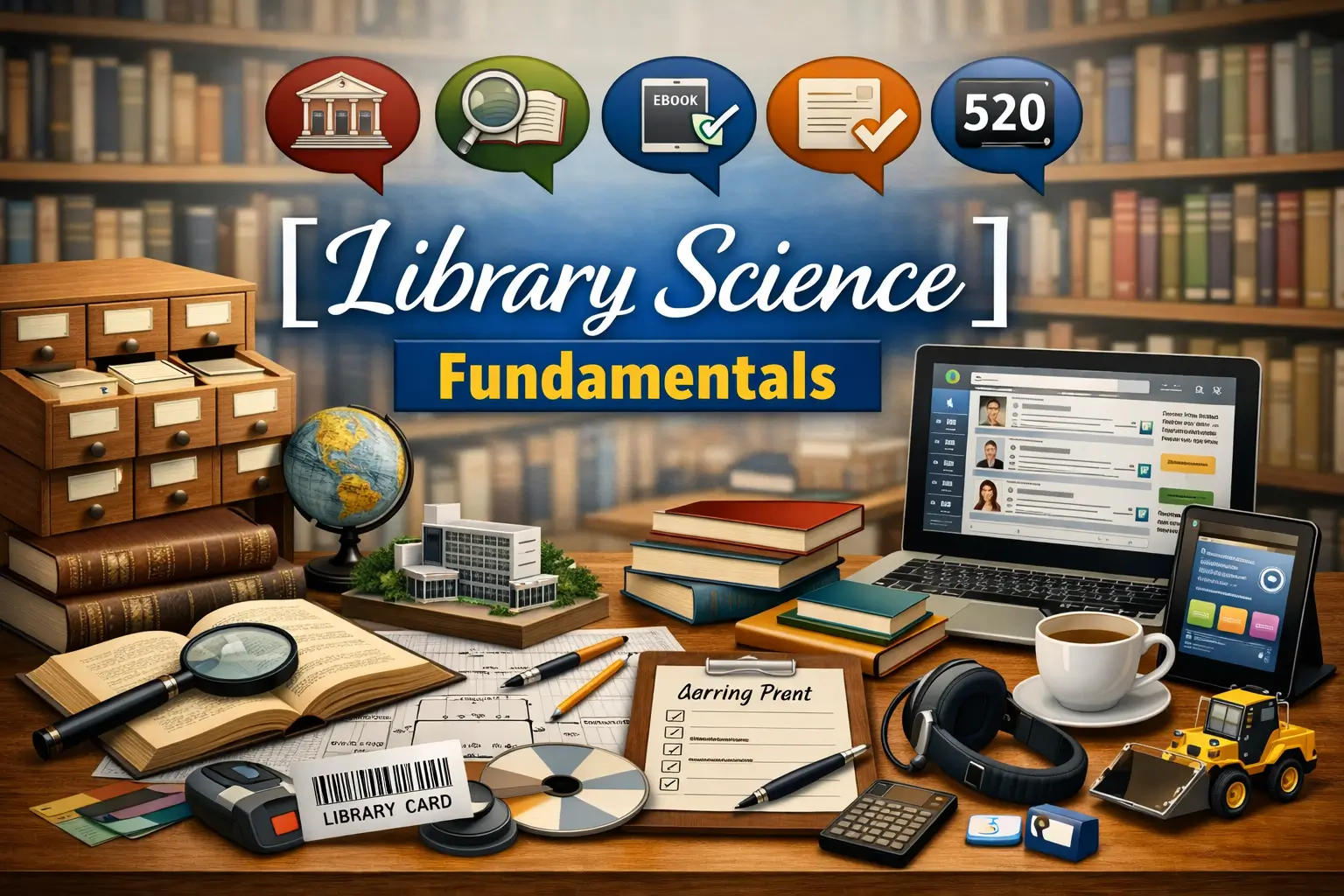
Library Science Fundamentals Course
The Library Science Fundamentals Course is designed to provide learners with a comprehensive understanding of library operations, information management, cataloging systems, and library services. Libraries play a vital role in organizing, preserving, and providing access to knowledge, making library science an essential field for education, research, and information management.
This course introduces learners to the principles of library science, cataloging and classification methods, library administration, information organization, digital library systems, and user services. Whether you are a student, aspiring librarian, educator, administrative professional, or information management enthusiast, this course provides a strong foundation in modern library practices.
Why Learn Library Science Fundamentals?
Libraries have evolved beyond traditional book collections and now serve as information hubs that support learning, research, and digital access to knowledge. Understanding library science helps individuals manage information resources effectively and provide valuable services to library users.
Learning library science fundamentals equips learners with organizational, research, and information management skills that are valuable in educational institutions, public libraries, research centers, and corporate knowledge management environments.
What You Will Learn
This course covers key topics, including:
- Introduction to library science
- History and evolution of libraries
- Library organization and administration
- Cataloging and classification systems
- Information storage and retrieval
- Library user services
- Collection development basics
- Digital library concepts
- Information management principles
- Library technology and automation
Practical Learning Experience
Learners will explore real-world library operations and understand how information resources are organized, managed, and accessed. Through practical examples and case studies, participants will gain insights into cataloging systems, library workflows, and modern information services.
The course also highlights the growing importance of digital libraries and technology-driven information management.
Benefits of the Course
Completing the Library Science Fundamentals Course offers several benefits:
- Understand library operations and management
- Learn cataloging and classification techniques
- Develop information organization skills
- Gain knowledge of digital library systems
- Improve research and information retrieval abilities
- Build administrative and management competencies
- Enhance career opportunities in libraries and information services
- Gain practical knowledge of library technologies
Who Should Enroll?
This course is ideal for:
- Students interested in library science
- Aspiring librarians
- Teachers and educators
- Administrative professionals
- Research assistants
- Information management personnel
- Academic support staff
- Library volunteers
- Knowledge management professionals
- Anyone interested in information services
No prior experience is required. The course is beginner-friendly and suitable for learners from all educational backgrounds.
Career Opportunities
After completing this course, learners can pursue or support roles such as:
- Library Assistant
- Library Technician
- Information Services Assistant
- Library Administrator
- Documentation Assistant
- Research Support Assistant
- Knowledge Management Associate
- Academic Library Support Staff
The skills gained through this course are applicable in schools, colleges, universities, public libraries, research institutions, archives, and corporate information centers.
Certification
Upon successful completion of the Library Science Fundamentals Course, learners receive a certification demonstrating their knowledge of library operations, information management, cataloging systems, and library services.
Conclusion
Library science is a dynamic field that combines information management, technology, and user services. The Library Science Fundamentals Course equips learners with practical skills and foundational knowledge needed to manage information resources effectively and support learning communities. Enroll today to begin your journey into the world of library and information science.
9. FAQ SECTION
Q1. What is library science?
Library science is the study of organizing, managing, and providing access to information resources in libraries and information centers.
Q2. Who should take this course?
Students, aspiring librarians, educators, administrative professionals, and anyone interested in information management.
Q3. Do I need prior experience?
No. This course is designed for beginners and requires no previous library science knowledge.
Q4. What topics are covered?
Topics include library management, cataloging, classification, digital libraries, and information services.
Q5. What is cataloging in library science?
Cataloging is the process of organizing and describing library materials to make them easy to locate and access.
Q6. Will I learn about digital libraries?
Yes. The course covers digital library concepts and modern information management systems.
Q7. Is this course useful for educational careers?
Yes. It is valuable for individuals working in schools, colleges, universities, and research institutions.
Q8. Can this course help with library jobs?
Yes. It provides foundational skills required for entry-level library and information service roles.
Q9. Will I receive a certificate?
Yes. Participants receive a certificate after successful completion of the course.
Q10. Is the course beginner-friendly?
Yes. It is suitable for learners from all educational backgrounds.


Reviews
There are no reviews yet.