
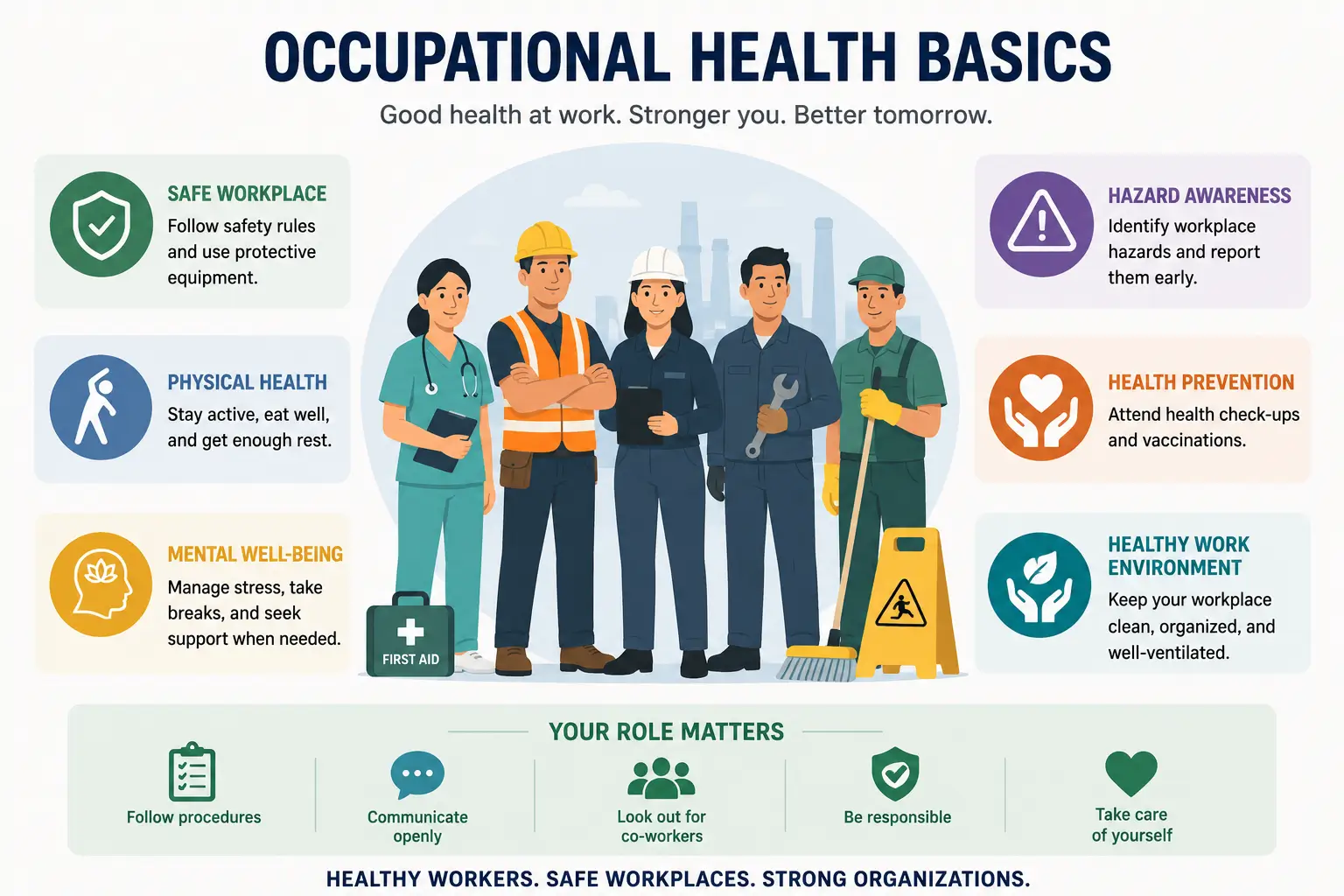
Introduction to Occupational Health Basics
The Occupational Health Basics course provides learners with an introduction to workplace health, safety principles, and employee well-being practices. Occupational health focuses on preventing injuries, controlling hazards, and creating safe working environments in all types of industries.
A safe workplace is essential for employee productivity and organizational success. This course explains how occupational health practices help reduce risks, improve working conditions, and ensure safety for all employees.
Learners are introduced to the importance of identifying workplace hazards, following safety procedures, and maintaining healthy work environments.
Importance of Occupational Health Basics
Workplace health and safety are critical for protecting employees and improving efficiency.
The Occupational Health Basics course helps learners:
- Understand workplace hazards
- Improve safety awareness
- Learn risk prevention methods
- Promote employee well-being
- Reduce workplace accidents
- Understand safety regulations
- Develop safe working habits
- Improve productivity
Good occupational health practices create safer and more efficient workplaces.
Understanding Workplace Health and Safety
Workplace safety involves protecting employees from harm.
Learners explore:
Workplace Hazards
Understanding physical, chemical, biological, and ergonomic risks.
Safety Awareness
Learning how to recognize unsafe conditions.
Health Protection
Understanding measures to prevent injuries and illnesses.
Workplace Responsibility
Learning how employees contribute to safety.
These concepts form the foundation of occupational health.
Hazard Identification and Risk Assessment
Identifying risks is essential for preventing accidents.
The course introduces:
Hazard Detection
Recognizing dangerous conditions in the workplace.
Risk Evaluation
Understanding the severity and likelihood of hazards.
Preventive Measures
Learning how to reduce or eliminate risks.
Safety Planning
Developing strategies for workplace protection.
Risk assessment helps maintain safe environments.
Workplace Safety Practices
Safe practices reduce accidents and injuries.
Learners understand:
Safe Work Procedures
Following proper steps during tasks.
Equipment Safety
Using tools and machines correctly.
Protective Measures
Using safety gear and equipment.
Safety Compliance
Following workplace safety rules.
These practices improve workplace security.
Health and Hygiene in the Workplace
Maintaining hygiene is important for employee health.
The course covers:
- Clean working environments
- Personal hygiene practices
- Sanitation awareness
- Infection prevention
- Healthy workplace habits
Good hygiene reduces health risks and improves well-being.
Emergency Preparedness and Response
Workplaces must be prepared for emergencies.
Learners explore:
Emergency Planning
Understanding how to prepare for accidents.
First Response Awareness
Learning basic response actions.
Evacuation Procedures
Understanding safe exit strategies.
Crisis Management
Handling unexpected situations effectively.
Preparedness improves safety outcomes.
Occupational Health Regulations
Safety laws protect employees at work.
Learners understand:
- Workplace safety rules
- Health standards
- Legal responsibilities
- Compliance requirements
- Safety inspections
Following regulations ensures safe working conditions.
Employee Well-being and Health Awareness
Occupational health also focuses on employee wellness.
The course introduces:
Physical Well-being
Maintaining good health at work.
Mental Health Awareness
Understanding stress and workload management.
Work-Life Balance
Balancing job and personal life.
Healthy Work Environment
Creating supportive workplaces.
Employee well-being improves productivity.
Risk Prevention Strategies
Preventing hazards is better than reacting to accidents.
Learners explore:
- Safety training importance
- Regular inspections
- Proper workplace organization
- Safe handling procedures
- Awareness programs
Prevention reduces workplace injuries.
Skills You Will Gain
After completing this course, learners may develop:
- Workplace safety awareness
- Hazard identification skills
- Risk assessment knowledge
- Emergency response understanding
- Hygiene awareness
- Safety compliance knowledge
- Employee well-being awareness
- Preventive safety skills
Benefits of Occupational Health Basics Course
This course provides several benefits:
- Improved workplace safety understanding
- Reduced risk awareness
- Better health practices
- Increased productivity awareness
- Knowledge of safety regulations
- Stronger emergency preparedness
- Improved employee well-being understanding
Who Should Join
This course is suitable for:
- Employees
- Students
- Supervisors
- Safety assistants
- Workplace managers
- Industrial workers
- Beginners interested in safety
No previous experience is required.
Career Opportunities
After completing this course, learners may explore:
- Safety Assistant
- Occupational Health Support Staff
- Workplace Safety Coordinator Assistant
- Industrial Safety Helper
- Health and Safety Assistant
- Compliance Support Staff
- Workplace Welfare Assistant
FAQ Section
1. What is Occupational Health Basics?
Occupational Health Basics is a beginner course that teaches workplace safety, health protection, hazard awareness, and employee well-being.
2. Who can join this course?
Employees, students, supervisors, and beginners interested in workplace safety can join.
3. Do I need prior experience?
No, this course is designed for beginners.
4. What will I learn in this course?
You will learn about workplace hazards, safety practices, risk management, and health awareness.
5. Why is occupational health important?
It helps prevent workplace injuries, improves safety, and ensures employee well-being.
6. Does this course cover safety rules?
Yes, learners understand basic workplace safety regulations and compliance.
7. What skills will I gain?
You will gain safety awareness, risk management skills, and workplace health knowledge.
8. Is this course suitable for beginners?
Yes, it is designed for learners with no prior safety experience.
9. Can this course help in industrial jobs?
Yes, it provides foundational knowledge useful in industrial and workplace environments.
10. How does this course improve workplace safety?
It teaches hazard identification, preventive measures, and safe working practices.





Reviews
There are no reviews yet.