
Introduction
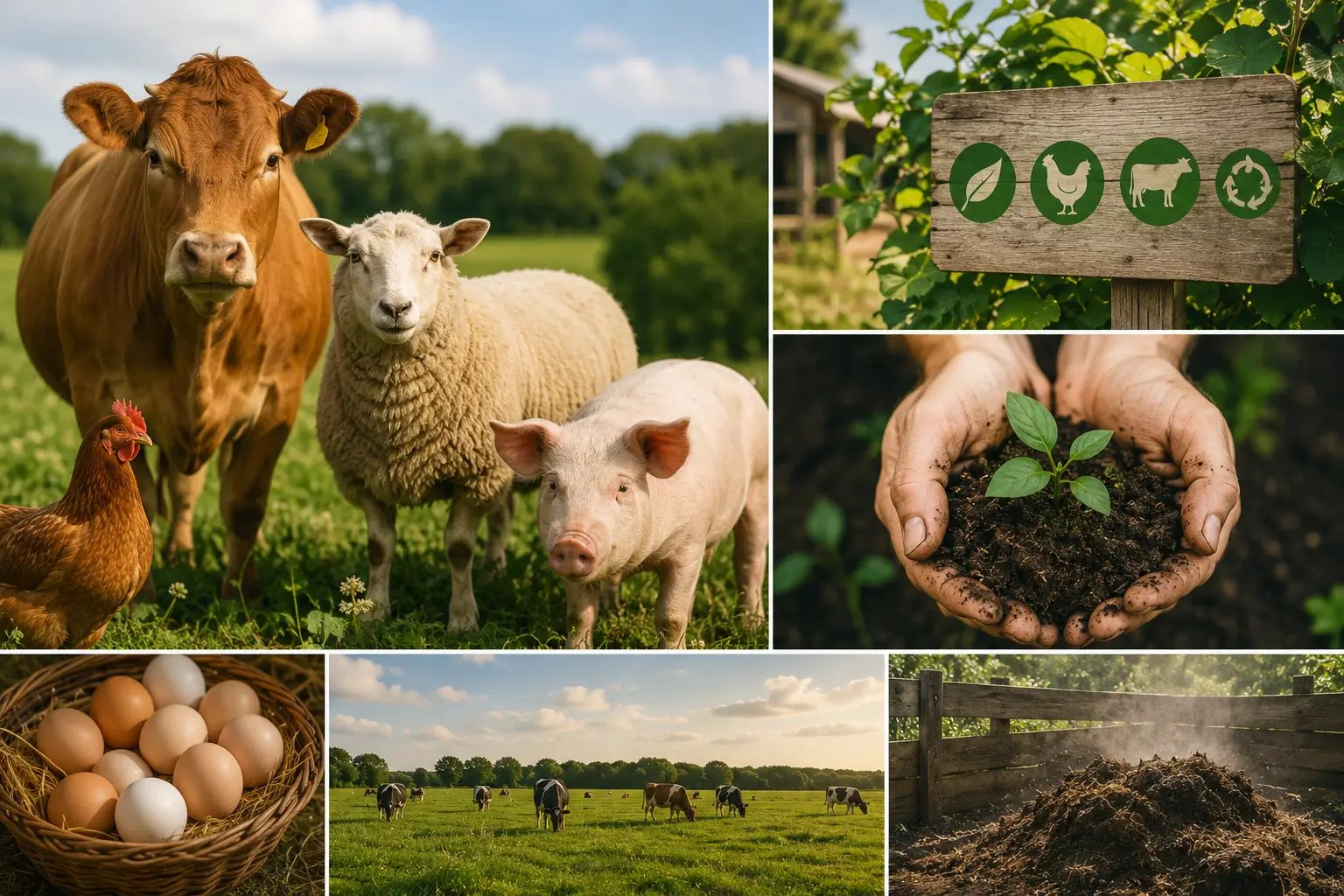
The Organic Livestock Practices Course helps learners understand natural and sustainable methods of animal farming. It focuses on animal health, organic feeding, and eco-friendly farming techniques.
Therefore, learners develop knowledge about responsible livestock care and sustainable agriculture.
Importance of Organic Livestock Practices Course
This course is important because sustainable farming improves animal health and environmental balance. First, learners understand natural feeding systems. Then, they learn how to maintain livestock without harmful chemicals.
Moreover, it promotes ethical and eco-friendly farming. Therefore, learners contribute to healthier food production systems.
In addition, it supports rural development and agricultural sustainability.
Key Learning Areas
Organic Feeding Practices
Learners understand natural feed and nutrition methods for livestock.
Animal Health Management
Learners study basic animal care and disease prevention.
Sustainable Farming Methods
Learners learn eco-friendly livestock management techniques.
Dairy and Livestock Basics
Learners explore milk production and animal productivity basics.
Skills You Will Gain
- Organic animal care knowledge
- Livestock management skills
- Sustainable farming understanding
- Basic dairy farming knowledge
- Animal health awareness
- Eco-friendly farming practices
Benefits
This course helps learners understand natural farming systems. First, it improves knowledge of animal care. In addition, it supports sustainable agriculture practices.
Moreover, learners contribute to healthier food production. As a result, farming becomes more eco-friendly and efficient.
Who Should Join
- Farmers
- Students
- Agriculture learners
- Rural youth
- Beginners in farming
No prior experience is required.
Career Opportunities
- Livestock Assistant
- Dairy Farm Helper
- Organic Farming Support Staff
- Animal Care Assistant
- Rural Agriculture Work





Reviews
There are no reviews yet.