
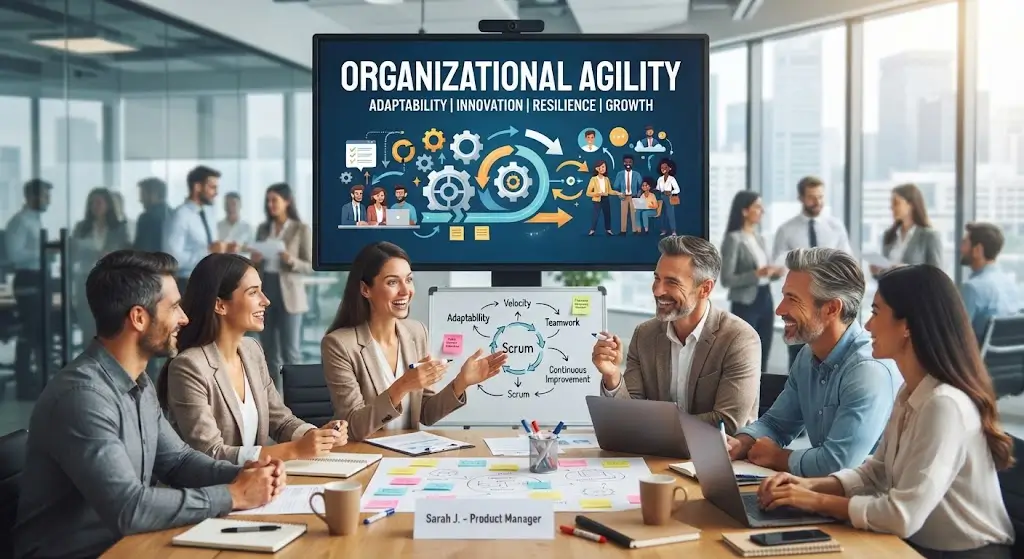
Introduction to Organizational Agility
Organizational Agility is the ability of an organization to respond effectively to changing market conditions, customer expectations, technological advancements, and business challenges. Organizations that embrace agility can innovate faster, improve collaboration, and achieve sustainable competitive advantage.
This course provides practical knowledge of agile thinking, adaptive leadership, organizational flexibility, change management, continuous improvement, and business transformation. Learners gain the skills needed to support agile organizations in today’s rapidly evolving business environment.
Understanding Organizational Agility
Modern businesses operate in environments where change is constant. Organizations must continuously evaluate opportunities, respond to customer needs, and improve internal processes to remain competitive.
Learners explore important concepts, including:
- Agile leadership
- Organizational adaptability
- Business flexibility
- Change management
- Innovation management
- Continuous improvement
These concepts help organizations respond confidently to evolving business demands.
Building Agile Organizations
Creating an agile organization requires collaboration, effective leadership, and a culture that supports learning and innovation. Teams must communicate effectively, embrace change, and continuously improve their ways of working.
The course explains practical approaches for:
- Organizational transformation
- Agile decision-making
- Cross-functional collaboration
- Performance improvement
- Employee engagement
- Customer-focused operations
Leadership and Change Management
Successful leaders guide organizations through change while maintaining productivity and employee engagement. Strong leadership encourages innovation, supports teamwork, and helps organizations achieve strategic objectives.
Learners understand how leadership contributes to resilience, adaptability, and organizational growth.
Continuous Improvement and Innovation
Continuous improvement enables organizations to identify opportunities, solve operational challenges, and improve business performance over time. Innovation encourages creative thinking and supports sustainable success in competitive markets.
Organizations that combine agility with continuous improvement are better prepared to achieve long-term growth.
Skills You Will Develop
After completing this course, learners will understand:
- Organizational agility principles
- Agile leadership
- Change management
- Business adaptability
- Innovation management
- Team collaboration
- Strategic thinking
- Performance improvement
- Continuous improvement
- Organizational transformation
Who Should Enroll?
This course is suitable for:
- Students
- Business professionals
- Team leaders
- Managers
- Entrepreneurs
- Human resource professionals
- Operations executives
- Change management professionals
No previous experience is required.
Career Opportunities
This course supports careers such as:
- Change Management Specialist
- Business Transformation Executive
- Operations Manager
- Project Leader
- Human Resource Manager
- Organizational Development Specialist
- Business Consultant
- Team Leader
FAQ Section (Frequently Asked Questions)
Who can enroll in this course?
This course is suitable for students, professionals, managers, entrepreneurs, HR specialists, team leaders, and anyone interested in improving workplace adaptability and organizational performance.
What will I learn during the training?
You will learn agile leadership, change management, innovation strategies, collaboration techniques, continuous improvement, business adaptability, and organizational transformation principles.
Is this course suitable for beginners?
Yes. The course introduces the fundamentals first and gradually explains practical concepts through business-focused examples.
Why is organizational agility important in today’s business environment?
Organizations that adapt quickly to changing customer expectations, technology, and market conditions are better positioned to remain competitive and achieve sustainable growth.
Which topics are covered in the course?
The course covers adaptive leadership, organizational change, innovation management, agile thinking, collaboration, strategic planning, business resilience, and performance improvement.
How can these concepts be applied in the workplace?
The knowledge gained helps improve teamwork, support organizational change, strengthen decision-making, increase flexibility, and improve operational performance.
What professional skills will I develop?
You will strengthen leadership, communication, collaboration, analytical thinking, strategic planning, change management, innovation, and problem-solving skills.
Which industries benefit from these practices?
Technology, healthcare, manufacturing, finance, retail, logistics, education, consulting, government, and service organizations all benefit from agile business practices.
Can this course support career growth?
Yes. It supports professional development in organizational development, project leadership, operations management, business consulting, HR management, and change management.
What can I achieve after completing the course?
After completing the program, you will understand how organizations adapt to change, improve collaboration, lead transformation initiatives, and build resilient, high-performing teams.


Reviews
There are no reviews yet.