
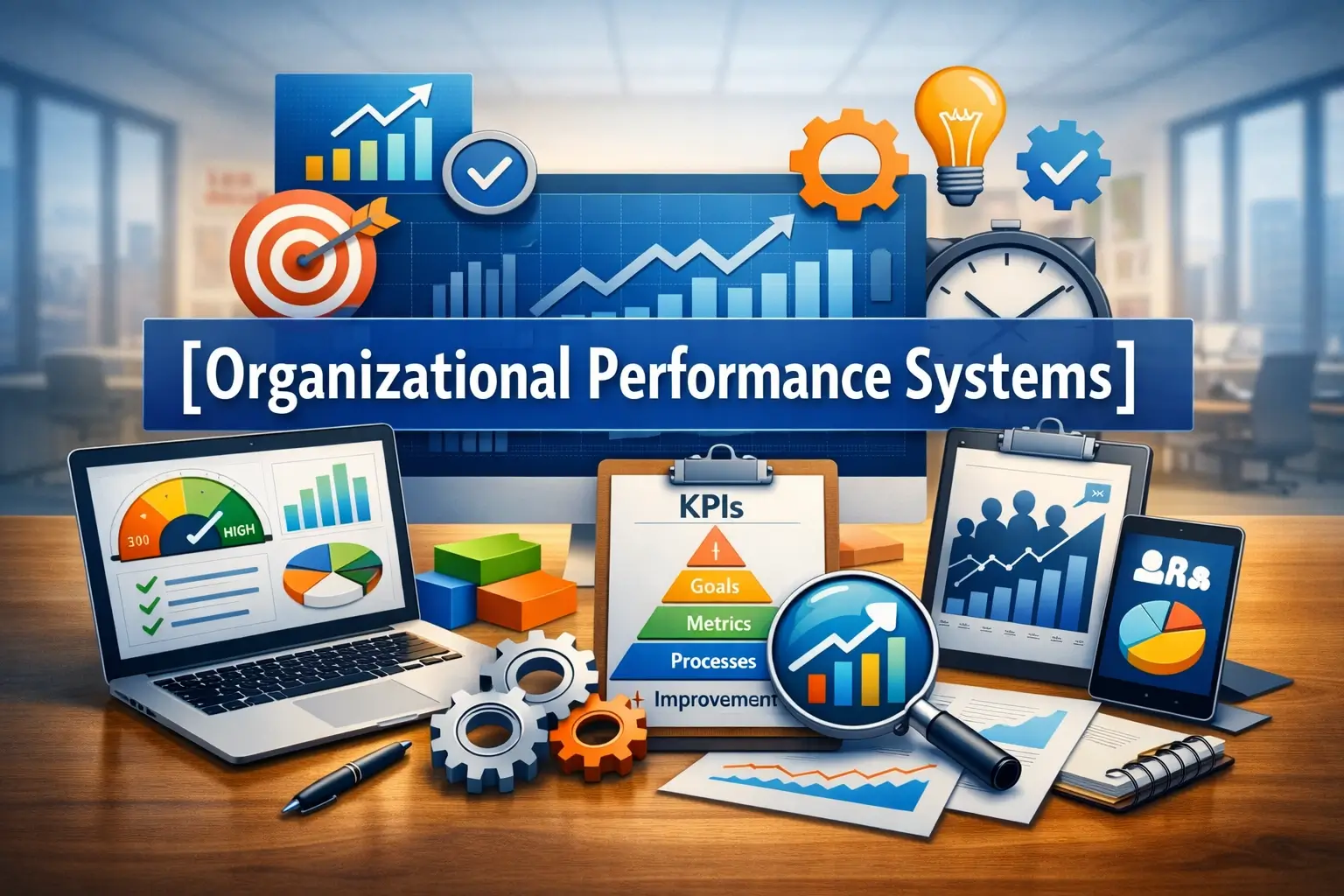
Introduction to Organizational Performance Systems
The Organizational Performance Systems course provides learners with a comprehensive introduction to how organizations measure, manage, and improve performance. In modern businesses, success depends not only on effort but also on structured systems that track progress and ensure efficiency.
Performance systems help organizations understand whether goals are being achieved and how effectively resources are being used. This course helps learners understand how these systems are designed and implemented.
Learners are introduced to key concepts such as performance metrics, productivity analysis, and organizational goal alignment.
Importance of Organizational Performance Systems
Performance systems are critical for business success.
The Organizational Performance Systems course helps learners:
- Understand performance measurement
- Improve business efficiency awareness
- Learn KPI tracking methods
- Develop analytical thinking
- Understand workflow optimization
- Support decision-making processes
- Improve productivity understanding
- Learn management fundamentals
Strong performance systems lead to better organizational outcomes.
Understanding Organizational Performance
Organizational performance refers to how well a company achieves its goals.
Learners explore:
What is Organizational Performance
Understanding business success measurement.
Performance Measurement
Learning how results are tracked.
Efficiency vs Effectiveness
Understanding productivity concepts.
Organizational Goals
Aligning work with objectives.
These basics form the foundation of performance systems.
Key Performance Indicators (KPIs)
KPIs are essential for tracking success.
The course covers:
What are KPIs
Understanding measurable performance indicators.
Types of KPIs
Financial, operational, and employee-based metrics.
KPI Tracking
Monitoring progress over time.
Performance Goals
Setting achievable targets.
KPIs help measure success clearly.
Performance Management Systems
These systems help manage employee and organizational performance.
Learners understand:
Goal Setting Systems
Defining clear objectives.
Feedback Mechanisms
Improving performance through evaluation.
Appraisal Systems
Assessing employee performance.
Continuous Improvement
Enhancing efficiency over time.
These systems support structured growth.
Workflow and Process Optimization
Efficient workflows improve productivity.
The course introduces:
Workflow Design
Structuring tasks effectively.
Process Mapping
Understanding business operations.
Bottleneck Identification
Finding inefficiencies.
Optimization Techniques
Improving processes for better results.
Better workflows increase efficiency.
Data-Driven Decision Making
Organizations rely on data for decisions.
Learners explore:
Performance Data
Collecting relevant information.
Data Analysis Basics
Understanding trends and patterns.
Reporting Systems
Presenting performance results.
Decision Support Systems
Using data for planning.
Data improves accuracy in decisions.
Employee Performance and Productivity
People are central to organizational performance.
The course covers:
Productivity Measurement
Tracking employee output.
Motivation Techniques
Improving performance through engagement.
Skill Development
Enhancing workforce abilities.
Workplace Efficiency
Improving daily operations.
Employees drive organizational success.
Continuous Improvement Systems
Organizations must evolve constantly.
Learners understand:
Feedback Loops
Using feedback for improvement.
Quality Management
Ensuring consistent standards.
Performance Reviews
Evaluating progress regularly.
Improvement Strategies
Enhancing systems over time.
Continuous improvement ensures long-term success.
Skills You Will Gain
After completing this course, learners may develop:
- Performance analysis skills
- KPI understanding
- Business management awareness
- Analytical thinking
- Problem-solving abilities
- Workflow optimization skills
- Organizational planning knowledge
- Data interpretation skills
Benefits of Organizational Performance Systems Course
This course provides several benefits:
- Better understanding of business operations
- Improved management skills
- Strong analytical thinking
- Enhanced productivity awareness
- Knowledge of performance tracking
- Foundation for management careers
Who Should Join
This course is suitable for:
- Students
- Beginners
- Management learners
- HR assistants
- Business professionals
- Entrepreneurs
- Operations learners
No prior experience is required.
Career Opportunities
After completing this course, learners may explore:
- Operations Assistant
- HR Performance Assistant
- Business Analyst Trainee
- Administrative Assistant
- Management Support Staff
- Productivity Analyst Assistant
FAQ Section
1. What is Organizational Performance Systems?
It is a course that teaches how organizations measure and improve performance using structured systems.
2. Who can join this course?
Students, beginners, and business learners can join.
3. Do I need experience?
No, it is designed for beginners.
4. What will I learn in this course?
You will learn KPIs, performance tracking, workflow systems, and productivity measurement.
5. Why are performance systems important?
They help organizations achieve goals efficiently.
6. Does this course cover KPIs?
Yes, it includes detailed KPI understanding.
7. What skills will I gain?
You will gain analytical and management-related skills.
8. Is this course suitable for beginners?
Yes, it is beginner-friendly.
9. Can this course help in management careers?
Yes, it provides foundational knowledge for management roles.
10. How does this course improve productivity understanding?
It teaches how performance and efficiency are measured and improved.



Reviews
There are no reviews yet.