
Introduction
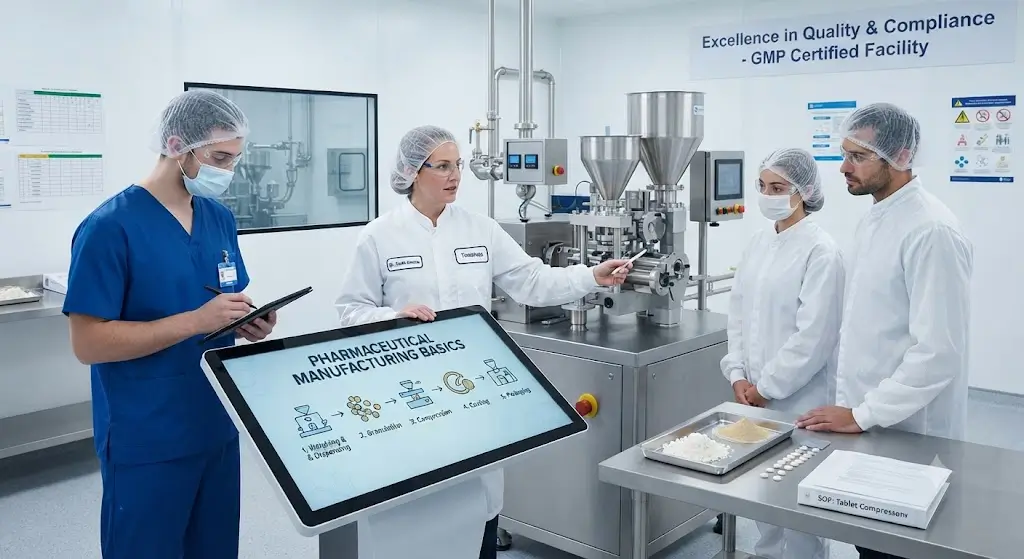
The Pharmaceutical Manufacturing Basics Course is a comprehensive training program designed to help learners understand the fundamental processes involved in the manufacturing of pharmaceutical products. Pharmaceutical manufacturing is a highly regulated industry that requires precision, quality assurance, regulatory compliance, and strict adherence to safety standards. Professionals working in pharmaceutical production play a critical role in ensuring that medicines are manufactured consistently, safely, and according to established quality guidelines.
This course introduces learners to pharmaceutical manufacturing processes, production planning, Good Manufacturing Practices (GMP), quality control, quality assurance, equipment handling, documentation, safety procedures, and regulatory requirements. Participants also gain practical knowledge of manufacturing workflows, packaging, process validation, and contamination control.
Whether you are a pharmacy student, science graduate, pharmaceutical professional, manufacturing employee, quality assurance executive, or someone interested in the pharmaceutical industry, this course provides industry-focused knowledge and practical skills that support professional development and career growth.
Course Overview
Pharmaceutical manufacturing involves transforming raw materials into safe and effective medicines through carefully controlled production processes. Every stage of manufacturing requires attention to quality, accuracy, hygiene, and regulatory compliance to ensure products meet industry standards.
Throughout this course, learners explore pharmaceutical production systems, manufacturing equipment, process documentation, quality management, packaging operations, safety protocols, and production monitoring. The curriculum combines theoretical concepts with practical industry applications to prepare learners for modern pharmaceutical manufacturing environments.
What You Will Learn
During this course, learners will explore:
- Fundamentals of pharmaceutical manufacturing
- Drug production processes
- Good Manufacturing Practices (GMP)
- Pharmaceutical quality assurance
- Quality control procedures
- Manufacturing equipment basics
- Production planning and workflow
- Pharmaceutical documentation
- Packaging and labeling processes
- Process validation concepts
- Contamination prevention
- Workplace safety standards
- Regulatory compliance
- Manufacturing quality improvement
- Professional responsibilities in pharmaceutical production
Skills You Will Gain
After completing the course, learners will develop valuable skills including:
- Pharmaceutical production management
- GMP compliance awareness
- Manufacturing documentation
- Quality assurance practices
- Quality control understanding
- Equipment operation awareness
- Safety compliance
- Process monitoring
- Team collaboration
- Problem-solving and analytical thinking
These skills are highly valued across pharmaceutical manufacturing companies, biotechnology firms, contract manufacturing organizations, quality laboratories, research facilities, and healthcare industries.
Benefits of the Course
This course provides learners with a strong understanding of pharmaceutical manufacturing principles and industry standards. Participants develop practical knowledge of production processes, quality management, documentation, and regulatory compliance that supports efficient manufacturing operations.
The program also strengthens organizational skills, attention to detail, teamwork, communication, and professional responsibility. As the pharmaceutical industry continues to expand globally, trained professionals with manufacturing knowledge remain in demand across production and quality-related roles.
Who Should Enroll?
This course is ideal for:
- Pharmacy students
- Pharmaceutical professionals
- Science graduates
- Manufacturing technicians
- Quality assurance professionals
- Quality control staff
- Production supervisors
- Biotechnology professionals
- Healthcare professionals
- Individuals interested in pharmaceutical manufacturing
No prior pharmaceutical manufacturing experience is required, making this course suitable for beginners and working professionals alike.
Career Opportunities
After completing this course, learners may pursue opportunities such as:
- Pharmaceutical Production Executive
- Manufacturing Technician
- Quality Assurance Executive
- Quality Control Assistant
- Production Supervisor
- GMP Compliance Associate
- Packaging Operations Executive
- Pharmaceutical Manufacturing Associate
- Production Coordinator
- Pharmaceutical Process Technician
The knowledge gained through this course can be applied across pharmaceutical manufacturing companies, biotechnology organizations, research laboratories, contract manufacturing firms, healthcare industries, and pharmaceutical production facilities.
Certification
Upon successful completion of the course, participants receive a professional certification recognizing their understanding of pharmaceutical manufacturing processes, GMP principles, quality assurance, quality control, documentation, safety procedures, and regulatory compliance. This certification enhances professional credibility and supports career advancement within the pharmaceutical manufacturing sector.
Why Choose This Course?
This course combines pharmaceutical manufacturing fundamentals with practical industry applications to provide learners with a comprehensive educational experience. The curriculum focuses on production processes, GMP compliance, quality assurance, manufacturing documentation, equipment handling, packaging, safety, and regulatory standards.
Learners gain practical knowledge that prepares them for real-world pharmaceutical manufacturing environments while building confidence in production and quality management practices. Whether your goal is to begin a career in pharmaceutical manufacturing or strengthen your existing industry knowledge, this course provides the essential skills needed for long-term success.
Start Your Learning Journey
Pharmaceutical manufacturing is essential for delivering safe, effective, and high-quality medicines to patients worldwide. By completing this course, learners develop practical knowledge, professional skills, and industry awareness that support rewarding career opportunities in pharmaceutical production and quality management.
FAQ Section
1. What is pharmaceutical manufacturing?
Pharmaceutical manufacturing involves producing medicines through controlled processes while maintaining quality, safety, and regulatory compliance.
2. Is this course suitable for beginners?
Yes. The course is designed for beginners, pharmacy students, science graduates, and professionals interested in pharmaceutical manufacturing.
3. What topics are covered?
Topics include pharmaceutical production, Good Manufacturing Practices (GMP), quality assurance, quality control, documentation, packaging, manufacturing equipment, safety procedures, and regulatory compliance.
4. Will I receive a certificate?
Yes. Participants receive a certificate after successfully completing the course.
5. Do I need previous manufacturing experience?
No. The course explains pharmaceutical manufacturing concepts in a beginner-friendly format.
6. Who should enroll?
Pharmacy students, pharmaceutical professionals, manufacturing technicians, quality assurance staff, biotechnology professionals, and anyone interested in pharmaceutical production.
7. Is the course available online?
Yes. The course offers flexible online learning, allowing participants to study according to their own schedule.
8. What skills will I gain?
You will develop skills in pharmaceutical production, GMP compliance, quality assurance, quality control, manufacturing documentation, process monitoring, and workplace safety.
9. Can this course improve my career opportunities?
Yes. Pharmaceutical manufacturing knowledge is highly valued across pharmaceutical companies, biotechnology firms, production facilities, and quality laboratories.
10. Why are Good Manufacturing Practices (GMP) important?
GMP helps ensure medicines are consistently produced and controlled according to quality standards, improving product safety, reliability, and regulatory compliance.



Reviews
There are no reviews yet.