
Introduction
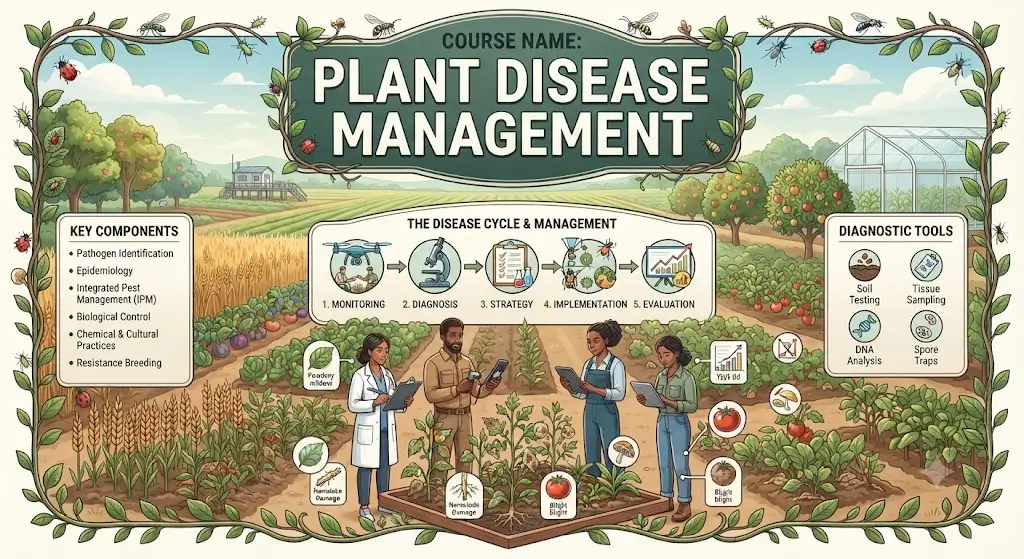
Healthy crops are essential for ensuring food security, agricultural sustainability, and economic growth. However, plant diseases continue to threaten crop production by reducing yield, lowering product quality, and increasing production costs. The Plant Disease Management Course introduces learners to the scientific principles and practical techniques used to identify, prevent, and control plant diseases in modern agriculture. As farming systems become more advanced, the need for professionals with expertise in plant disease management continues to grow.
Plant diseases are caused by various pathogens, including fungi, bacteria, viruses, nematodes, and other microorganisms. Therefore, understanding how these pathogens develop, spread, and affect crops is essential for protecting agricultural productivity. This course provides learners with a systematic understanding of disease diagnosis, disease cycles, host-pathogen interactions, and effective disease control strategies.
Moreover, the course emphasizes integrated disease management approaches that combine cultural, biological, mechanical, and chemical methods to reduce disease incidence while minimizing environmental impact. Learners also become familiar with disease surveillance, crop monitoring, resistant crop varieties, and sustainable farming practices that improve long-term crop health.
In addition, participants develop analytical and problem-solving skills that enable them to diagnose plant diseases accurately and recommend appropriate management solutions. These competencies are valuable for careers in agriculture, horticulture, crop protection, agribusiness, research institutions, and government agricultural organizations.
By completing this course, learners establish a strong foundation in plant pathology and disease management while preparing themselves to support healthy crop production and sustainable agricultural development.
Course Overview
The Plant Disease Management Course provides comprehensive training in plant pathology, disease diagnosis, integrated disease management, and modern crop protection practices. Furthermore, the course explains how scientific disease management contributes to healthier crops, improved agricultural productivity, and sustainable farming systems.
Fundamentals of Plant Pathology
The course begins by introducing the principles of plant pathology and the importance of disease management in agriculture. Learners understand the relationship between plants, pathogens, and environmental conditions that influence disease development. Consequently, they gain a strong scientific foundation for diagnosing and managing crop diseases.
Types of Plant Diseases
Next, learners explore different categories of plant diseases caused by fungi, bacteria, viruses, nematodes, phytoplasmas, and other disease-causing organisms. Moreover, the course explains the characteristics, symptoms, and transmission methods associated with each type of pathogen.
Disease Identification and Diagnosis
Accurate diagnosis is the first step in effective disease management. Therefore, participants learn to recognize disease symptoms, identify signs of infection, distinguish nutrient deficiencies from diseases, and apply laboratory and field diagnostic techniques.
Disease Cycle and Epidemiology
Understanding how diseases develop and spread is essential for successful control. Accordingly, learners study disease cycles, infection processes, environmental influences, host susceptibility, pathogen survival, and disease forecasting methods.
Integrated Disease Management
The course introduces Integrated Disease Management (IDM) strategies that combine multiple control methods for sustainable crop protection. Consequently, learners understand how cultural, biological, mechanical, and chemical practices work together to reduce disease incidence.
Chemical and Biological Control
Participants examine the safe and effective use of fungicides, bactericides, biofungicides, and biological control agents. Furthermore, the course explains responsible pesticide application, resistance management, and environmentally friendly alternatives.
Disease Monitoring and Prevention
Preventive measures are often more effective than treatment. Therefore, learners explore crop rotation, field sanitation, resistant varieties, quarantine measures, seed treatment, and regular crop monitoring techniques that minimize disease outbreaks.
Sustainable Crop Protection
The course emphasizes environmentally responsible disease management practices that protect natural resources while maintaining agricultural productivity. Moreover, participants understand the importance of balancing crop protection with ecological sustainability.
Emerging Technologies in Plant Disease Management
Finally, learners explore modern innovations such as remote sensing, artificial intelligence, drone-based disease monitoring, molecular diagnostics, precision agriculture, and digital disease forecasting systems. These technologies are transforming disease management in modern farming.
Overall, this course combines scientific knowledge with practical agricultural applications, enabling learners to understand every stage of plant disease management while preparing them for careers in agriculture, crop protection, research, and agribusiness.
What You Will Learn
The Plant Disease Management Course equips learners with practical knowledge and technical skills required to identify, prevent, and manage plant diseases using scientific and sustainable approaches.
Fundamentals of Plant Diseases
First, learners understand the causes of plant diseases, the characteristics of different pathogens, and the impact of diseases on crop production and food security.
Disease Diagnosis
Participants learn how to identify disease symptoms, recognize pathogen signs, distinguish between diseases and nutrient deficiencies, and perform basic diagnostic procedures. Furthermore, they understand the importance of early disease detection.
Disease Cycle Analysis
The course explains pathogen life cycles, infection stages, environmental influences, and disease spread. Consequently, learners understand how disease forecasting supports timely management decisions.
Integrated Disease Management
Learners explore Integrated Disease Management (IDM) principles, including cultural, biological, chemical, and mechanical control methods. Moreover, they understand how combining multiple strategies improves disease control while reducing environmental risks.
Crop Protection Practices
The course introduces preventive crop management techniques such as crop rotation, sanitation, resistant varieties, seed treatment, irrigation management, and field monitoring. Therefore, learners become familiar with practical disease prevention methods.
Safe Use of Plant Protection Products
Participants study responsible pesticide selection, application techniques, safety precautions, resistance management, and environmental protection measures. In addition, they understand the importance of following recommended agricultural guidelines.
Sustainable Disease Management
The course also emphasizes eco-friendly farming practices, biological control methods, and integrated crop protection systems that support sustainable agriculture and long-term crop health.
Skills You Will Gain
After completing the Plant Disease Management Course, learners will develop valuable agricultural, technical, and analytical skills that support effective crop protection and sustainable farming.
Disease Identification Skills
Develop the ability to recognize plant disease symptoms, identify pathogens, and diagnose crop health problems accurately.
Crop Monitoring Skills
Learn effective field inspection techniques, disease surveillance methods, and crop health monitoring practices that support early disease detection.
Integrated Disease Management Skills
Understand how to develop and implement integrated disease management strategies using cultural, biological, mechanical, and chemical control methods.
Plant Protection Knowledge
Gain practical knowledge of disease prevention, fungicide application, biological control agents, resistant crop varieties, and environmental safety practices.
Problem-Solving Skills
Analyze disease outbreaks, evaluate contributing factors, and recommend appropriate management strategies that minimize crop losses.
Analytical Skills
Interpret field observations, laboratory findings, and disease monitoring reports to support informed agricultural decision-making.
Communication Skills
Strengthen professional communication skills required to advise farmers, agricultural organizations, extension services, and agribusiness companies on disease management practices.
Sustainable Farming Practices
Develop an understanding of environmentally responsible crop protection methods that improve productivity while conserving natural resources.
Field Management Skills
Improve the ability to manage crop health, monitor disease risks, maintain field sanitation, and implement preventive agricultural practices.
Professional Competence
Build the confidence to contribute effectively to agricultural organizations, crop protection companies, research institutions, government departments, and sustainable farming initiatives.
Benefits of the Course
The Plant Disease Management Course provides learners with practical knowledge and scientific skills required to protect crops from diseases and improve agricultural productivity. Moreover, the course combines theoretical concepts with real-world applications, enabling participants to understand modern crop protection techniques used in sustainable agriculture.
Build Strong Plant Pathology Knowledge
First, learners develop a solid understanding of plant diseases, disease-causing organisms, disease cycles, and crop health management. As a result, they gain the knowledge required to identify and manage plant diseases effectively.
Improve Disease Diagnosis Skills
Accurate diagnosis is essential for successful disease control. Therefore, this course teaches learners how to identify disease symptoms, recognize pathogen signs, distinguish diseases from nutrient deficiencies, and recommend appropriate treatment methods.
Learn Integrated Disease Management
The course introduces Integrated Disease Management (IDM) strategies that combine biological, cultural, chemical, and mechanical control methods. Consequently, learners understand how to manage diseases while reducing environmental impact and improving crop sustainability.
Develop Practical Crop Protection Skills
Participants gain practical knowledge of crop monitoring, field inspection, disease surveillance, seed treatment, sanitation practices, and preventive disease management. Furthermore, these skills help reduce crop losses and improve overall farm productivity.
Understand Safe Chemical Applications
Responsible use of plant protection products is critical for modern agriculture. Accordingly, learners study fungicide selection, pesticide safety, resistance management, and application techniques that support effective disease control while protecting the environment.
Promote Sustainable Farming
The course emphasizes environmentally friendly disease management practices that conserve soil health, protect beneficial organisms, and encourage sustainable crop production. Therefore, learners become better prepared to support eco-friendly farming systems.
Increase Agricultural Productivity
Healthy crops produce higher yields and better-quality harvests. Moreover, learners understand how effective disease management contributes to increased productivity, improved profitability, and long-term agricultural success.
Strengthen Career Opportunities
Agricultural organizations, seed companies, crop protection firms, and research institutions actively seek professionals with plant disease management expertise. As a result, completing this course enhances employability across multiple sectors.
Prepare for Advanced Agricultural Studies
The knowledge gained through this course provides a strong academic foundation for specialized studies in plant pathology, agronomy, crop protection, horticulture, and agricultural biotechnology. In addition, it supports continuous professional development.
Contribute to Food Security
Effective plant disease management plays an important role in protecting crops and ensuring stable food production. Ultimately, this course enables learners to contribute to sustainable agriculture, food security, and rural development through improved crop health management.
Who Should Enroll
The Plant Disease Management Course is designed for individuals who want to develop professional knowledge and practical skills in crop protection, plant pathology, and sustainable agriculture.
Agriculture Students
Students studying agriculture, horticulture, agronomy, plant pathology, crop science, or related disciplines can strengthen their academic understanding while preparing for future careers.
Farmers
Farmers seeking to improve crop health, reduce disease-related losses, and adopt scientific disease management practices will benefit greatly from this course.
Agricultural Extension Officers
Extension professionals who advise farmers can enhance their ability to diagnose plant diseases and recommend effective crop protection strategies.
Crop Protection Professionals
Individuals working in pesticide companies, crop advisory services, or agricultural consulting organizations can expand their expertise in disease identification and management.
Agribusiness Entrepreneurs
Entrepreneurs involved in crop production, agricultural services, or farm management can improve their understanding of disease prevention and sustainable farming practices.
Researchers
Agricultural researchers and laboratory professionals can strengthen their knowledge of plant pathology, disease diagnostics, and integrated disease management techniques.
Government Agriculture Professionals
Employees working in agriculture departments, research centers, and rural development programs can improve their technical expertise in crop disease management.
Anyone Interested in Modern Agriculture
Anyone interested in improving crop productivity, supporting sustainable farming, or building a career in agriculture can enroll in this course regardless of prior experience.
Career Opportunities
The increasing demand for healthy crops and sustainable farming has created numerous career opportunities for professionals with expertise in plant disease management. Therefore, completing the Plant Disease Management Course can help learners build successful careers across agriculture and agribusiness sectors.
Potential career roles include:
- Plant Disease Management Specialist
- Plant Pathology Technician
- Crop Protection Officer
- Agricultural Extension Officer
- Plant Health Inspector
- Seed Quality Officer
- Agricultural Field Officer
- Agribusiness Executive
- Crop Consultant
- Farm Manager
- Agricultural Research Assistant
- Plant Protection Technician
- Pest and Disease Monitoring Officer
- Horticulture Officer
- Agricultural Advisor
Graduates may find employment opportunities in:
- Agriculture departments
- Crop protection companies
- Seed production companies
- Agricultural universities
- Research institutes
- Government agricultural agencies
- Agribusiness organizations
- Horticulture companies
- Sustainable farming projects
- Agricultural consultancy firms
Furthermore, this course provides a strong foundation for advanced education and specialized training in plant pathology, crop science, integrated pest management, horticulture, biotechnology, and sustainable agriculture.
Certification
Upon successfully completing the Plant Disease Management Course, learners will receive a Course Completion Certificate that recognizes their knowledge of plant pathology, disease diagnosis, integrated disease management, crop protection practices, and sustainable agriculture.
Moreover, the certificate demonstrates your commitment to professional development and continuous learning in the agricultural sector. It can strengthen your resume, improve your professional profile, and increase employment opportunities with agricultural organizations, research institutions, crop protection companies, and government agencies.
Additionally, the certification validates your understanding of disease identification, prevention strategies, crop monitoring, safe chemical application, and environmentally responsible farming practices. Consequently, it supports career advancement while preparing learners for technical and advisory roles in modern agriculture.
Conclusion
Plant diseases remain one of the biggest challenges to agricultural productivity because they reduce crop quality, lower yields, and affect food security worldwide. Therefore, professionals with expertise in plant disease management play an essential role in protecting crops and promoting sustainable farming practices.
The Plant Disease Management Course provides comprehensive knowledge of plant pathology, disease diagnosis, integrated disease management, crop monitoring, and environmentally responsible crop protection techniques. Moreover, learners develop practical skills that enable them to identify plant diseases accurately, recommend effective management strategies, and support healthy crop production.
Throughout the course, participants strengthen their analytical, technical, and decision-making abilities while exploring modern technologies and sustainable agricultural approaches. In addition, they gain valuable insights into disease prevention, regulatory practices, and integrated crop health management that contribute to long-term agricultural success.
Whether your goal is to improve farm productivity, pursue a career in crop protection, support agricultural research, or expand your expertise in sustainable agriculture, this course provides the knowledge and confidence needed for long-term success. Ultimately, it prepares learners to contribute to healthier crops, improved food security, and the continued advancement of modern agriculture.
FAQ SECTION
1. What is the Plant Disease Management Course?
The Plant Disease Management Course provides comprehensive training in plant pathology, disease identification, integrated disease management, crop protection, and sustainable farming practices.
2. Who should enroll in this course?
This course is ideal for agriculture students, farmers, agricultural professionals, crop protection specialists, researchers, extension officers, agribusiness entrepreneurs, and anyone interested in plant health management.
3. Do I need prior agricultural experience?
No. The course is suitable for beginners as well as experienced professionals who want to strengthen their knowledge of plant disease management.
4. What topics are covered in this course?
The course covers plant pathology, disease-causing organisms, disease diagnosis, disease cycles, integrated disease management, biological control, chemical control, crop monitoring, and sustainable crop protection practices.
5. What skills will I gain after completing this course?
You will develop skills in disease diagnosis, crop monitoring, integrated disease management, plant protection, field inspection, problem-solving, sustainable farming, and agricultural decision-making.
6. What is Integrated Disease Management (IDM)?
Integrated Disease Management (IDM) is a sustainable approach that combines cultural, biological, mechanical, and chemical methods to prevent and control plant diseases while minimizing environmental impact.
7. What career opportunities are available after completing this course?
Graduates can pursue careers as Plant Disease Management Specialists, Crop Protection Officers, Agricultural Extension Officers, Plant Health Inspectors, Farm Managers, Agricultural Consultants, and Research Assistants.
8. Will I receive a certificate after completing the course?
Yes. Learners who successfully complete the course will receive a Course Completion Certificate that validates their knowledge and practical skills in plant disease management.
9. Why is plant disease management important?
Plant disease management helps prevent crop losses, improves agricultural productivity, protects food quality, supports sustainable farming, and contributes to global food security.
10. How can this course benefit my career?
This course enhances your technical expertise, strengthens your professional profile, improves employability, and prepares you for diverse career opportunities in agriculture, crop protection, research, and agribusiness.





Reviews
There are no reviews yet.