
1. Introduction
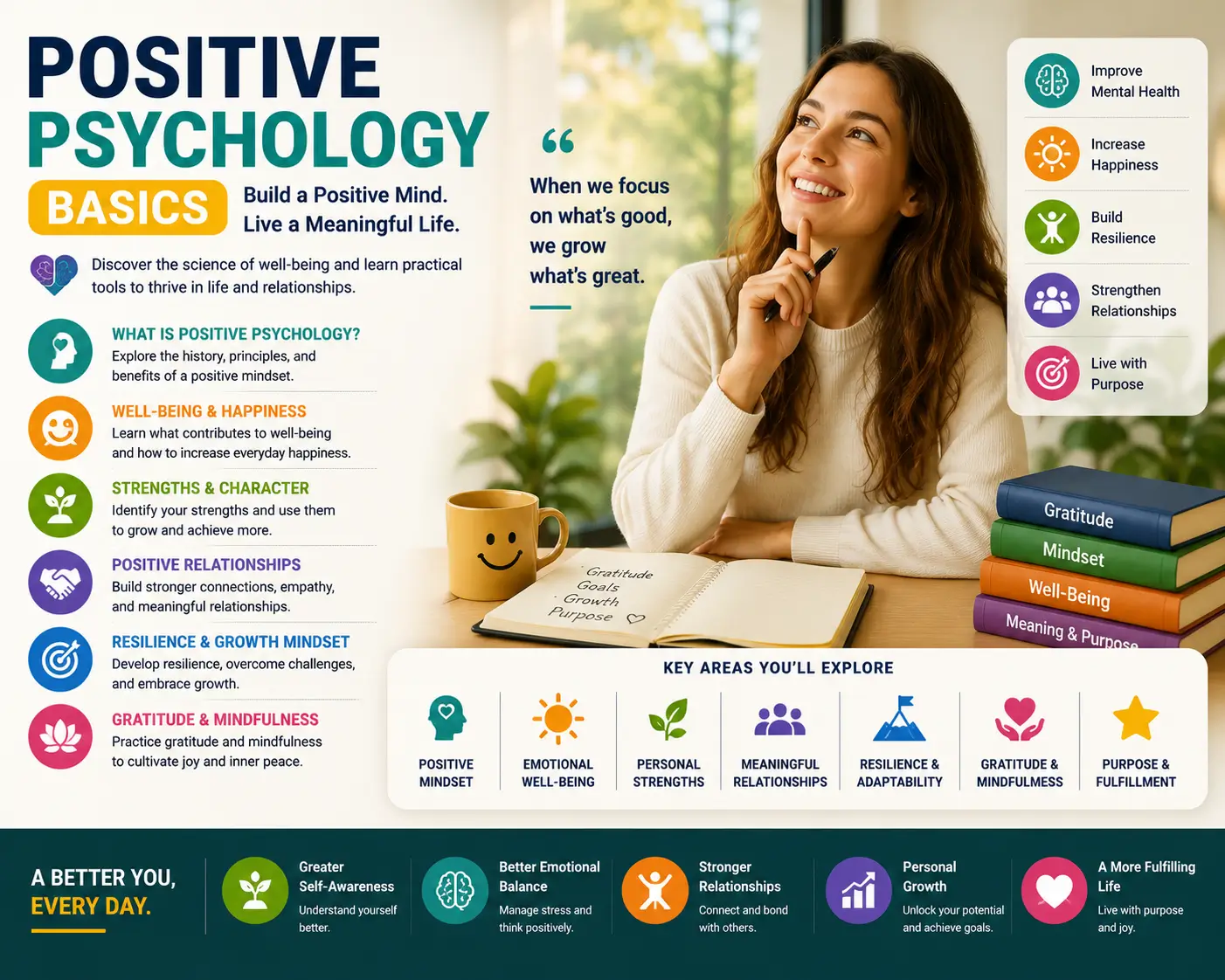
The Positive Psychology Basics Course is an in-depth foundational program designed to explore the science of happiness, well-being, and human potential. Unlike traditional psychology that focuses on mental illness and psychological disorders, positive psychology focuses on strengths, positive emotions, resilience, motivation, and how individuals can build a meaningful and fulfilling life.
This course is carefully designed for beginners who want to understand how thoughts, emotions, habits, and mindset shape overall happiness and life satisfaction. It provides both theoretical understanding and practical tools that can be applied in everyday life for personal growth.
2. Course Objective
The main objective of this course is to help learners understand the principles of positive psychology and apply them in real-life situations to improve emotional well-being and mental strength.
This course aims to:
- Develop a positive and growth-oriented mindset
- Improve emotional resilience and stress handling ability
- Increase self-awareness and life satisfaction
- Teach scientifically proven happiness-building techniques
- Encourage personal development through strengths-based thinking
3. Foundations of Positive Psychology
In this section, learners will gain deep understanding of:
- Meaning and scope of positive psychology
- Difference between positive psychology and clinical psychology
- Concept of happiness and subjective well-being
- Role of mindset in shaping behavior and success
- Psychological theories of human flourishing
This forms the base of understanding how positive psychology works as a scientific discipline.
4. Science of Happiness
Happiness is not random—it is influenced by psychological, biological, and behavioral factors. This section includes:
- Factors influencing long-term happiness
- Emotional regulation and stability
- Impact of thoughts on mental well-being
- Role of gratitude in happiness development
- Life satisfaction vs momentary pleasure
- Science behind positive emotions
Learners understand that happiness can be trained and developed with practice.
5. Positive Thinking & Mindset Development
This part focuses on how mindset shapes reality and behavior. It includes:
- Developing optimistic thinking patterns
- Replacing negative thoughts with constructive thinking
- Building growth mindset (learning from failures)
- Strengthening self-belief and confidence
- Overcoming self-doubt and fear-based thinking
6. Strength-Based Psychology
Positive psychology focuses on strengths instead of weaknesses. In this section, learners will explore:
- Identifying personal strengths and talents
- Using strengths in daily life and career
- Building confidence through self-awareness
- Character strengths such as kindness, courage, gratitude, and perseverance
- Applying strengths for personal success
7. Gratitude, Mindfulness & Emotional Balance
This section provides practical tools for emotional wellness:
- Gratitude journaling and daily reflection practices
- Mindfulness techniques for stress reduction
- Breathing exercises for emotional control
- Awareness of present-moment thinking
- Building calm and focused mental states
8. Stress Management & Resilience
Learners will understand how to deal with challenges effectively:
- Understanding stress triggers
- Developing emotional resilience
- Coping strategies for difficult situations
- Mental flexibility and adaptability
- Turning challenges into growth opportunities
9. Real-Life Applications
Positive psychology is highly practical and can be applied in:
- Personal life improvement
- Workplace productivity and motivation
- Relationship building and communication
- Academic performance enhancement
- Leadership and teamwork development
10. Skills You Will Gain
After completing this course, learners will gain:
- Positive thinking and mindset development
- Emotional intelligence and awareness
- Stress management and resilience skills
- Self-motivation and goal setting ability
- Gratitude and mindfulness practices
- Strong understanding of happiness psychology
11. Importance of Positive Psychology
This field is important because it helps individuals:
- Improve mental and emotional well-being
- Build long-term happiness habits
- Reduce stress and negativity
- Increase productivity and life satisfaction
- Develop healthier relationships and mindset
12. Career Scope
After this course, learners can explore:
- Life coaching assistant roles
- Wellness coaching support
- Motivation and personal development roles
- HR and workplace well-being programs
- NGO and mental wellness awareness programs
It also acts as a strong foundation for advanced psychology and coaching careers.
13. Conclusion
The Positive Psychology Basics Course is a powerful foundational program designed to help learners understand happiness scientifically and apply it practically in life. It is ideal for anyone who wants to improve mindset, emotional well-being, and overall life satisfaction.
FAQ SECTION
Q1. What is Positive Psychology Basics Course?
It is a foundational course that teaches the science of happiness, well-being, positive thinking, and emotional strength. It focuses on improving life satisfaction through scientifically proven psychological methods.
Q2. Is this course related to clinical psychology?
No, this course is not clinical psychology. It focuses on positive aspects of human behavior such as happiness, strengths, resilience, and personal growth rather than mental disorders or treatment.
Q3. Who should take this course?
This course is suitable for students, professionals, teachers, counselors, HR professionals, and anyone who wants to improve their mindset, emotional well-being, and personal development.
Q4. What will I learn in this course?
You will learn about happiness science, positive thinking techniques, gratitude practices, mindfulness, emotional resilience, stress management, and strength-based psychology.
Q5. Can this course improve my daily life?
Yes, this course is highly practical and helps you improve daily habits, thinking patterns, emotional responses, and overall life satisfaction.
Q6. Does this course include practical exercises?
Yes, it includes practical exercises such as gratitude journaling, mindfulness practices, positive thinking exercises, and stress management techniques.
Q7. Can this course help reduce stress and negativity?
Yes, one of the main goals of positive psychology is to reduce stress and negative thinking by building emotional resilience and positive mindset habits.
Q8. Is this course useful for career growth?
Yes, it improves communication skills, emotional intelligence, leadership mindset, and motivation—all of which are valuable in multiple career fields.
Q9. Is certification provided after completion?
Yes, learners receive a completion certificate after successfully finishing the course.
Q10. Is this course beginner-friendly?
Yes, this course is designed for beginners with simple explanations, practical examples, and easy-to-follow concepts.



Reviews
There are no reviews yet.