
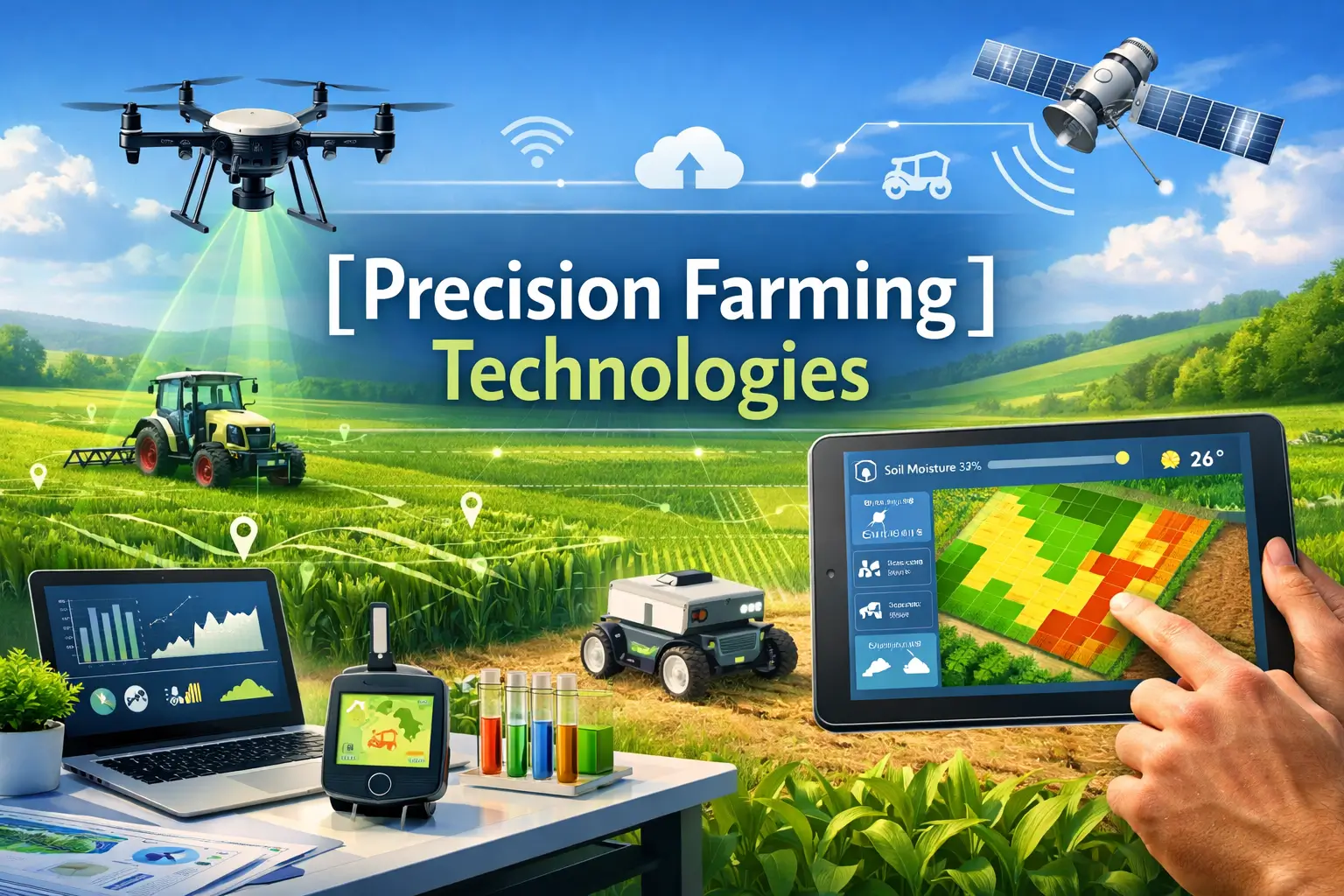
Precision Farming Technologies Course
The Precision Farming Technologies Course is designed to introduce learners to modern agricultural technologies that improve farm productivity, efficiency, and sustainability. Moreover, the course explores innovative tools such as GPS systems, remote sensing, agricultural drones, data analytics, and smart irrigation technologies. As a result, learners gain practical knowledge of how technology is transforming modern farming practices.
Precision Farming Technologies Course Overview
Agriculture is rapidly evolving with the adoption of advanced technologies. Therefore, farmers and agricultural professionals increasingly rely on data-driven solutions to optimize crop production and resource management. This Precision Farming Technologies Course provides a comprehensive introduction to smart farming systems and precision agriculture techniques.
In addition, learners explore the role of technology in improving crop yields, reducing operational costs, and promoting sustainable farming. Furthermore, they gain valuable insights into the future of agriculture and agri-tech innovation.
Fundamentals of Precision Farming
The course begins with the fundamentals of precision farming. Therefore, students learn the core concepts, principles, and benefits of precision agriculture. Moreover, they understand how technology helps farmers make informed decisions based on real-time data.
These foundations provide a strong understanding of modern farming systems.
GPS and GIS Applications in Agriculture
GPS and GIS technologies play an important role in precision farming. Consequently, learners study how location-based technologies support field mapping, crop monitoring, and farm management. In addition, they explore how geographic data improves agricultural planning and productivity.
As a result, students gain practical knowledge of precision agriculture tools.
Remote Sensing and Farm Monitoring
Remote sensing technologies help farmers collect valuable information about crops and soil conditions. Therefore, the course covers satellite imagery, sensor technologies, and field monitoring systems. Furthermore, learners understand how remote sensing supports efficient resource management.
These skills improve decision-making and farm performance.
Data-Driven Crop Management
Data is at the heart of precision agriculture. Consequently, students learn how agricultural data is collected, analyzed, and used to improve crop production. In addition, they explore data-driven strategies for managing soil health, nutrient application, and pest control.
These concepts support efficient and sustainable farming practices.
Smart Irrigation Systems
Water management is critical for successful agriculture. Therefore, learners study smart irrigation technologies, automated watering systems, and moisture monitoring tools. Moreover, they understand how precision irrigation reduces water waste while improving crop health.
As a result, students gain valuable resource management skills.
Agricultural Drones and Automation
Automation is transforming modern farming operations. Consequently, the course introduces agricultural drones, robotic systems, and automated farm equipment. In addition, learners explore how these technologies support crop monitoring, spraying, and field assessments.
These innovations help improve efficiency and productivity.
Sustainable Farming Practices
Sustainability is a key objective of precision farming. Therefore, students learn environmentally responsible farming methods that reduce waste and optimize resource use. Furthermore, they explore how technology supports long-term agricultural sustainability.
These practices contribute to responsible and profitable farming.
Practical Learning and Case Studies
The Precision Farming Technologies Course includes practical projects, technology demonstrations, and real-world agricultural case studies. Moreover, learners analyze farming scenarios and apply precision agriculture concepts to modern agricultural challenges.
As a result, students gain hands-on experience and industry-relevant skills.
Learning Outcomes
By the end of this course, learners will be able to:
- Understand the principles of precision farming and smart agriculture.
- Apply GPS, GIS, and remote sensing technologies in agriculture.
- Use data-driven techniques for crop management.
- Understand smart irrigation and water management systems.
- Explore agricultural drones and automation technologies.
- Promote sustainable and efficient farming practices.
- Support agricultural innovation through technology adoption.
Who Should Enroll?
This course is ideal for farmers, agriculture students, agribusiness professionals, agricultural consultants, researchers, and individuals interested in modern farming technologies. Moreover, it benefits anyone seeking to understand the future of agriculture and precision farming.
Conclusion
The Precision Farming Technologies Course provides comprehensive training in smart agriculture, digital farming tools, GPS technology, remote sensing, automation, and sustainable farming practices. Furthermore, it combines theoretical knowledge with practical learning experiences. As a result, learners gain the expertise needed to improve agricultural productivity and contribute to the future of modern farming.
9. FAQ SECTION
What is a Precision Farming Technologies Course?
A Precision Farming Technologies Course teaches modern agricultural technologies used to improve farm productivity and efficiency.
Who can enroll in this course?
Farmers, agriculture students, agribusiness professionals, researchers, and beginners can enroll.
Do I need farming experience?
No, the course is suitable for both beginners and experienced agricultural professionals.
What skills will I learn?
You will learn precision agriculture, GPS farming, crop monitoring, data analytics, and smart irrigation techniques.
Is practical training included?
Yes, the course includes projects, case studies, and practical applications of agricultural technologies.
Will I receive a certificate?
Yes, learners receive a course completion certificate.
Does the course cover agricultural drones?
Yes, agricultural drones and automation technologies are included.
What career opportunities are available?
Career opportunities include Precision Agriculture Specialist, Farm Technology Consultant, Agri-Tech Analyst, and Agricultural Advisor.
Is sustainable farming covered?
Yes, the course emphasizes sustainable and environmentally responsible farming practices.
Why should I study Precision Farming Technologies?
The course helps learners understand modern farming technologies that improve productivity, profitability, and sustainability.



Reviews
There are no reviews yet.