
Introduction
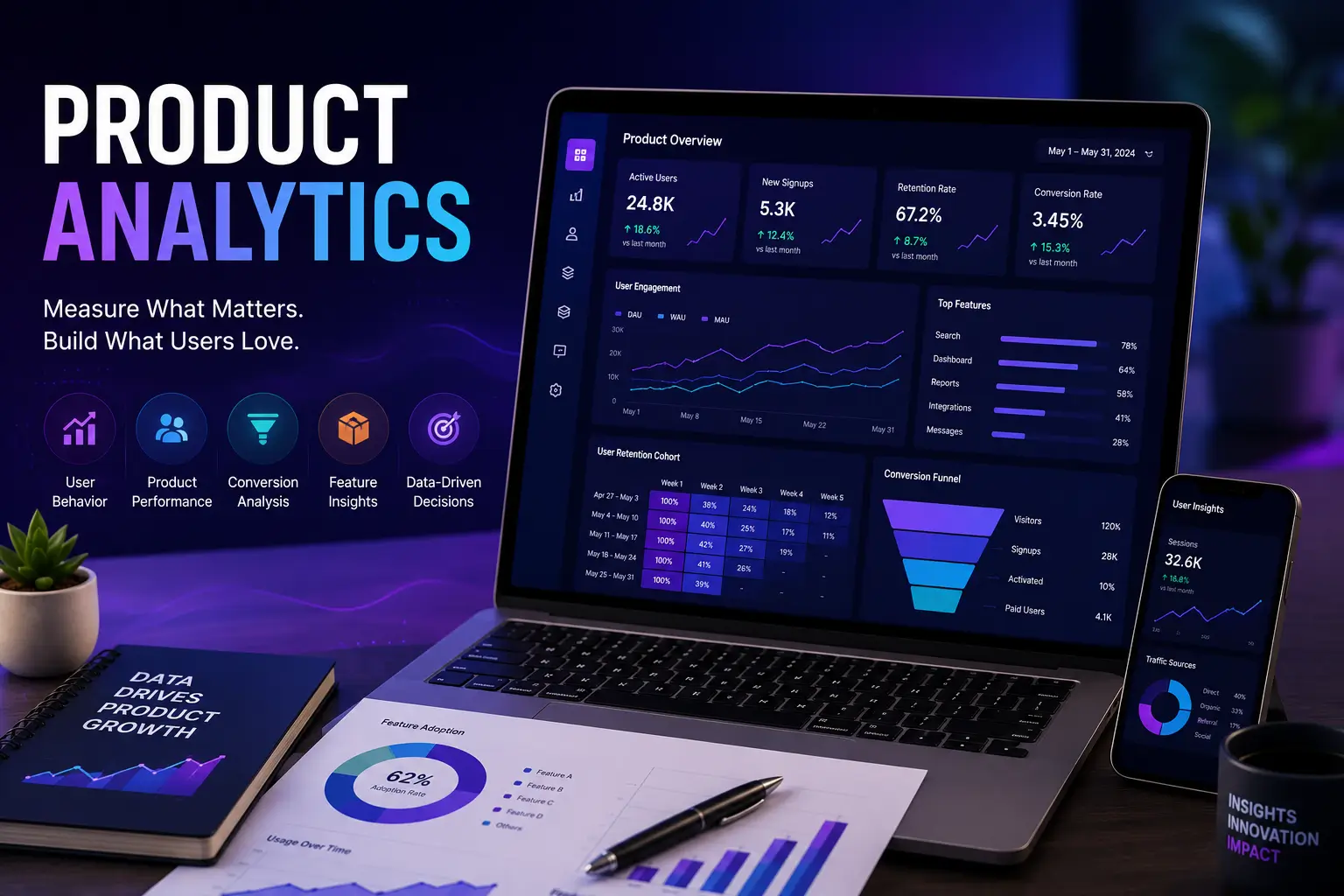
Product analytics is the backbone of modern product management and digital business success. It enables organizations to understand how users interact with products, identify opportunities for improvement, and make data-driven decisions. The Product Analytics Course provides learners with a complete framework to analyze product performance, optimize customer journeys, and drive measurable outcomes.
Course Overview
This course covers the essentials of product analytics, including data collection, KPI definition, customer segmentation, funnel analysis, retention metrics, and experimentation. Learners will explore tools like Google Analytics, Mixpanel, Amplitude, and Tableau, while also learning frameworks such as cohort analysis, growth loops, and North Star metrics.
Opportunities After the Course
Graduates can pursue careers such as:
- Product Analyst
- Growth Specialist
- Data Analyst
- Product Manager
- Customer Insights Specialist
- Business Intelligence Analyst
- Digital Strategy Consultant
What You Will Learn
- Fundamentals of product analytics
- Defining KPIs and success metrics
- Customer journey and funnel analysis
- Cohort analysis and retention tracking
- A/B testing and experimentation
- Using analytics tools (Mixpanel, Amplitude, GA)
- Data visualization and reporting
- Applying insights to product strategy
Skills You Will Gain
- Data collection and analysis
- KPI tracking and measurement
- Funnel optimization
- Experiment design and testing
- Customer segmentation
- Retention and engagement analysis
- Data visualization and storytelling
- Strategic decision-making
Who Should Enroll
- Product managers
- Data analysts
- Growth marketers
- Entrepreneurs and business owners
- Students aspiring to enter product management careers
Benefits of the Course
- Industry-relevant curriculum
- Hands-on projects and case studies
- Certification upon completion
- Career-ready skills
- Flexible online learning
- Access to analytics tools and templates
About Certificate
Upon successful completion, learners receive a recognized certificate that validates their expertise in product analytics. This credential enhances professional credibility and career opportunities in product management and data-driven industries.
Conclusion
The Product Analytics Course empowers learners to excel in product management by mastering the strategies and tools needed to analyze and optimize product performance. With practical skills, industry insights, and certification, participants are prepared to drive innovation, customer satisfaction, and business growth.
FAQ Section
1. What exactly is the difference between Web Analytics and Product Analytics?
Web analytics (like traditional Google Analytics) focuses primarily on top-of-funnel acquisition metrics—where users came from, what pages they viewed, and how long they stayed on a site. Product analytics focuses heavily on deep, post-login user behavior. It tracks specific actions (events) inside an app, such as completing a checkout, sharing a document, or inviting a teammate, to understand features, retention, and lifetime value.
2. Do I need to know how to code or write SQL to take this course?
No coding experience or SQL knowledge is required. This course focuses entirely on utilizing modern, visual product analytics platforms (like Amplitude and Mixpanel) and establishing behavioral frameworks. While we will discuss how data is structured logically, all analysis is performed through intuitive user interfaces rather than code interfaces.
3. Which analytics tools will we use during the program?
We will predominantly focus on industry-leading platforms including Amplitude, Mixpanel, and Google Analytics 4 (GA4). You will learn how the underlying data models function universally across all of them so you can easily adapt to whatever software your current or future company uses.
4. What is a “Tracking Plan” and why is it important?
A tracking plan (sometimes called a data schema) is a master blueprint or document that outlines exactly what user actions your product will track, why they are being tracked, and what contextual data properties will be captured alongside them. It is the crucial foundation that ensures your data stays clean, organized, and useful.
5. How much time do I need to dedicate to this course weekly?
We recommend dedicating roughly 4 to 6 hours per week. This allows comfortable time to review the video frameworks, participate in the hands-on tracking labs, and complete the practical course assignments.
6. Can I apply these concepts to Mobile Apps as well as Web Apps?
Yes, absolutely. The event-based data frameworks, retention cohorts, and conversion funnel methodologies taught in this course apply identically to iOS, Android, Desktop, and Web-based software products.
7. What is a “North Star Metric” and will we learn how to define one?
A North Star Metric is the key framework metric that best captures the core value your product delivers to its customers. It serves as a guiding light for your entire product team. We dedicate an entire section of the course to identifying, measuring, and breaking down a North Star Metric into actionable inputs.
8. Is there a final project required to pass the course?
Yes. To earn your professional certificate, you will complete a hands-on capstone project. You will take a simulated, raw dataset from a struggling software product, diagnose exactly where users are churning inside the funnel, and draft a data-backed product recommendation report.
9. How long do I have access to the course materials?
You will receive lifetime access to all video lessons, reading materials, downloadable tracking templates, and framework guides. You can easily return and refresh your memory whenever you encounter a new data challenge in your career.
10. Will this course help me if I am preparing for a Product Manager interview?
Very much so. Product data case studies are standard in modern PM interviews. This course gives you the exact vocabulary, metrics (like LTV, CAC, Churn, and Day-N Retention), and diagnostic frameworks needed to ace metrics-focused interview questions confidently.
11. Can I get a refund if the course isn’t a good fit for me?
Yes, we offer a 100% money-back guarantee within the first 14 days of enrollment. If you find the material isn’t aligning with your current learning goals, simply reach out to support for a prompt and courteous refund.




Reviews
There are no reviews yet.