
Introduction to Product Lifecycle Management
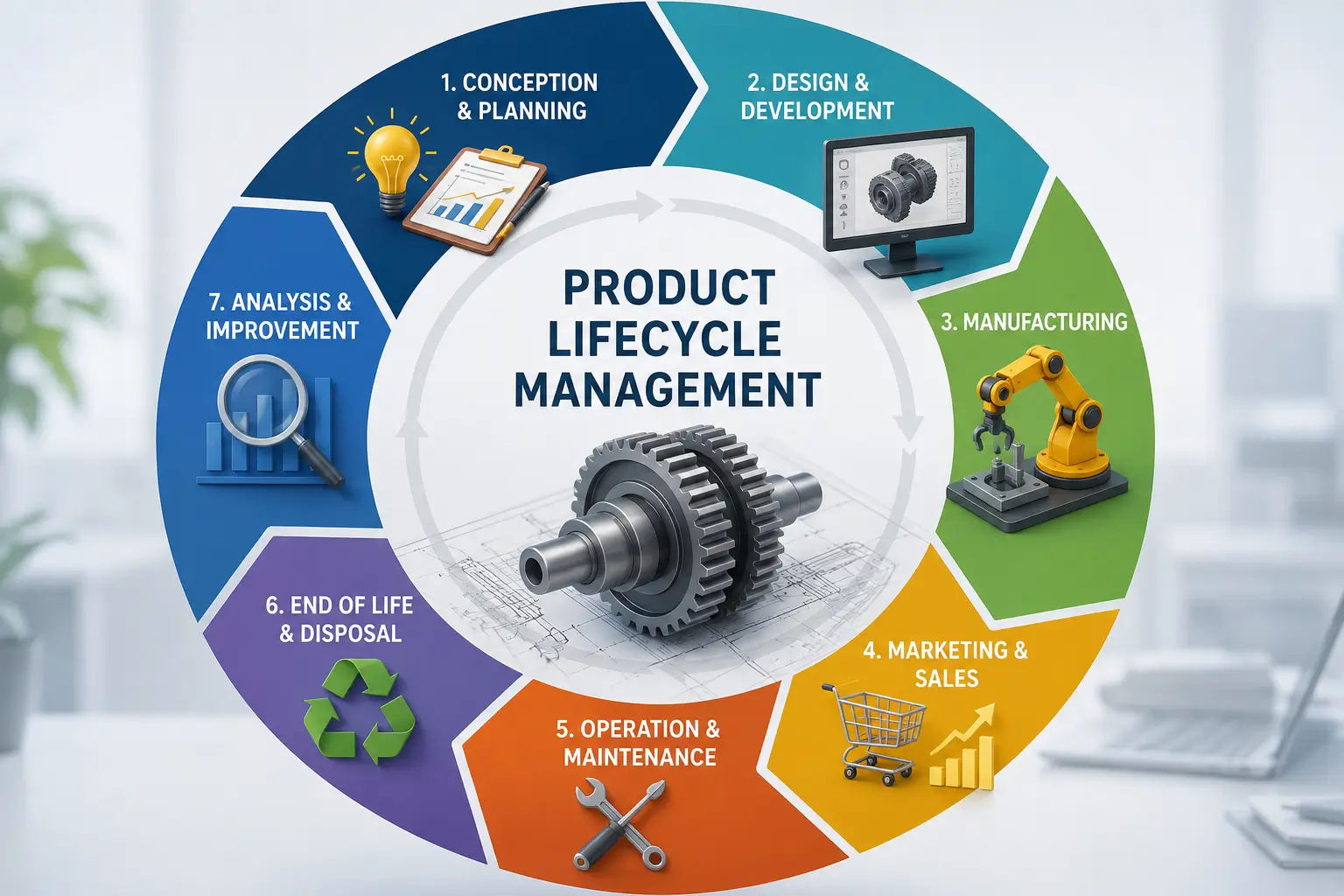
Product Lifecycle Management is a structured approach to managing a product from the initial concept and design stage through development, production, maintenance, and eventual retirement. Modern organizations use Product Lifecycle Management to improve collaboration, maintain accurate product information, increase product quality, and accelerate innovation.
This course provides practical knowledge of product planning, product development, engineering collaboration, lifecycle management, product data management, quality control, and continuous product improvement.
Understanding Product Lifecycle Management
Every product moves through multiple stages during its lifecycle. Effective lifecycle management helps organizations coordinate activities across engineering, manufacturing, procurement, marketing, quality assurance, and customer support.
Learners explore important concepts including:
- Product lifecycle planning
- Product development
- Product design
- Product data management
- Engineering collaboration
- Product quality management
These concepts provide the foundation for successful product management.
Product Development and Design Management
Successful products require careful planning, collaboration, and continuous evaluation throughout development. Organizations use structured PLM processes to improve communication, reduce development errors, and shorten product launch timelines.
Learners study practical approaches for:
- Product design coordination
- Engineering documentation
- Design review processes
- Product information management
- Cross-functional collaboration
- Product change management
These practices improve product quality and development efficiency.
Manufacturing, Quality, and Lifecycle Optimization
Product Lifecycle Management supports manufacturing by ensuring accurate product information is available throughout production. Organizations monitor quality, manage engineering changes, and improve production processes to maintain product consistency.
The course explains how lifecycle optimization contributes to operational excellence, customer satisfaction, and sustainable business growth.
Digital Transformation and Product Innovation
Modern Product Lifecycle Management systems integrate digital technologies that improve collaboration, automate workflows, support data-driven decisions, and accelerate innovation across global organizations.
Learners understand how digital product management supports faster product development while improving business competitiveness.
Skills You Will Develop
After completing this course, learners will understand:
- Product Lifecycle Management principles
- Product development
- Product planning
- Product data management
- Engineering collaboration
- Product quality management
- Lifecycle optimization
- Product documentation
- Change management
- Continuous improvement
Who Should Enroll?
This course is suitable for:
- Students
- Product managers
- Engineers
- Manufacturing professionals
- Quality professionals
- Supply chain specialists
- Operations managers
- Business professionals
No previous Product Lifecycle Management experience is required.
Career Opportunities
This course supports careers such as:
- Product Lifecycle Management Coordinator
- Product Manager
- Product Development Engineer
- Manufacturing Engineer
- Product Data Analyst
- Quality Assurance Executive
- Operations Manager
- Engineering Project Coordinator
FAQ Section
1. What is the Product Lifecycle Management Course?
The course teaches how products are planned, developed, managed, and improved throughout their entire lifecycle, from concept to retirement.
2. Is this course suitable for beginners?
Yes. The course is designed for beginners as well as professionals who want to strengthen their PLM knowledge.
3. What topics are covered?
Topics include product development, Product Data Management (PDM), engineering change management, configuration management, quality management, project coordination, supply chain integration, and lifecycle optimization.
4. Will I receive a certificate?
Yes. Participants receive a certificate upon successfully completing the course.
5. Do I need prior Product Lifecycle Management experience?
No. The course introduces PLM concepts in a simple, structured, and beginner-friendly format.
6. Who should enroll in this course?
Engineers, product managers, project coordinators, manufacturing professionals, quality specialists, engineering students, designers, and operations professionals can benefit from this course.
7. Is the course fully online?
Yes. The course offers flexible online learning, allowing participants to study at their own pace.
8. What skills will I gain?
You will gain skills in Product Lifecycle Management, product planning, engineering change management, product data management, quality management, project coordination, and lifecycle optimization.
9. Can this course help my career?
Yes. PLM skills are highly valued across manufacturing, engineering, automotive, aerospace, healthcare, technology, consumer goods, and industrial product development sectors.
10. Why is Product Lifecycle Management important?
Product Lifecycle Management helps organizations improve collaboration, reduce development costs, accelerate innovation, maintain product quality, ensure regulatory compliance, and manage products efficiently throughout their lifecycle.




Reviews
There are no reviews yet.