
Introduction
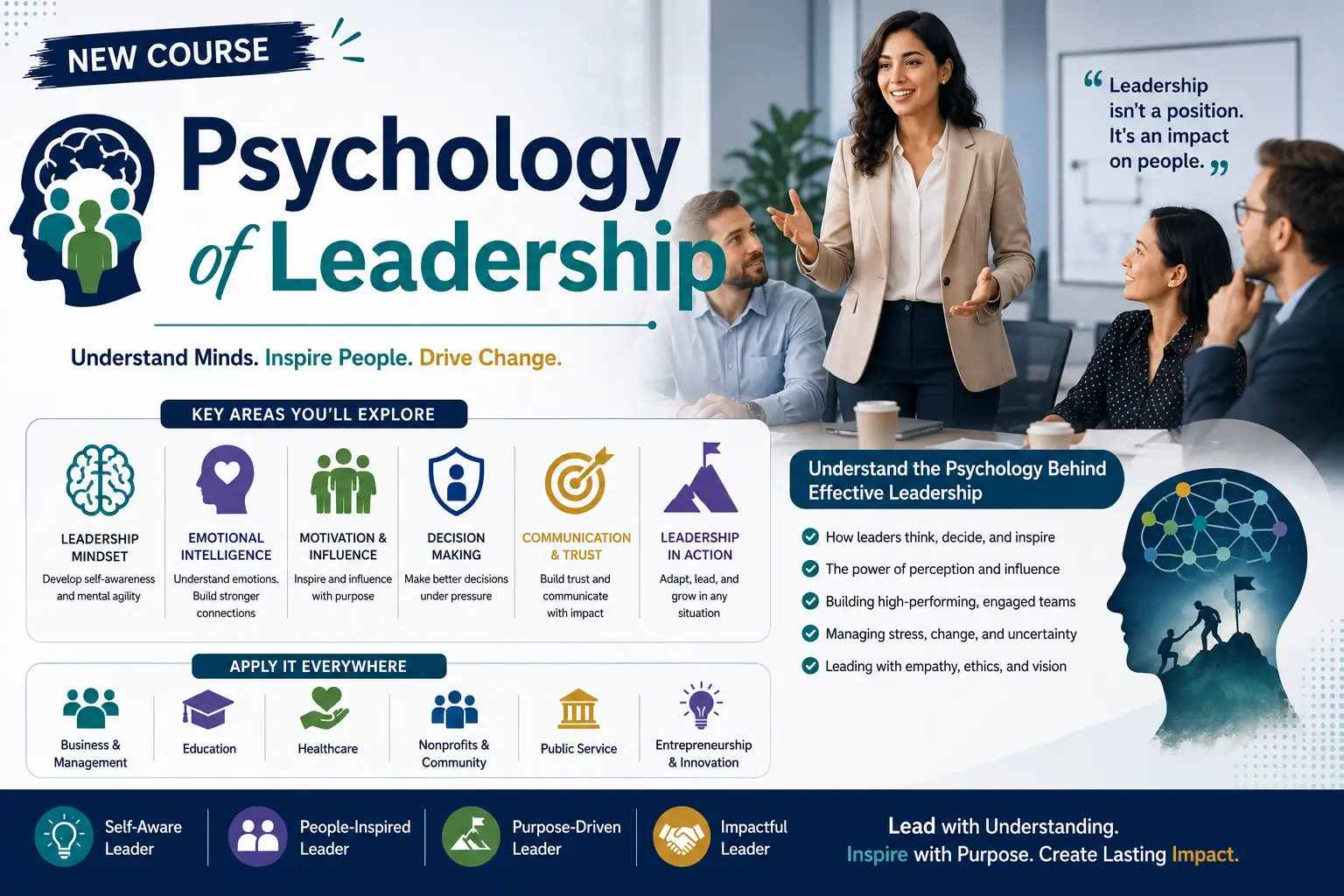
The Psychology of Leadership Course is a comprehensive training program designed to equip learners with the knowledge and practical skills required to become more effective leaders by understanding human behavior and psychological principles. Leadership is more than directing teams or making decisions—it involves influencing people, building trust, motivating performance, resolving challenges, and creating positive organizational cultures.
Leadership psychology explores how emotions, personality, motivation, perception, communication, values, and behavioral patterns influence leadership effectiveness. By understanding these psychological factors, leaders can improve relationships, strengthen collaboration, inspire teams, and achieve organizational goals more effectively.
As organizations increasingly value emotionally intelligent and people-focused leadership, professionals who understand leadership psychology are better prepared to manage change, support employee development, improve workplace culture, and drive long-term organizational success.
Whether you are a student, manager, HR professional, entrepreneur, educator, supervisor, project manager, team leader, or aspiring executive, this course provides practical knowledge for applying psychology to everyday leadership situations.
Why Psychology of Leadership is Important
Leadership psychology helps professionals understand how people think, behave, and respond to different leadership approaches.
Key benefits include:
- Improves leadership effectiveness
- Enhances emotional intelligence
- Strengthens communication skills
- Builds high-performing teams
- Improves decision-making
- Increases employee motivation
- Supports conflict resolution
- Encourages ethical leadership
- Strengthens organizational culture
- Promotes professional growth
For example, leaders who understand psychology can adapt their leadership style, improve employee engagement, manage change effectively, and create supportive work environments.
Course Overview
This course provides a structured understanding of leadership psychology and its practical applications in organizations.
Learners will explore:
- Introduction to leadership psychology
- Leadership theories and styles
- Personality and leadership
- Emotional intelligence
- Motivation and employee engagement
- Communication and influence
- Decision-making psychology
- Team dynamics
- Organizational behavior
- Conflict management
- Leadership ethics
- Change management
- Resilience and adaptability
- Leadership development strategies
- Best practices in psychological leadership
What You Will Learn
By the end of this course, learners will be able to:
- Understand leadership psychology principles
- Identify effective leadership styles
- Improve emotional intelligence
- Communicate with confidence and clarity
- Motivate and inspire teams
- Make informed leadership decisions
- Build strong workplace relationships
- Resolve conflicts constructively
- Strengthen organizational culture
- Develop long-term leadership capabilities
Key Components of Psychology of Leadership
1. Leadership and Human Behavior
Learn how personality, values, beliefs, emotions, and behavioral patterns influence leadership effectiveness and workplace relationships.
2. Emotional Intelligence
Understand how self-awareness, empathy, emotional regulation, and social skills contribute to stronger leadership and better team performance.
3. Motivation and Team Leadership
Explore psychological theories of motivation, employee engagement, collaboration, recognition, and performance improvement.
4. Decision-Making and Communication
Learn how psychological principles improve critical thinking, communication, ethical decision-making, conflict management, and influence.
5. Leadership Growth and Organizational Success
Understand how continuous learning, resilience, adaptability, coaching, and psychological awareness contribute to sustainable leadership development.
Skills You Will Gain
After completing this course, learners will develop valuable professional skills, including:
- Leadership development
- Emotional intelligence
- Communication
- Team management
- Decision-making
- Motivation
- Conflict resolution
- Relationship management
- Organizational behavior
- Strategic thinking
- Coaching
- Problem-solving
- Critical thinking
- Adaptability
- Ethical leadership
Benefits of This Course
Completing this course offers several professional advantages, including:
- Strong understanding of leadership psychology
- Better communication and people management skills
- Improved emotional intelligence
- Practical understanding of leadership behavior
- Better decision-making and conflict resolution abilities
- Enhanced team leadership capabilities
- Increased employability in leadership and management roles
- Competitive advantage in HR, business management, education, healthcare, consulting, and entrepreneurship
- Strong foundation for advanced leadership, organizational behavior, and management studies
Who Should Enroll?
This course is suitable for:
- Students
- Managers
- Supervisors
- Team Leaders
- Human Resource Professionals
- Entrepreneurs
- Project Managers
- Educators
- Business Professionals
- Anyone aspiring to become an effective leader
No previous leadership or psychology experience is required, making this course suitable for beginners as well as experienced professionals.
Career Opportunities
After completing this course, learners can strengthen their effectiveness in roles such as:
- Team Leader
- Project Manager
- Human Resources Executive
- Learning and Development Executive
- Organizational Development Executive
- Business Manager
- Operations Manager
- Corporate Trainer
- Leadership Development Specialist
- Employee Engagement Manager
- Business Consultant
Certification
Upon successful completion of the Psychology of Leadership Course, learners receive a professional certificate recognizing their knowledge of leadership psychology, emotional intelligence, motivation, communication, decision-making, organizational behavior, team leadership, conflict resolution, coaching, and leadership development. This certification enhances career opportunities across multinational corporations, educational institutions, healthcare organizations, consulting firms, government agencies, nonprofit organizations, technology companies, financial institutions, manufacturing industries, and leadership development organizations.
Conclusion
The Psychology of Leadership Course provides learners with practical knowledge and professional skills to understand the psychological foundations of effective leadership. By mastering emotional intelligence, communication, motivation, decision-making, organizational behavior, conflict resolution, coaching, and leadership development, learners will be well prepared to inspire teams, improve workplace performance, and lead with confidence and integrity.
Whether your goal is to become a successful manager, strengthen your leadership capabilities, improve employee engagement, or advance your career into leadership roles, this course provides a strong foundation for long-term professional growth and organizational success.
FAQ
1. What is the Psychology of Leadership Course?
It is a course that explores how psychological principles influence leadership effectiveness, helping learners develop stronger leadership, communication, motivation, and decision-making skills.
2. Who should enroll in this course?
Students, managers, supervisors, HR professionals, entrepreneurs, educators, project managers, team leaders, business professionals, and anyone interested in leadership development.
3. Do I need prior leadership experience?
No. The course is beginner-friendly and suitable for learners with no previous leadership or psychology background.
4. What topics are covered in this course?
The course covers leadership theories, emotional intelligence, personality, motivation, communication, decision-making, organizational behavior, conflict management, team dynamics, ethical leadership, and leadership development.
5. Will I learn how psychology improves leadership?
Yes. The course explains how psychological principles help leaders understand employee behavior, improve communication, motivate teams, resolve conflicts, and make informed decisions.
6. Does this course include emotional intelligence and motivation?
Yes. You will learn emotional intelligence, empathy, self-awareness, motivation theories, coaching techniques, employee engagement strategies, and leadership communication skills.
7. Will I receive a certificate after completing the course?
Yes. A professional course completion certificate is awarded upon successful completion.
8. Why is leadership psychology important?
Leadership psychology helps leaders understand people, improve workplace relationships, increase employee engagement, strengthen communication, make better decisions, and create positive organizational cultures.
9. How does leadership psychology benefit organizations?
It improves leadership effectiveness, enhances teamwork, strengthens employee motivation, supports organizational development, reduces workplace conflicts, increases productivity, and contributes to sustainable business success.
10. What career opportunities are available after this course?
This course strengthens your professional skills for roles such as Team Leader, Project Manager, Human Resources Executive, Business Manager, Operations Manager, Corporate Trainer, Leadership Development Specialist, Employee Engagement Manager, Organizational Development Executive, Learning and Development Executive, and Business Consultant.





Reviews
There are no reviews yet.