
Introduction
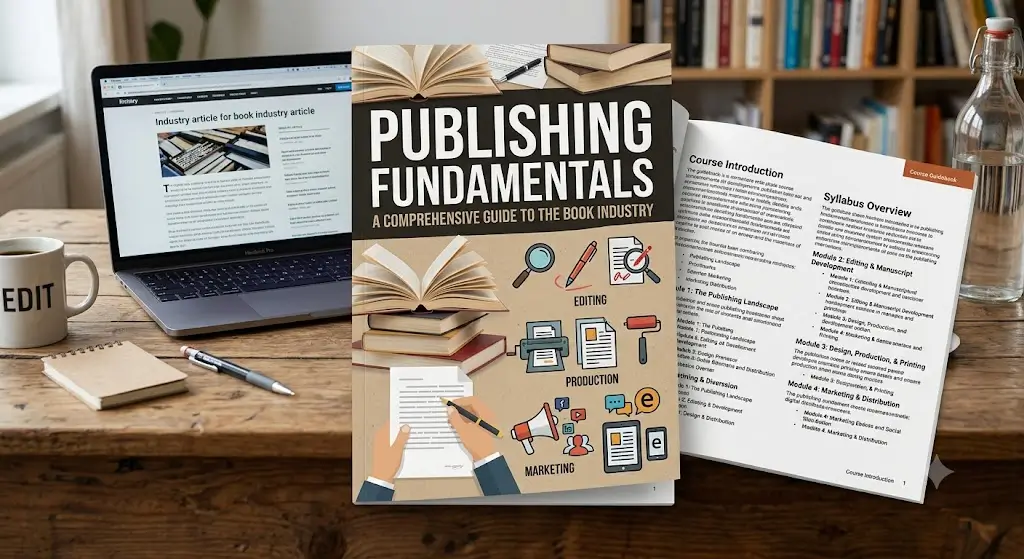
The Publishing Fundamentals Course is a comprehensive training program designed to equip learners with the knowledge and practical skills required to understand the publishing industry and its complete workflow. Publishing plays a vital role in sharing knowledge, ideas, research, literature, educational materials, news, and creative content with audiences worldwide. From books and magazines to academic journals, newspapers, e-books, and online publications, publishing helps transform ideas into professionally produced and distributed content.
Modern publishing combines traditional editorial practices with digital technologies, enabling publishers to reach global audiences through both print and electronic platforms. Successful publishing requires collaboration between writers, editors, designers, proofreaders, production specialists, marketers, distributors, and publishing managers to ensure high-quality publications.
Whether you are a student, aspiring author, editor, content creator, educator, publisher, communication professional, or entrepreneur, this course provides practical knowledge to understand publishing processes and contribute to professional publishing projects.
Why Publishing Fundamentals are Important
Publishing ensures that information is accurate, professionally presented, legally compliant, and accessible to intended audiences.
Key benefits of learning publishing fundamentals include:
- Improves editorial and publishing knowledge
- Supports professional content production
- Enhances writing and editing quality
- Improves understanding of publishing workflows
- Supports digital and print publishing initiatives
- Encourages ethical publishing practices
- Strengthens copyright awareness
- Improves communication and collaboration skills
- Expands career opportunities in publishing and media
- Supports professional content distribution and audience engagement
For example, understanding publishing workflows enables professionals to manage manuscripts efficiently while maintaining editorial quality and production standards.
Course Overview
This course provides a structured understanding of publishing principles and professional publishing workflows.
Learners will explore:
- Introduction to the publishing industry
- Publishing processes and workflows
- Manuscript preparation
- Editorial review and copy editing
- Proofreading techniques
- Book and publication design basics
- Print publishing fundamentals
- Digital publishing concepts
- Copyright and intellectual property awareness
- Publishing ethics and legal considerations
- Production and distribution processes
- Publishing project management
- Marketing published content
- Quality assurance in publishing
- Best practices in modern publishing
What You Will Learn
By the end of this course, learners will be able to:
- Understand the complete publishing process
- Prepare manuscripts for publication
- Apply editorial review and proofreading techniques
- Understand print and digital publishing workflows
- Recognize copyright and publishing ethics principles
- Support publishing production and distribution activities
- Apply quality standards in publishing projects
- Understand publishing technologies and industry trends
- Collaborate effectively within publishing teams
- Contribute to professional publishing projects from planning to publication
Key Components of Publishing Fundamentals
1. Editorial Processes
Learn how manuscripts are reviewed, edited, proofread, and prepared for professional publication.
2. Print and Digital Publishing
Understand the differences between traditional print publishing and digital publishing, including e-books, online publications, and multimedia content.
3. Copyright and Publishing Ethics
Explore intellectual property rights, copyright protection, permissions, ethical publishing practices, and responsible content management.
4. Publishing Production
Learn how publications move through design, formatting, production, printing, digital conversion, and distribution.
5. Publishing Management
Understand project planning, editorial coordination, production scheduling, quality control, marketing, and publication management.
Skills You Will Gain
After completing this course, learners will develop valuable professional skills, including:
- Publishing workflow management
- Editorial processes
- Copy editing awareness
- Proofreading techniques
- Manuscript preparation
- Digital publishing knowledge
- Print publishing fundamentals
- Copyright awareness
- Publishing project coordination
- Content quality assurance
- Business communication
- Project planning
- Attention to detail
- Content organization
- Publishing ethics awareness
Benefits of This Course
Completing this course offers several professional advantages, including:
- Strong understanding of publishing industry fundamentals
- Better career opportunities in publishing, media, and communications
- Improved editorial and content management skills
- Practical understanding of print and digital publishing processes
- Better knowledge of copyright and publishing ethics
- Enhanced publishing project management capabilities
- Increased employability across publishing and creative industries
- Competitive advantage in editorial and content development careers
- Strong foundation for advanced publishing, editing, and content management certifications
Who Should Enroll?
This course is suitable for:
- Students interested in publishing careers
- Aspiring authors
- Editors and proofreaders
- Content writers
- Communication professionals
- Journalists
- Publishers
- Educators and trainers
- Marketing and media professionals
- Anyone interested in publishing fundamentals
No previous publishing experience is required, making this course suitable for beginners and experienced professionals alike.
Career Opportunities
After completing this course, learners may pursue roles such as:
- Editorial Assistant
- Publishing Assistant
- Content Editor
- Copy Editor
- Proofreader
- Publishing Coordinator
- Digital Publishing Executive
- Content Production Specialist
- Publishing Project Assistant
- Communications Executive
- Content Management Associate
Certification
Upon successful completion of the Publishing Fundamentals Course, learners receive a professional certificate recognizing their knowledge of editorial workflows, manuscript preparation, copy editing, proofreading, print and digital publishing, copyright awareness, publishing ethics, content production, publishing management, and quality assurance. This certification enhances career opportunities across publishing houses, educational institutions, media organizations, newspapers, magazines, digital publishing companies, marketing agencies, corporate communication departments, and content development firms.
Conclusion
The Publishing Fundamentals Course provides learners with practical knowledge and professional skills to understand and manage the complete publishing process. By mastering editorial workflows, manuscript preparation, proofreading, publishing production, digital publishing, copyright principles, quality assurance, and publishing project management, learners will be well prepared for rewarding careers in publishing, editorial services, media, communications, and content development.
Whether your goal is to become an editor, publishing professional, content manager, author, or communication specialist, this course provides a strong foundation for long-term professional success in the publishing industry.
FAQ
1. What is the Publishing Fundamentals Course?
It is a course that teaches the complete publishing process, including manuscript preparation, editing, proofreading, production, digital publishing, copyright, and content distribution.
2. Who should enroll in this course?
Students, aspiring authors, editors, publishers, journalists, content writers, communication professionals, educators, marketing professionals, and anyone interested in publishing.
3. Do I need prior publishing experience?
No. The course is beginner-friendly and designed for learners with little or no prior publishing knowledge.
4. What topics are covered in this course?
The course covers editorial workflows, manuscript preparation, copy editing, proofreading, print publishing, digital publishing, copyright, publishing ethics, production, distribution, and publishing project management.
5. Will I learn about both print and digital publishing?
Yes. The course explains the workflows, tools, and best practices used in both traditional print publishing and modern digital publishing.
6. Does this course include copyright and publishing ethics?
Yes. You will learn copyright fundamentals, intellectual property awareness, permissions, ethical publishing practices, and responsible content management.
7. Will I receive a certificate after completing the course?
Yes. A professional course completion certificate is awarded upon successful completion.
8. Is publishing knowledge valuable in today’s digital world?
Yes. Publishing skills are valuable across media, education, marketing, corporate communications, digital content creation, academic publishing, and self-publishing industries.
9. How does publishing benefit organizations and creators?
Publishing ensures content is professionally edited, legally compliant, well-designed, accurately presented, and effectively distributed to target audiences through print and digital channels.
10. What career opportunities are available after this course?
You can pursue roles such as Editorial Assistant, Publishing Assistant, Content Editor, Copy Editor, Proofreader, Publishing Coordinator, Digital Publishing Executive, Content Production Specialist, Publishing Project Assistant, Communications Executive, or Content Management Associate.



Reviews
There are no reviews yet.