
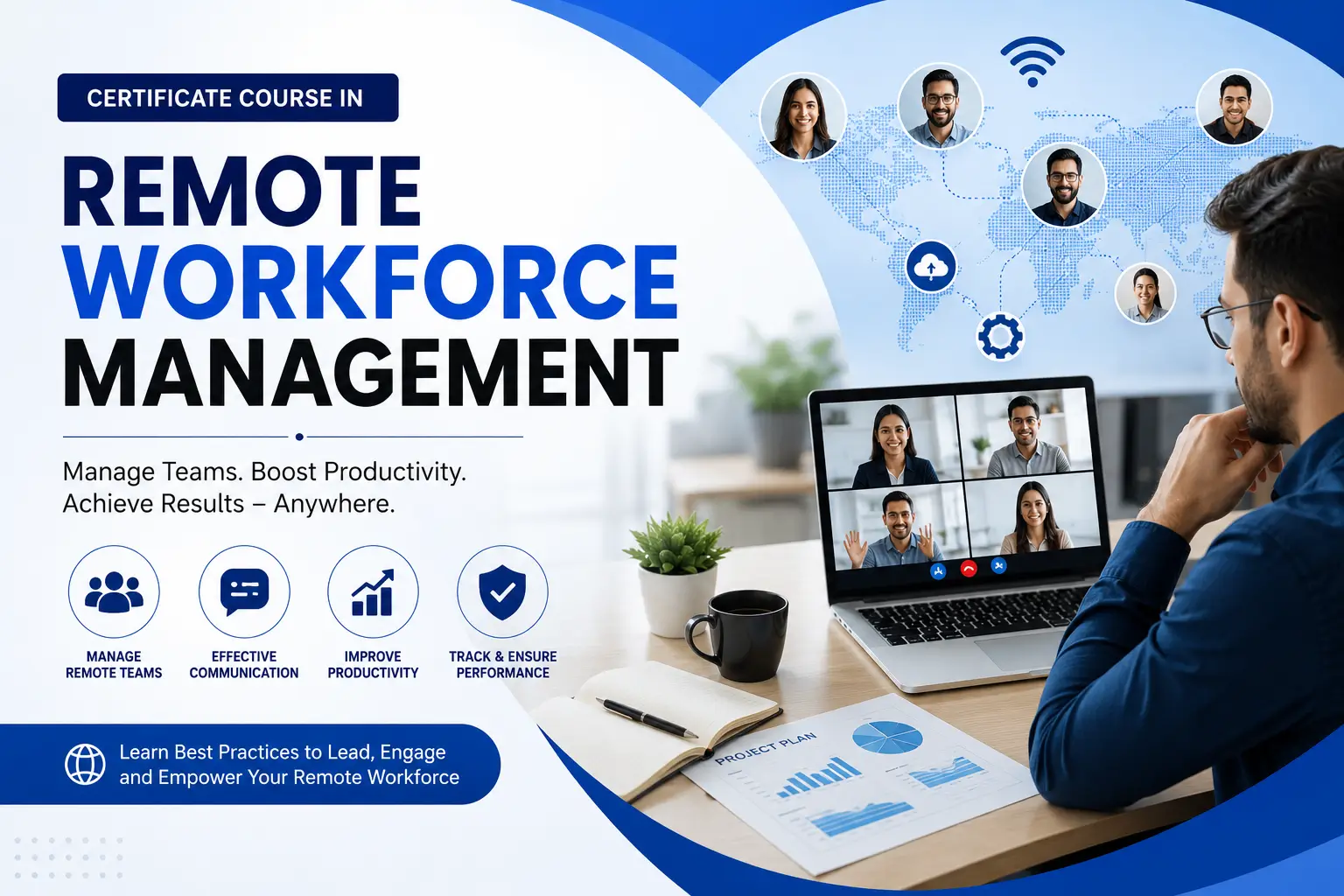
The Remote Workforce Management Course is a modern business leadership program designed for managers, HR professionals, entrepreneurs, and team leaders who want to effectively manage remote and hybrid teams in today’s digital workplace.
With the rise of remote work, organizations worldwide are shifting toward flexible work environments. Managing distributed teams requires new skills in communication, productivity tracking, digital tools, and employee engagement.
This course provides a complete understanding of remote workforce systems, virtual leadership strategies, and modern workplace management practices.
Course Overview
The Remote Workforce Management Course introduces learners to virtual team leadership, remote HR practices, and digital collaboration tools.
Students will learn how to manage productivity, improve communication, and build strong remote team cultures.
The curriculum is aligned with the future of work and modern organizational structures.
What You Will Learn
Throughout this course, students will learn:
- Fundamentals of remote workforce management
- Virtual team leadership strategies
- Remote communication best practices
- Digital collaboration tools (Slack, Zoom, Teams)
- Employee engagement in remote environments
- Hybrid workforce models
- Remote performance tracking systems
- Productivity optimization techniques
- Conflict resolution in virtual teams
- Remote HR management basics
Skills You Will Gain
After completing this course, you will develop:
- Remote leadership skills
- Virtual team coordination abilities
- Digital communication expertise
- Workforce productivity management
- HR and employee engagement skills
- Performance monitoring techniques
- Problem-solving in remote environments
- Time management and planning skills
- Collaboration tool proficiency
- Organizational leadership mindset
Benefits of the Remote Workforce Management Course
Future of Work Skills
Remote work is becoming a global standard.
High Demand in Industry
Companies need skilled remote team leaders.
Practical Tool Training
Learn Slack, Zoom, Teams, and productivity tools.
Leadership Development
Build strong virtual leadership capabilities.
Flexible Career Opportunities
Applicable across industries and global companies.
Who Should Enroll?
This course is ideal for:
- Managers and team leaders
- HR professionals
- Entrepreneurs and startup founders
- Project managers
- Corporate employees
- Freelancers managing teams
- Business consultants
- MBA students
No technical background is required.
Career Opportunities
After completing the Remote Workforce Management Course, learners can pursue roles such as:
- Remote Team Manager
- HR Operations Manager
- Virtual Team Leader
- Workforce Coordinator
- Project Manager (Remote Teams)
- Operations Manager
- Agile Team Facilitator
Career opportunities exist in:
- IT companies
- Startups
- BPO/KPO industries
- Global remote companies
- Consulting firms
- Freelance and gig economy platforms
Certification Details
Students who complete the course receive a certification validating their expertise in remote workforce management, virtual leadership, and digital workplace operations.
Why Choose This Course?
Course highlights include:
- Industry-relevant remote work training
- Real-world virtual team scenarios
- Modern HR and leadership tools
- Beginner-friendly structure
- Future-of-work focus
- Career-oriented learning
- Certification support
Prepare for the global shift toward remote and hybrid workplaces.
9. FAQ SECTION
What is Remote Workforce Management?
It is the process of managing employees who work from different locations using digital tools.
Who can join this course?
Managers, HR professionals, and business leaders can join.
Is technical knowledge required?
No, basic computer knowledge is enough.
What tools are covered?
Slack, Zoom, Microsoft Teams, and productivity tools.
How long is the course?
Typically 1 to 3 months.
Will I get certification?
Yes, certification is provided after completion.
Is remote work management a good career?
Yes, it is highly in demand globally.
What jobs can I get?
Remote team manager, HR manager, and project leader roles.
Is this course beginner-friendly?
Yes, it is designed for beginners.
Does it include HR topics?
Yes, remote HR management is included.


Reviews
There are no reviews yet.