
Introduction
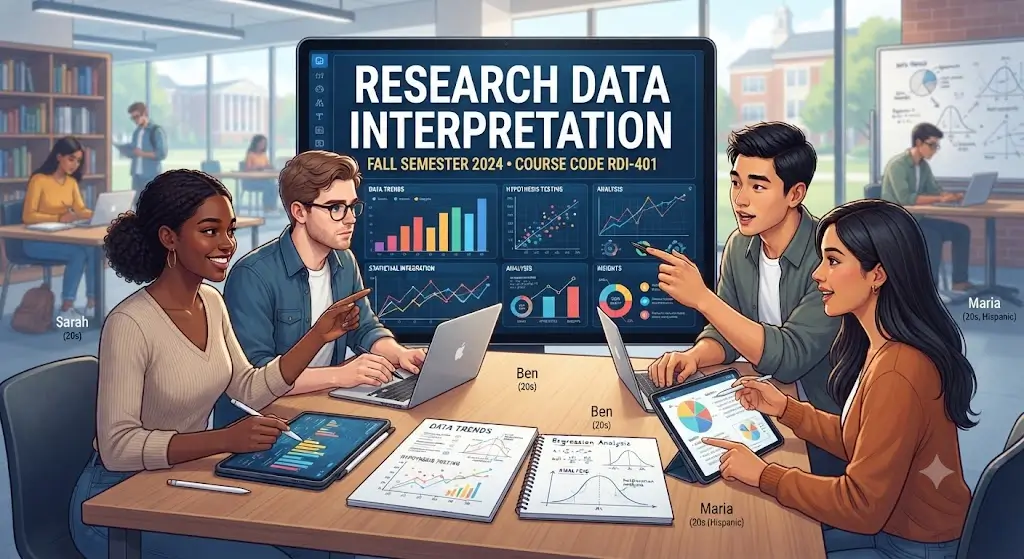
The Research Data Interpretation Course is a comprehensive training program designed to provide learners with the knowledge and practical skills required to interpret research findings accurately and transform data into meaningful information. Collecting data is only one part of the research process. Equally important is the ability to analyze results, identify patterns, explain relationships, evaluate evidence, and communicate conclusions that support informed decision-making.
Research data interpretation is widely used across academic research, healthcare, business analytics, marketing, education, psychology, engineering, finance, public policy, nonprofit organizations, and government institutions. Professionals rely on data interpretation to evaluate research outcomes, measure performance, improve products and services, monitor organizational performance, assess policies, and support evidence-based planning.
This course combines research methodology with analytical techniques to help learners confidently interpret quantitative and qualitative data, evaluate statistical results, create meaningful visualizations, and communicate research findings effectively.
Whether you are a student, researcher, educator, healthcare professional, business analyst, consultant, project manager, policy analyst, data professional, or working professional, this course provides practical knowledge applicable across multiple industries.
Why Research Data Interpretation is Important
Research data interpretation transforms collected information into actionable knowledge that supports better decisions.
Key benefits include:
- Supports evidence-based decision-making
- Improves research quality
- Identifies meaningful patterns and trends
- Strengthens analytical thinking
- Enhances statistical understanding
- Supports business and policy decisions
- Improves research reporting
- Encourages objective conclusions
- Increases data literacy
- Builds professional credibility
For example, businesses interpret customer survey data to improve services, healthcare organizations analyze clinical research outcomes, universities evaluate academic research findings, and government agencies interpret public data to support policy decisions.
Course Overview
This course provides a structured understanding of research data interpretation principles and analytical techniques.
Learners will explore:
- Introduction to research data interpretation
- Data organization and preparation
- Qualitative and quantitative data interpretation
- Descriptive statistics
- Inferential statistics
- Trend analysis
- Pattern recognition
- Statistical significance
- Data visualization
- Research reporting
- Evidence-based conclusions
- Research ethics
- Communication of findings
- Decision-making using research data
- Best practices in research interpretation
What You Will Learn
By the end of this course, learners will be able to:
- Understand research data interpretation principles
- Organize and prepare research data
- Interpret qualitative and quantitative findings
- Analyze statistical outputs
- Identify trends and relationships
- Evaluate research evidence
- Create meaningful visualizations
- Prepare professional research reports
- Support evidence-based decisions
- Communicate research findings effectively
Key Components of Research Data Interpretation
1. Data Preparation and Organization
Learn how to organize research data, verify data quality, clean datasets, classify information, and prepare data for meaningful analysis.
2. Statistical and Qualitative Interpretation
Understand descriptive statistics, inferential statistics, qualitative findings, trend analysis, relationship identification, comparison techniques, and evidence evaluation.
3. Data Visualization and Reporting
Explore charts, graphs, tables, dashboards, visual storytelling, professional reporting, interpretation of visual data, and presentation of research findings.
4. Decision-Making and Ethical Interpretation
Learn how to interpret results objectively, avoid bias, communicate limitations, apply ethical research practices, and support informed decision-making.
5. Practical Applications
Understand how research data interpretation supports healthcare research, business intelligence, education, marketing, finance, engineering, public policy, nonprofit organizations, academic research, and organizational performance improvement.
Skills You Will Gain
After completing this course, learners will develop valuable professional skills, including:
- Research data interpretation
- Data analysis
- Statistical reasoning
- Data visualization
- Trend analysis
- Pattern recognition
- Critical thinking
- Analytical reasoning
- Research reporting
- Evidence evaluation
- Communication skills
- Problem-solving
- Decision-making
- Research ethics
- Professional documentation
Benefits of This Course
Completing this course offers several professional advantages, including:
- Strong understanding of research data interpretation principles
- Better analytical and statistical reasoning skills
- Improved data literacy and interpretation capabilities
- Practical understanding of qualitative and quantitative findings
- Better reporting and communication skills
- Enhanced evidence-based decision-making abilities
- Increased employability across universities, research institutes, healthcare organizations, consulting firms, government agencies, educational institutions, technology companies, financial organizations, multinational corporations, and research analytics teams
- Competitive advantage in research, analytics, business intelligence, policy, and evaluation roles
- Strong foundation for advanced studies in research methodology, business analytics, data science, statistics, healthcare research, public policy, and organizational analysis
Who Should Enroll?
This course is suitable for:
- Students
- Researchers
- Educators
- Healthcare Professionals
- Business Analysts
- Consultants
- Policy Analysts
- Project Managers
- Data Professionals
- Anyone interested in research data interpretation
No previous experience in data analysis or research is required, making this course suitable for beginners as well as experienced professionals.
Career Opportunities
After completing this course, learners can strengthen their professional capabilities in roles such as:
- Research Analyst
- Data Analyst
- Business Analyst
- Research Associate
- Market Research Analyst
- Policy Research Analyst
- Monitoring and Evaluation Officer
- Research Consultant
- Business Intelligence Analyst
- Research Reporting Specialist
- Research Coordinator
Certification
Upon successful completion of the Research Data Interpretation Course, learners receive a professional certificate recognizing their knowledge of research data interpretation, data organization, statistical analysis, qualitative and quantitative interpretation, trend analysis, data visualization, evidence evaluation, research reporting, ethical research practices, and evidence-based decision-making. This certification enhances career opportunities across universities, research institutes, healthcare organizations, consulting firms, government agencies, educational institutions, technology companies, financial institutions, multinational corporations, and research analytics organizations.
Conclusion
The Research Data Interpretation Course provides learners with practical knowledge and professional skills to analyze, interpret, and communicate research findings effectively. By mastering statistical reasoning, qualitative and quantitative interpretation, trend analysis, visualization techniques, ethical reporting, and evidence-based communication, learners will be well prepared to transform research data into meaningful insights that support informed decision-making across academic, business, healthcare, and public sector environments.
Whether your goal is to build a career in research, business analytics, healthcare, education, consulting, public policy, market research, organizational analysis, or data-driven decision-making, this course provides a strong foundation for long-term professional growth.
FAQ
1. What is the Research Data Interpretation Course?
It is a course that teaches how to analyze, interpret, and communicate qualitative and quantitative research data to support evidence-based decision-making.
2. Who should enroll in this course?
Students, researchers, educators, healthcare professionals, business analysts, consultants, policy analysts, project managers, data professionals, and anyone interested in research data interpretation.
3. Do I need prior experience in data analysis?
No. The course is beginner-friendly and suitable for learners with no previous background in research, statistics, or data interpretation.
4. What topics are covered in this course?
The course covers data organization, qualitative and quantitative interpretation, descriptive and inferential statistics, trend analysis, data visualization, research reporting, ethical interpretation, and evidence-based conclusions.
5. Will I learn how to interpret statistical and research findings?
Yes. The course explains how to organize research data, analyze statistical outputs, identify patterns, interpret results, create visualizations, and prepare professional reports.
6. Does this course include data visualization and reporting?
Yes. You will learn how to present research findings using charts, graphs, tables, dashboards, visual storytelling, and professional reporting techniques.
7. Will I receive a certificate after completing the course?
Yes. A professional course completion certificate is awarded upon successful completion.
8. Why is research data interpretation important?
Research data interpretation helps transform raw data into meaningful insights, improves research quality, supports objective analysis, strengthens decision-making, and enables organizations to make informed strategic choices.
9. How does research data interpretation benefit organizations?
It improves performance evaluation, supports business intelligence, enhances policy development, strengthens research reporting, identifies trends, and enables evidence-based organizational decision-making.
10. What career opportunities are available after this course?
This course strengthens your professional skills for roles such as Research Analyst, Data Analyst, Business Analyst, Research Associate, Market Research Analyst, Policy Research Analyst, Monitoring and Evaluation Officer, Research Consultant, Business Intelligence Analyst, Research Reporting Specialist, and Research Coordinator.




Reviews
There are no reviews yet.