
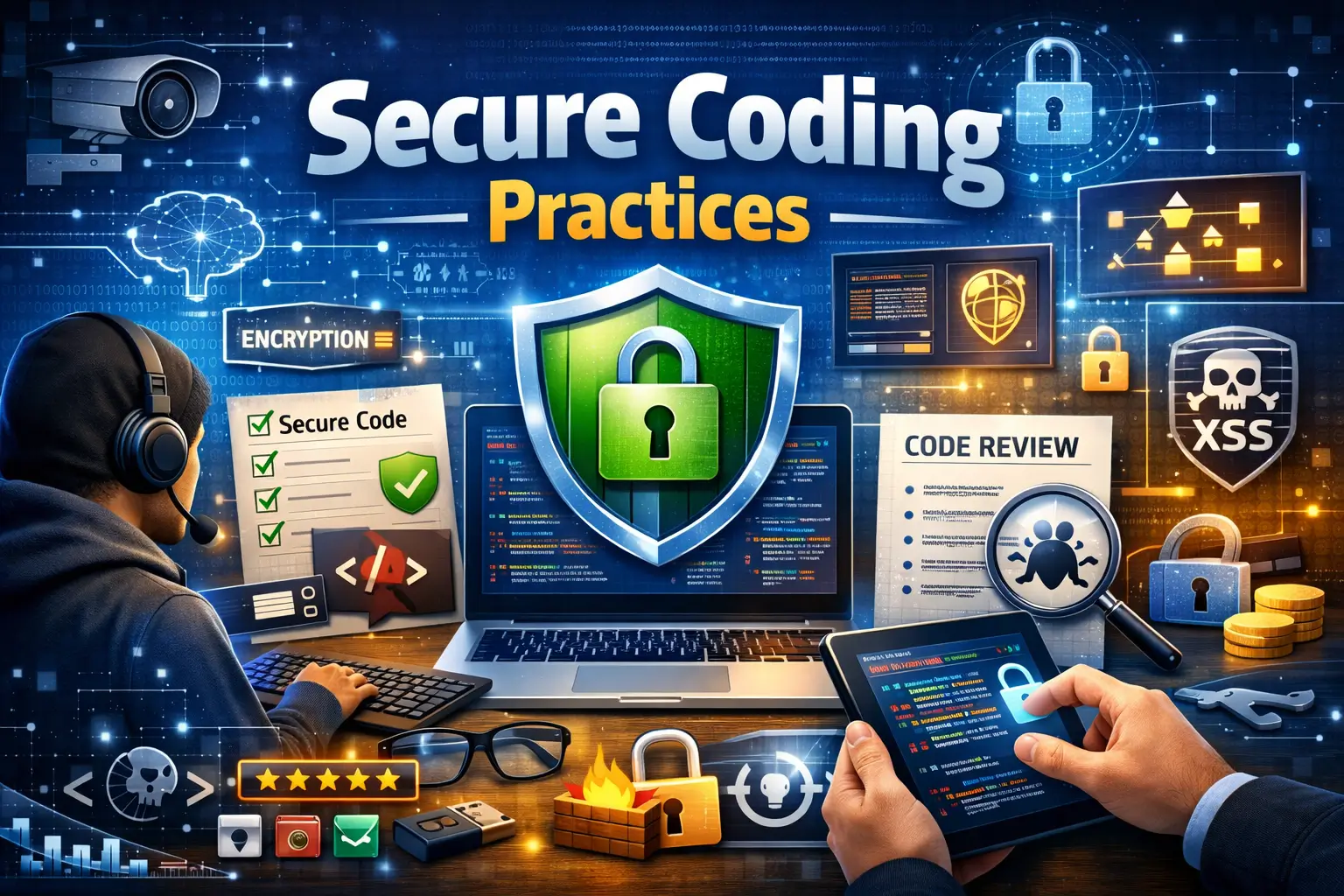
Build Secure Software with a Secure Coding Practices Course
The Secure Coding Practices Course is designed to help developers and technology professionals understand how to create secure applications by following industry-recognized coding standards and software security principles. As cyber threats continue to evolve, organizations increasingly require developers who can build applications that protect sensitive data and resist security vulnerabilities.
This course provides a comprehensive introduction to secure software development, secure coding guidelines, application security concepts, and vulnerability prevention strategies. Learners gain practical knowledge that supports the development of reliable and secure software systems.
Secure Coding Practices Course Overview
Software vulnerabilities can lead to data breaches, financial losses, and operational disruptions. Secure coding practices help developers identify risks early and implement safeguards throughout the software development process.
This course explores the principles of secure application development and introduces learners to best practices used by software development teams worldwide.
Why Learn Secure Coding Practices?
Security is now a critical component of software development. Organizations seek professionals who understand how to build security into applications from the beginning.
Benefits of learning Secure Coding Practices include:
- Understanding software security principles
- Learning secure programming techniques
- Reducing software vulnerabilities
- Improving application security awareness
- Supporting secure software development
- Enhancing problem-solving abilities
- Increasing career opportunities
- Building industry-relevant technical skills
What You Will Learn in This Secure Coding Practices Course
During this course, learners will explore:
- Secure coding fundamentals
- Software security concepts
- Application security principles
- Secure design methodologies
- Secure development lifecycle concepts
- Input validation techniques
- Authentication and authorization fundamentals
- Security testing basics
- Code review methodologies
- Vulnerability management principles
Secure Software Development Fundamentals
Secure software development focuses on integrating security considerations throughout the software lifecycle.
Application Security Principles
Learn how organizations protect applications from common security risks and threats.
Secure Coding Standards
Understand coding guidelines that help developers write secure and maintainable code.
Vulnerability Prevention
Explore techniques used to minimize security weaknesses during software development.
Secure Development Lifecycle
Learn how security activities are incorporated into planning, development, testing, and deployment processes.
Skills You Will Gain from the Secure Coding Practices Course
After completing the course, learners will be able to:
- Understand secure coding principles
- Identify common software vulnerabilities
- Apply secure development practices
- Support application security initiatives
- Conduct basic security-focused code reviews
- Improve software quality
- Contribute to secure development teams
- Understand software security requirements
Career Benefits
Secure coding knowledge is valuable across software development and cybersecurity domains.
Potential career opportunities include:
- Software Developer
- Application Security Analyst
- Secure Software Engineer
- Cyber Security Analyst
- Web Developer
- Security-Focused Developer
- Software Quality Analyst
- Develops Associate
- Security Compliance Specialist
- Application Support Engineer
Who Should Enroll?
This course is ideal for:
- Software developers
- Web developers
- Computer science students
- Cybersecurity professionals
- Application support teams
- DevOps professionals
- Technology enthusiasts
- IT professionals interested in software security
Basic programming knowledge is recommended but not mandatory.
Certification Benefits
Upon successful completion of the Secure Coding Practices Course, learners receive a certification demonstrating their understanding of software security and secure development principles.
Benefits include:
- Enhanced professional credibility
- Improved software security knowledge
- Increased employability
- Recognition of secure coding skills
- Preparation for advanced application security studies
Conclusion
The Secure Coding Practices Course provides a strong foundation in secure software development, application security, vulnerability prevention, and coding standards. Learners gain practical knowledge that helps organizations reduce software risks and improve security outcomes. Whether you are a developer, student, or IT professional, this course offers valuable skills for building secure applications in today’s technology-driven world.
FAQ SECTION
1. What are secure coding practices?
Secure coding practices are techniques and standards used to develop software that minimizes security vulnerabilities and risks.
2. Is this Secure Coding Practices Course suitable for beginners?
Yes, the course introduces secure coding concepts in a beginner-friendly manner.
3. What skills will I learn?
You will learn secure software development, coding standards, vulnerability prevention, application security, and secure development lifecycle concepts.
4. Who should take this course?
Developers, students, cybersecurity professionals, DevOps practitioners, and IT professionals can benefit from this course.
5. Why is secure coding important?
Secure coding helps prevent vulnerabilities that could lead to security incidents, data breaches, and application compromise.
6. Does the course cover application security?
Yes, application security principles are a major component of the curriculum.
7. Will I receive a certificate?
Yes, learners receive a course completion certificate.
8. Can secure coding skills improve career opportunities?
Yes, software security expertise is highly valued across technology industries.
9. What is a secure development lifecycle?
It is a development approach that integrates security throughout software planning, development, testing, and deployment.
10. What should I learn after this course?
Advanced application security, Develops, software testing, and cybersecurity courses are recommended.



Reviews
There are no reviews yet.