
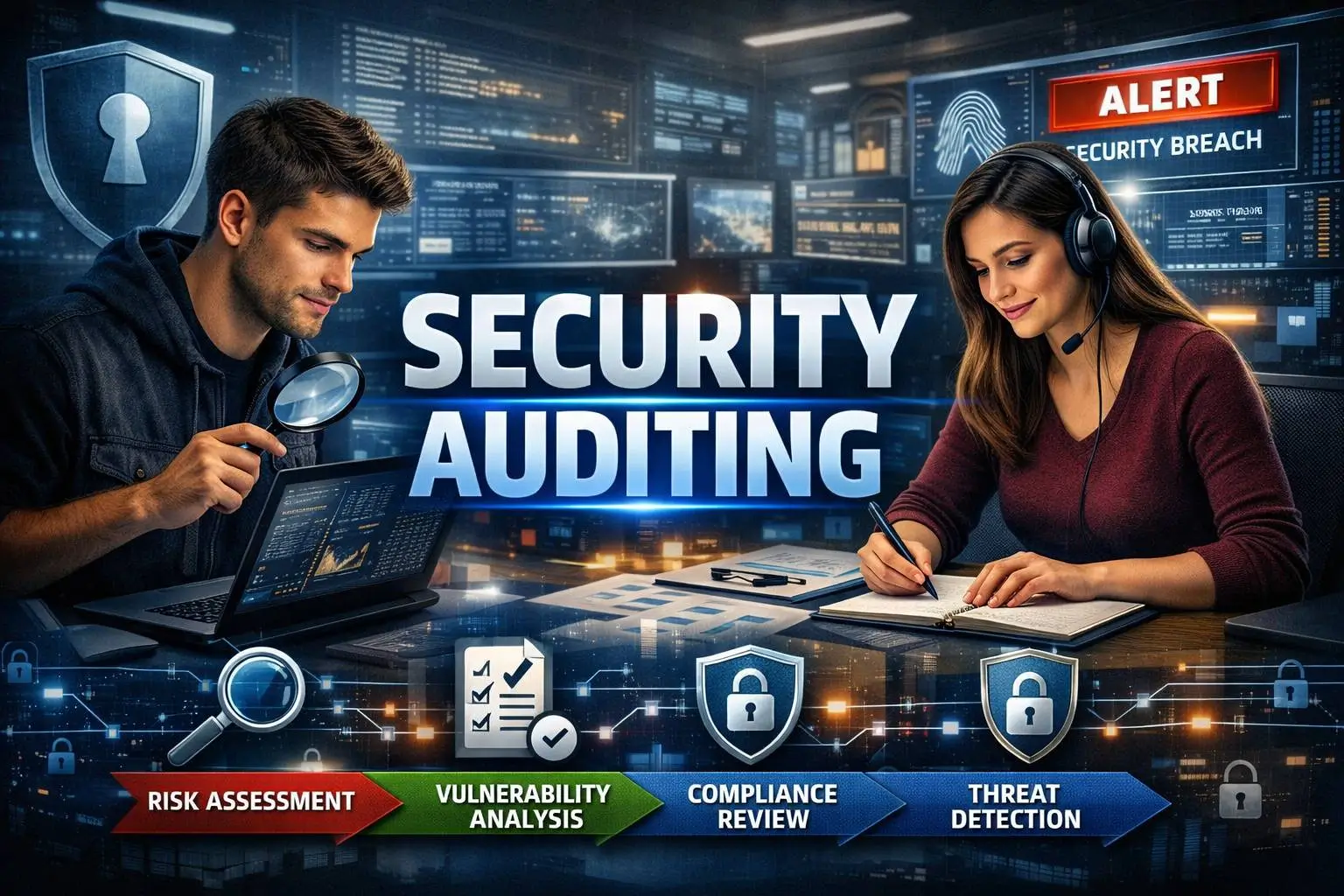
Strengthen organizational resilience with our Security Auditing course, designed to provide learners with the knowledge and skills to evaluate, monitor, and improve information security practices. Security auditing is a vital discipline in cybersecurity and compliance, ensuring that systems, networks, and processes meet regulatory standards and safeguard against threats. This course offers a structured foundation in auditing principles, equipping participants with practical strategies to succeed in both academic and professional environments.
Learners will explore the fundamentals of security audits, including risk assessment, compliance checks, and vulnerability identification. The curriculum emphasizes frameworks such as ISO/IEC 27001, NIST, and COBIT, along with audit planning, evidence collection, and reporting techniques. Participants will gain insights into how security auditing supports governance, risk management, and regulatory compliance.
A major focus of the course is on practical application. Students will learn how to conduct internal and external audits, review documentation, and assess technical controls. Real‑world case studies highlight how organizations use security audits to identify weaknesses, recommend corrective actions, and foster continuous improvement.
The course also introduces learners to modern developments in security auditing, including automated audit tools, cloud security assessments, and AI‑driven monitoring. By understanding how innovation and policy shape auditing practices, participants will be prepared to adapt to evolving cybersecurity landscapes.
Whether you are a student, IT professional, or compliance officer, this course equips you with actionable knowledge and confidence. By the end of the program, learners will be able to plan and conduct audits, evaluate security performance, and contribute to organizational resilience.
Key Benefits:
- Understand fundamentals of security auditing and compliance
- Learn frameworks like ISO/IEC 27001, NIST, and COBIT
- Explore audit planning, evidence collection, and reporting techniques
- Gain skills in conducting internal and external audits
- Prepare for modern trends like automated and cloud security audits
FAQ SECTION
1. What is Security Auditing?
Security auditing is the process of evaluating security controls, policies, and procedures to identify risks and ensure compliance.
2. Is this Security Auditing Course suitable for beginners?
Yes, the course is designed for beginners and professionals seeking foundational auditing knowledge.
3. What skills will I learn?
You will learn security auditing, compliance management, risk assessment, governance practices, and audit reporting techniques.
4. Who should take this course?
Students, cybersecurity professionals, auditors, compliance specialists, and risk management professionals can benefit.
5. What is the purpose of a security audit?
Security audits help organizations identify weaknesses, improve controls, and ensure regulatory compliance.
6. Does the course cover risk assessment?
Yes, risk assessment and risk management concepts are important components of the curriculum.
7. Is certification provided?
Yes, learners receive a course completion certificate.
8. What industries need security auditing skills?
Finance, healthcare, government, education, telecommunications, and technology sectors require security auditing expertise.
9. Can this course help my cybersecurity career?
Yes, security auditing knowledge is highly valued in cybersecurity and compliance roles.
10. What should I study after this course?
Advanced cybersecurity, risk management, governance, compliance, and information security certification programs are excellent next steps.





Reviews
There are no reviews yet.