
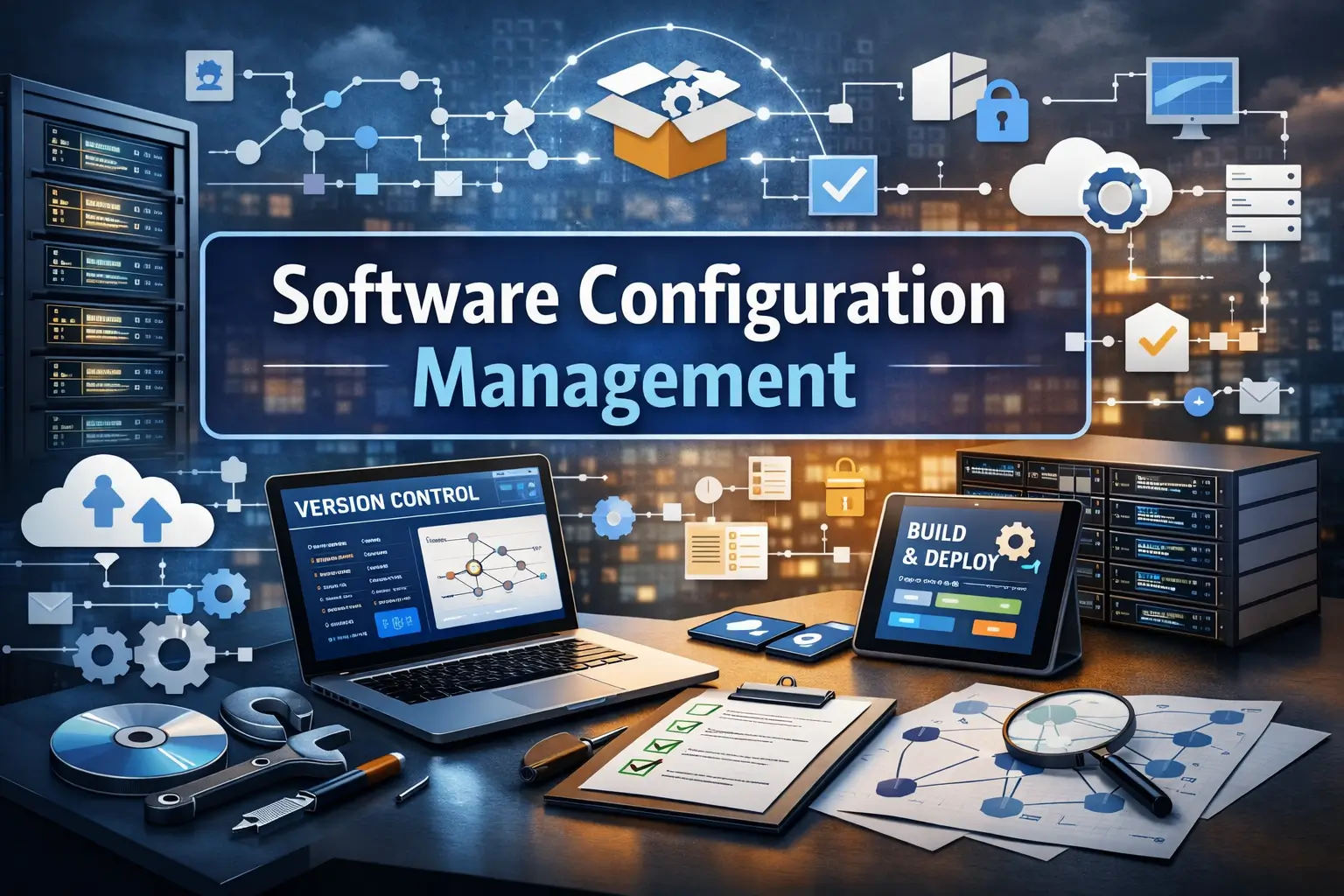
Software Configuration Management Course
The Software Configuration Management Course is designed to provide learners with the knowledge and practical skills needed to manage software changes, maintain version control, and ensure consistency throughout the software development lifecycle. Software Configuration Management (SCM) is a critical discipline that helps development teams control source code, track modifications, automate builds, and manage software releases efficiently.
This course introduces the principles, processes, and tools used in configuration management, including version control systems, change management, build automation, release management, and continuous integration practices. Learners will understand how SCM supports collaboration, improves software quality, and reduces deployment risks.
Whether you are a software developer, DevOps engineer, project manager, QA professional, or student, this course provides a strong foundation in configuration management for modern software development.
Course Overview
The course explains how software configuration management ensures that development teams maintain accurate records of software assets, manage changes systematically, and deliver reliable software releases. Learners will explore the complete configuration management lifecycle, from identifying configuration items to auditing and maintaining software integrity.
The course also highlights the role of SCM in Agile, DevOps, and continuous delivery environments.
What You Will Learn
By completing this course, you will be able to:
- Understand software configuration management principles.
- Manage source code using version control systems.
- Apply Git workflows for collaborative development.
- Control software changes effectively.
- Implement configuration identification practices.
- Manage software builds and releases.
- Understand branching and merging strategies.
- Integrate SCM with CI/CD pipelines.
- Maintain software documentation and traceability.
- Perform configuration audits.
- Improve collaboration within development teams.
- Reduce software deployment risks.
- Support software quality assurance processes.
- Follow SCM industry best practices.
- Manage software lifecycle configurations efficiently.
Course Curriculum
The curriculum begins with the fundamentals of software configuration management and progresses through version control, Git workflows, configuration identification, change control, build automation, release management, CI/CD integration, auditing, and documentation.
Learners will explore practical scenarios involving collaborative software development, release planning, and configuration tracking in enterprise environments.
Skills You Will Gain
After completing the course, you will develop skills in:
- Software Configuration Management
- Version Control
- Git Workflows
- Source Code Management
- Build Automation
- Release Management
- Change Management
- Configuration Auditing
- Branching & Merging
- CI/CD Integration
- DevOps Practices
- Software Documentation
- Traceability Management
- Software Lifecycle Management
- Team Collaboration
Benefits of the Course
This course helps learners establish effective configuration management practices that improve software reliability, reduce development errors, and streamline release processes. Proper SCM enables teams to collaborate efficiently, maintain software integrity, and recover quickly from issues.
Organizations rely on configuration management to ensure consistent deployments, regulatory compliance, and high-quality software delivery.
Who Should Enroll
This course is ideal for:
- Software Developers
- DevOps Engineers
- QA Engineers
- Build and Release Engineers
- Configuration Managers
- Project Managers
- System Administrators
- Full Stack Developers
- Backend Developers
- Software Architects
- Computer Science Students
- Technical Leads
- IT Professionals
- Agile Team Members
- Anyone interested in software engineering practices
Career Opportunities
After completing the Software Configuration Management Course, learners may pursue or strengthen careers as:
- Software Developer
- DevOps Engineer
- Configuration Manager
- Build and Release Engineer
- Software Engineer
- CI/CD Engineer
- Release Manager
- QA Automation Engineer
- System Administrator
- Software Project Manager
These roles are in demand across software companies, cloud service providers, enterprise IT organizations, fintech firms, healthcare technology companies, and government agencies.
Certification Details
Upon successful completion, learners receive a Certificate of Completion recognizing their expertise in software configuration management, version control, and release management. This certification demonstrates your understanding of modern software engineering practices and enhances your career opportunities in software development, DevOps, and IT operations.
If you want to improve software quality, streamline development workflows, and manage software changes effectively, the Software Configuration Management Course provides practical, industry-relevant knowledge for today’s software professionals.
FAQ SECTION
1. What is the Software Configuration Management Course?
It teaches how to manage software versions, configurations, builds, and releases throughout the software development lifecycle.
2. Is this course suitable for beginners?
Yes. It starts with the fundamentals and gradually covers advanced configuration management concepts.
3. What topics are covered?
Version control, Git, change management, build automation, release management, CI/CD, and configuration auditing.
4. Do I need programming experience?
Basic programming knowledge is helpful but not mandatory.
5. Is the course online?
Yes. It is a fully online, self-paced course.
6. Will I receive a certificate?
Yes. A certificate is awarded after successfully completing the course.
7. Who should enroll?
Software developers, DevOps engineers, QA professionals, project managers, and students.
8. What skills will I gain?
Version control, Git workflows, build automation, release management, CI/CD integration, and software lifecycle management.
9. Can this course help my career?
Yes. Software configuration management skills are highly valued in software engineering, DevOps, and release management roles.
10. Why is Software Configuration Management important?
It ensures software consistency, improves collaboration, manages changes efficiently, reduces deployment risks, and supports reliable software releases.



Reviews
There are no reviews yet.