
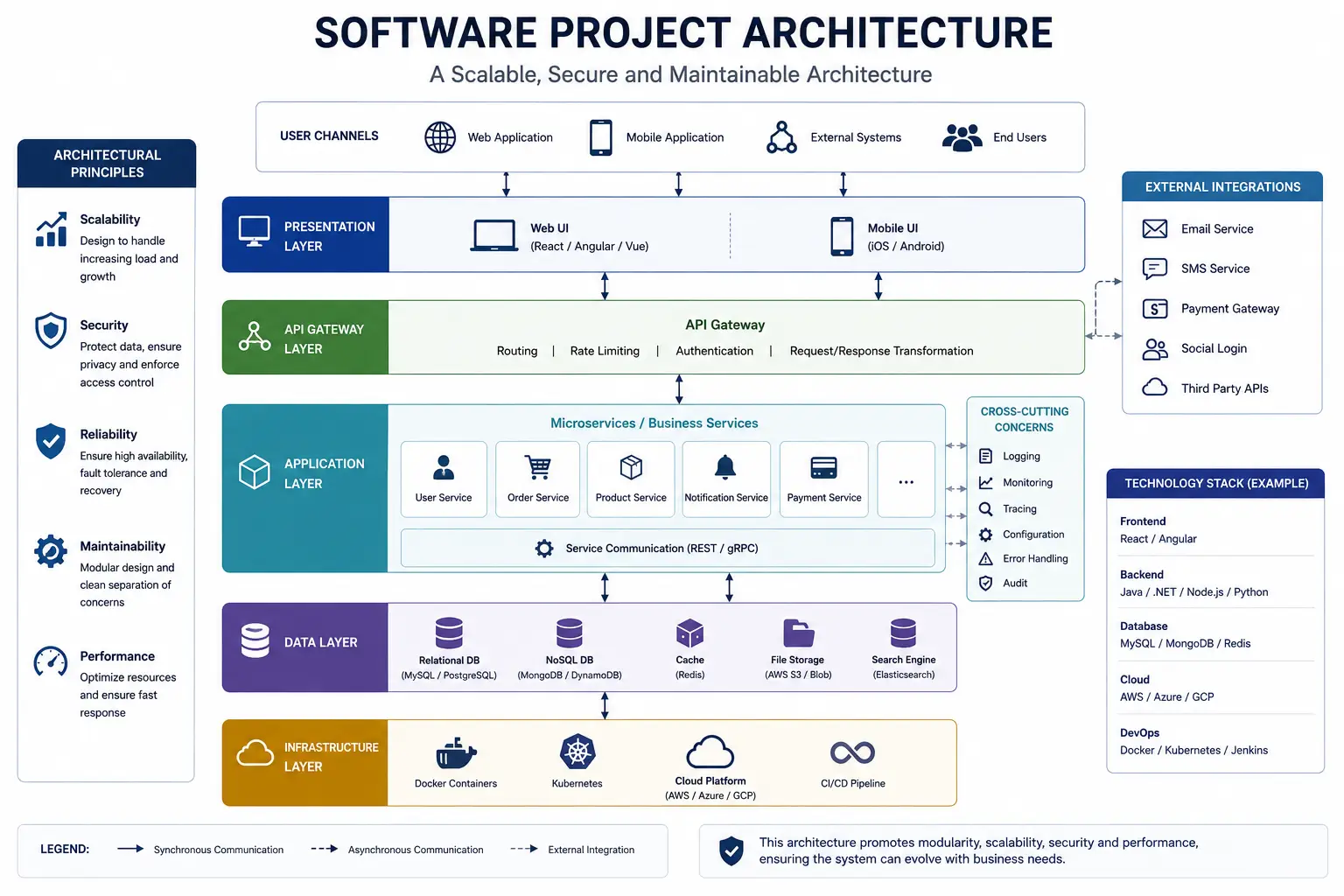
Introduction to Software Project Architecture
Software architecture serves as the blueprint for successful software systems. It defines how software components interact, how systems scale, how security is maintained, and how future growth can be supported. Effective architecture decisions directly influence software quality, maintainability, and business success.
The Software Project Architecture Course introduces learners to the principles, frameworks, and best practices used to design modern software systems. Participants will explore system architecture, software design patterns, scalability strategies, cloud-based architectures, and security considerations that drive successful software projects.
As organizations increasingly rely on digital technologies, software architecture expertise continues to be one of the most valuable skills in the technology industry.
Why Learn Software Project Architecture?
Well-designed software architecture reduces complexity, improves performance, and supports long-term business goals.
Benefits include:
- Better software scalability
- Improved system performance
- Enhanced maintainability
- Stronger security design
- Reduced technical debt
- Efficient project planning
- Increased career opportunities
Software architects play a vital role in ensuring software systems remain reliable, flexible, and future-ready.
What You Will Learn
This Software Project Architecture Course covers the essential concepts used in designing modern software systems.
Topics include:
- Software architecture fundamentals
- System design methodologies
- Architectural patterns
- Design principles
- Enterprise architecture
- Scalability planning
- Security architecture
- Cloud-based solutions
- Architecture documentation
- Technology governance
These topics provide a strong foundation for architecture-focused software development roles.
Core Areas Covered
Introduction to Software Architecture
Understand the purpose and importance of software architecture.
Topics include:
- Architecture concepts
- Architectural styles
- Software quality attributes
- Architecture frameworks
Software Design Principles
Strong design principles improve software quality.
Topics include:
- SOLID principles
- Modularity
- Maintainability
- Reusability
System Architecture Fundamentals
Learn how large-scale software systems are structured.
Topics include:
- Layered architecture
- Component architecture
- Service-oriented architecture
- Distributed systems
Software Design Patterns
Design patterns provide proven solutions to common challenges.
Topics include:
- Creational patterns
- Structural patterns
- Behavioral patterns
- Enterprise patterns
Enterprise Application Architecture
Modern enterprises require scalable software systems.
Topics include:
- Enterprise integration
- Application architecture
- Business systems
- Organizational scalability
Scalability and Performance Design
Architecture impacts system performance.
Topics include:
- Scalability strategies
- Load balancing concepts
- Performance optimization
- Capacity planning
Security Architecture Fundamentals
Security should be integrated into architectural design.
Topics include:
- Security principles
- Access control
- Risk mitigation
- Secure architecture design
Cloud and Distributed Systems Architecture
Cloud technologies have transformed software architecture.
Topics include:
- Cloud-native applications
- Microservices concepts
- Distributed computing
- Cloud scalability
Skills You Will Gain
Upon completing this course, learners will be able to:
- Understand software architecture principles
- Design scalable software systems
- Apply architecture patterns effectively
- Evaluate software design decisions
- Improve system performance
- Address security requirements
- Create architecture documentation
- Support enterprise software initiatives
These skills are highly valuable across software engineering and technology leadership roles.
Benefits of the Course
Industry-Relevant Expertise
Learn architecture practices used by leading technology organizations.
Strong Technical Foundation
Develop a deep understanding of system design and architecture concepts.
Career Advancement
Software architecture skills support progression into senior technical roles.
Practical Application
Apply architectural principles to real-world software projects.
Professional Certification
Earn a Software Project Architecture Certification demonstrating your expertise in software architecture and system design.
Who Should Enroll?
This course is ideal for:
- Software Developers
- Software Engineers
- Technical Leads
- Solution Architects
- IT Professionals
- System Analysts
- Technology Consultants
- Computer Science Students
Basic programming knowledge is recommended.
Career Opportunities
This course can support careers such as:
- Software Architect
- Solution Architect
- Technical Architect
- Senior Software Engineer
- Enterprise Architect
- Systems Designer
- Technology Consultant
- Engineering Manager
The demand for skilled software architects continues to grow across industries worldwide.
Certification Benefits
Upon successful completion, learners receive a Software Project Architecture Certification.
Benefits include:
- Enhanced professional credibility
- Recognition of architecture expertise
- Improved employability
- Stronger technical leadership profile
- Career advancement opportunities
Conclusion
The Software Project Architecture Course equips learners with the knowledge and practical skills required to design modern software systems. By exploring architecture principles, system design methodologies, design patterns, scalability strategies, cloud technologies, and security frameworks, learners gain valuable expertise that can be applied across a wide range of software projects. Whether you are a developer, technical lead, architect, or IT professional, this course provides a solid foundation for success in software architecture and system design.
10. FAQ SECTION
1. What is Software Project Architecture?
Software Project Architecture is the process of designing the structure, components, and interactions of a software system to meet technical and business requirements.
2. Is this course suitable for beginners?
Yes, although basic programming knowledge is recommended.
3. Will I receive a certificate?
Yes, learners receive a certificate upon successful completion.
4. What is the role of a software architect?
A software architect designs system structures, technology strategies, scalability plans, and architectural solutions.
5. Are design patterns covered in the course?
Yes, the course introduces common software design patterns and their practical applications.
6. Will I learn cloud architecture concepts?
Yes, cloud-based architecture and distributed systems concepts are included.
7. Who should take this course?
Developers, software engineers, technical leads, architects, consultants, and IT professionals.
8. What skills will I gain?
Software architecture, system design, scalability planning, security architecture, and architecture documentation.
9. Is software architecture a good career path?
Yes, software architecture is one of the highest-demand and highest-paying areas in software engineering.
10. Is the course fully online?
Yes, learners can study online at their own pace.





Reviews
There are no reviews yet.