
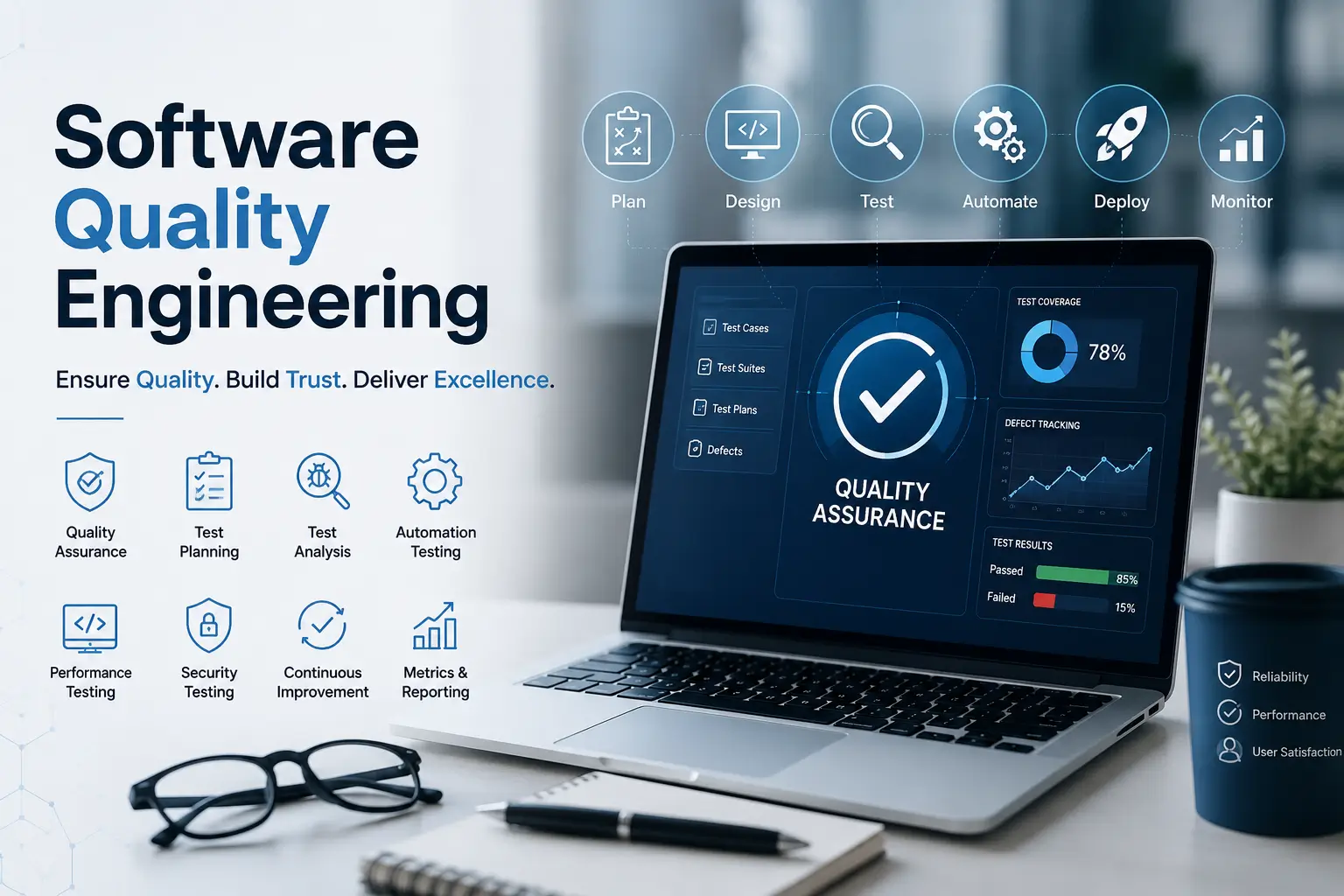
Software Quality Engineering Course
High-quality software is essential for delivering reliable, secure, and user-friendly digital products. Organizations need professionals who can ensure software meets performance, functionality, security, and usability standards. Software Quality Engineering focuses on improving software development processes through effective testing, quality management, automation, and continuous improvement. The Software Quality Engineering Course is designed to help learners understand modern approaches to building and maintaining high-quality software systems.
This course provides practical knowledge of software testing, quality assurance, automation concepts, defect management, testing strategies, quality metrics, and software improvement practices. Whether you are a software developer, tester, IT professional, student, or technology enthusiast, this course helps you build essential skills for software quality management.
Course Overview
The Software Quality Engineering Course introduces learners to the principles and practices used to ensure software reliability and performance. The course explains how quality engineering integrates with software development processes to identify issues, prevent defects, and improve product quality.
Learners will explore software testing methods, quality assurance frameworks, agile testing approaches, automation concepts, and continuous testing practices. The course provides a strong foundation for understanding how professional teams deliver reliable software products.
What You Will Learn
By completing this course, learners will understand:
- Software Quality Engineering concepts
- Software testing fundamentals
- Quality assurance processes
- Software development lifecycle
- Test planning and execution
- Defect identification and management
- Automation testing basics
- Agile testing practices
- Quality measurement techniques
- Continuous testing approaches
- Software reliability improvement
- Industry quality standards
These skills help learners contribute to successful software development projects.
Course Curriculum
The course begins with an introduction to Software Quality Engineering and explains its importance in modern software development. Learners understand how quality practices improve software performance, security, and user satisfaction.
The curriculum covers software testing fundamentals, manual and automated testing methods, test planning, defect management, quality metrics, agile testing, performance testing, and continuous quality improvement.
Practical examples help learners understand how software teams identify problems, improve processes, and deliver reliable applications.
Skills You Will Gain
After completing the Software Quality Engineering Course, learners will develop skills in:
- Software testing techniques
- Quality assurance practices
- Test planning and execution
- Defect tracking and management
- Automation testing concepts
- Agile quality processes
- Software performance evaluation
- Quality improvement strategies
- Testing documentation
- Software reliability management
- Continuous testing practices
These skills are valuable in software development and IT industries.
Benefits of the Course
The Software Quality Engineering Course helps learners develop essential skills required in today’s technology-driven world. As software applications become more complex, organizations need professionals who can maintain quality, reduce errors, and improve user experiences.
This course improves problem-solving abilities, technical understanding, and software quality management skills. Learners gain knowledge of industry practices used by professional software teams.
The course also provides a strong foundation for careers in software testing, quality assurance, automation testing, and software engineering.
Who Should Enroll
This course is ideal for:
- Software Developers
- Software Testers
- QA Engineers
- IT Professionals
- Computer Science Students
- Software Engineers
- Automation Testing Beginners
- Project Managers
- Business Analysts
- Technology Enthusiasts
Basic programming or software knowledge is helpful but not mandatory.
Career Opportunities
After completing this course, learners can explore career opportunities such as:
- Software Quality Engineer
- QA Engineer
- Software Tester
- Automation Test Engineer
- Quality Analyst
- Software Test Analyst
- Test Automation Specialist
- Software Reliability Engineer
- Quality Assurance Specialist
- Software Engineer
These roles are available across software companies, technology organizations, startups, and enterprise businesses.
Certification Details
After successful completion of the Software Quality Engineering Course, learners receive a professional certificate recognizing their knowledge of software testing, quality assurance, automation concepts, and quality improvement practices.
The certificate enhances professional credibility and demonstrates understanding of modern software quality methods.
Why Choose This Course?
The Software Quality Engineering Course combines software testing concepts with modern quality engineering practices to prepare learners for real-world software environments. Through flexible online learning, practical examples, and industry-focused content, learners gain the skills needed to improve software quality and support reliable product development.
FAQ SECTION
1. What is the Software Quality Engineering Course?
This course teaches software testing, quality assurance, automation concepts, and methods for improving software reliability.
2. Who should enroll in this course?
Software developers, testers, QA professionals, students, IT professionals, and beginners interested in software quality.
3. Do I need programming experience?
Basic programming knowledge is helpful but not required for understanding core concepts.
4. What skills will I gain?
You will learn testing methods, QA practices, defect management, automation basics, and quality improvement techniques.
5. Is this course available online?
Yes, the course is available online with flexible learning options.
6. Will I receive a certificate?
Yes, learners receive a professional certificate after successful completion.
7. Why is Software Quality Engineering important?
It helps organizations create reliable software, reduce defects, and improve customer satisfaction.
8. What topics are covered in software quality engineering?
Topics include testing, automation, quality assurance, defect management, agile testing, and continuous improvement.
9. What career opportunities are available after this course?
Learners can pursue roles such as QA Engineer, Software Tester, Quality Engineer, and Automation Test Engineer.
10. Is this course suitable for beginners?
Yes, the course is designed for beginners who want to build software quality skills.





Reviews
There are no reviews yet.