
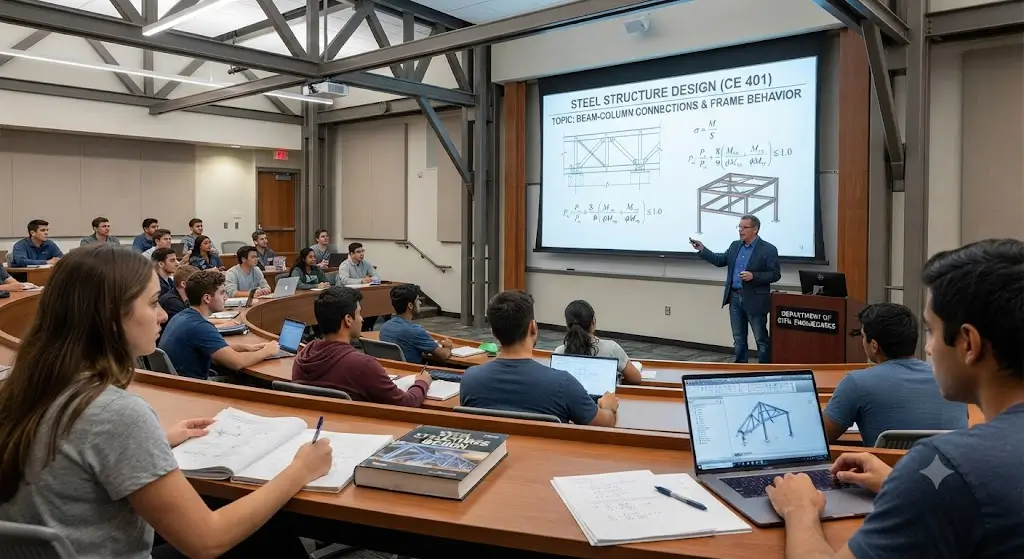
Introduction to Steel Structure Design
The Steel Structure Design Course is a professional training program designed to help learners understand the principles and techniques used in designing steel structures for residential, commercial, industrial, and infrastructure projects. Steel is one of the most widely used construction materials due to its strength, flexibility, and durability.
Steel structure design involves calculating structural loads, selecting appropriate steel sections, designing beams, columns, trusses, and connections, and ensuring compliance with engineering standards and safety regulations. Engineers apply analytical methods and design codes to create efficient and reliable structures.
This course combines structural engineering principles, material science, structural analysis, and design methodologies to provide practical knowledge applicable across construction, infrastructure, manufacturing, and industrial engineering sectors.
Why Steel Structure Design Matters
Steel structures provide high strength, faster construction, design flexibility, and long service life. Proper structural design ensures safety, stability, and cost efficiency while meeting engineering standards.
Knowledge of steel structure design enables engineers to create resilient buildings and industrial facilities capable of withstanding environmental and operational loads. These skills are highly valued in modern construction and infrastructure development.
The Steel Structure Design Course enables learners to develop professional expertise in structural analysis and steel design.
Course Overview
The Steel Structure Design Course introduces learners to structural engineering concepts and modern steel design practices.
Participants begin by studying the mechanical properties of structural steel and structural loading principles. The course explores beam, column, truss, and connection design techniques.
Learners also study structural stability, buckling analysis, structural detailing, fabrication methods, and relevant engineering standards.
Practical case studies demonstrate how steel structures are designed for commercial buildings, bridges, warehouses, industrial plants, and other infrastructure projects.
Topics Covered
Throughout the Steel Structure Design Course, learners will study:
Steel Material Properties
Understand the mechanical and structural properties of steel.
Structural Load Analysis
Calculate dead loads, live loads, wind loads, and seismic loads.
Beam Design
Design steel beams for strength and serviceability.
Column Design
Analyze and design compression members.
Truss Design
Understand truss systems and load distribution.
Connection Design
Design welded and bolted steel connections.
Structural Stability
Evaluate buckling and overall structural stability.
Structural Detailing
Prepare engineering drawings and detailing practices.
Design Codes and Standards
Apply national and international structural design standards.
Safety and Quality Control
Ensure structural integrity and construction quality.
Skills You Will Gain
After completing the Steel Structure Design Course, learners will develop valuable professional skills including:
- Steel structural analysis
- Beam and column design
- Truss analysis
- Structural load calculations
- Connection design
- Structural detailing
- Engineering drawing interpretation
- Design code application
- Structural stability evaluation
- Technical problem-solving
- Material selection
- Engineering calculations
- Construction planning
- Quality assurance
- Structural design optimization
These competencies are valuable across construction companies, infrastructure projects, structural consulting firms, manufacturing industries, and engineering organizations.
Benefits of the Course
The Steel Structure Design Course provides practical knowledge for designing safe, durable, and economical steel structures.
Participants gain confidence in structural calculations, design methodologies, engineering standards, and construction practices. The course also strengthens analytical thinking, technical expertise, and engineering decision-making.
As global infrastructure development continues to grow, professionals with steel structure design expertise remain highly sought after.
Who Should Enroll?
This course is suitable for:
- Civil engineers
- Structural engineers
- Construction engineers
- Design engineers
- Site engineers
- Project engineers
- Engineering consultants
- Engineering students
- CAD professionals
- Infrastructure professionals
Basic knowledge of structural engineering is recommended.
Career Opportunities
After completing the Steel Structure Design Course, learners may pursue careers such as:
- Structural Design Engineer
- Steel Design Engineer
- Civil Engineer
- Structural Consultant
- Construction Engineer
- Project Engineer
- Structural Analyst
- Design Consultant
- Infrastructure Engineer
- Building Design Engineer
- Fabrication Design Engineer
- Quality Engineer
- Site Engineer
- Engineering Project Manager
- Chief Structural Engineer (future path)
Certification
Upon successful completion of the Steel Structure Design Course, learners receive a professional certificate recognizing their expertise in steel structural analysis, member design, structural detailing, connection design, and engineering standards. This certification supports career advancement across civil engineering, construction, and structural design industries.
Frequently Asked Questions (FAQs)
1. What is the Steel Structure Design Course?
It teaches the principles, analysis, and design of steel structures used in engineering and construction.
2. Who should enroll in this course?
Civil engineers, structural engineers, engineering students, and construction professionals can benefit.
3. Do I need prior experience?
Basic knowledge of structural engineering is recommended.
4. What topics are covered?
Steel properties, load analysis, beam design, column design, trusses, connections, and design standards.
5. Is this course practical?
Yes. It includes practical design concepts, engineering calculations, and industry case studies.
6. Will I learn beam and column design?
Yes. Steel member design is a major part of the course.
7. How does this help my career?
It builds essential structural engineering skills required for construction and infrastructure projects.
8. Does it include engineering standards?
Yes. The course covers commonly used structural design codes and best practices.
9. Can this improve my job opportunities?
Yes. Steel structure design professionals are in demand across construction and infrastructure industries.
10. What industries use steel structure design?
Construction, infrastructure, manufacturing, oil and gas, industrial facilities, transportation, and engineering consulting.





Reviews
There are no reviews yet.