
Introduction
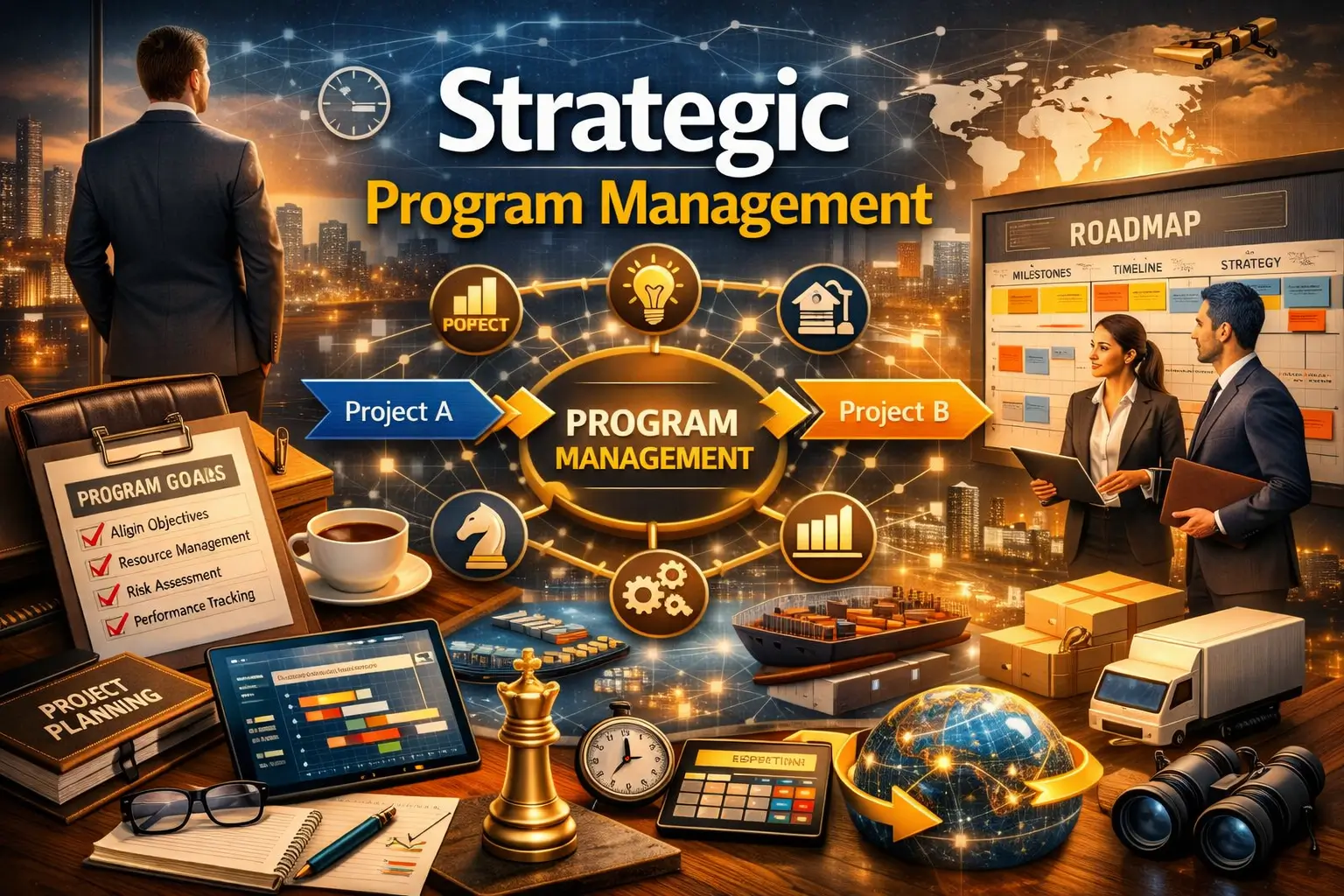
Organizations often manage multiple interconnected projects simultaneously to achieve broader strategic objectives. Coordinating these projects effectively requires structured planning, governance, resource management, and leadership. Strategic program management provides the framework for managing related projects as a unified program, ensuring that every initiative contributes to organizational goals while maximizing efficiency and business value. The Strategic Program Management Course introduces learners to the principles, methodologies, and best practices required to lead successful programs in today’s dynamic business environment.
Strategic program management involves defining program objectives, aligning projects with business strategy, managing stakeholders, allocating resources, monitoring performance, controlling risks, and realizing long-term benefits. Therefore, professionals with expertise in program management play an essential role in driving organizational transformation, improving collaboration, and supporting sustainable growth.
Moreover, this course explains how organizations establish governance structures, develop program roadmaps, manage program portfolios, coordinate project teams, evaluate program performance, and implement digital management tools. Learners explore program governance, benefits realization, financial management, change management, leadership, communication strategies, risk management, business analytics, automation, and continuous improvement.
In addition, participants develop practical skills in strategic thinking, leadership, communication, decision-making, resource planning, conflict resolution, stakeholder engagement, and analytical problem-solving. These competencies prepare learners for leadership positions in program management, project management, operations, consulting, and organizational development.
By completing this course, learners establish a strong foundation in strategic program management while contributing to improved organizational performance, better strategic execution, enhanced collaboration, and long-term business success.
Course Overview
The Strategic Program Management Course provides comprehensive training in program planning, governance, portfolio management, stakeholder engagement, strategic execution, performance measurement, and leadership. Furthermore, the course explains how organizations successfully manage multiple related projects to achieve strategic business outcomes.
Fundamentals of Strategic Program Management
The course begins by introducing program management principles, governance frameworks, strategic alignment, organizational objectives, and the relationship between projects, programs, and portfolios.
Program Planning and Strategy
Learners explore program planning, roadmap development, business case preparation, program objectives, scope management, scheduling, budgeting, and resource planning.
Program Governance
The course explains governance structures, decision-making frameworks, compliance, reporting mechanisms, accountability, and program oversight.
Portfolio Management
Participants learn portfolio prioritization, project selection, strategic alignment, resource optimization, portfolio balancing, and investment decision-making.
Stakeholder Engagement and Communication
Learners understand stakeholder identification, communication planning, executive reporting, collaboration strategies, conflict resolution, and stakeholder satisfaction management.
Program Risk and Change Management
The course covers risk identification, mitigation planning, issue management, organizational change management, business continuity, and program resilience.
Performance Measurement and Benefits Realization
Learners explore program KPIs, performance dashboards, benefits tracking, financial performance, reporting, evaluation methods, and continuous improvement.
Digital Tools for Program Management
Participants learn project management software, Enterprise Resource Planning (ERP) systems, business intelligence tools, collaboration platforms, artificial intelligence, automation, and predictive analytics.
Leadership and Team Management
The course explains leadership styles, team coordination, talent development, coaching, motivation, performance management, and organizational culture.
Future Trends in Program Management
Finally, learners explore AI-driven program management, digital transformation, agile program management, hybrid methodologies, intelligent automation, and emerging leadership practices.
Overall, this course combines strategic management principles with practical program management techniques, enabling learners to successfully lead complex programs while preparing them for leadership careers in project management, operations, consulting, and business management.
What You Will Learn
The Strategic Program Management Course equips learners with practical knowledge and skills required to manage strategic programs that support organizational objectives and long-term business success.
Understanding Program Management Principles
First, learners understand program management frameworks, governance structures, portfolio management concepts, and strategic alignment principles.
Planning Strategic Programs
Participants learn how to develop program roadmaps, define objectives, allocate resources, establish budgets, and create implementation plans.
Managing Program Governance
Learners explore governance frameworks, reporting structures, compliance requirements, accountability, and executive decision-making.
Leading Stakeholder Engagement
The course teaches learners stakeholder communication, executive reporting, collaboration strategies, conflict management, and relationship building.
Managing Program Risks
Participants gain knowledge of risk identification, issue resolution, contingency planning, organizational change management, and business continuity.
Measuring Program Performance
Learners develop skills in KPI development, benefits realization, financial tracking, reporting, dashboard analysis, and continuous improvement.
Using Digital Management Technologies
The course introduces ERP systems, project management software, business intelligence platforms, artificial intelligence, predictive analytics, automation tools, and cloud-based collaboration systems.
Driving Organizational Success
Participants learn how strategic programs improve operational efficiency, organizational transformation, innovation, competitive advantage, and long-term business growth.
Skills You Will Gain
After completing the Strategic Program Management Course, learners will develop valuable leadership, management, and strategic planning skills.
Strategic Program Management Skills
Develop the ability to plan, coordinate, and manage complex programs aligned with business objectives.
Leadership Skills
Learn leadership techniques, team development, coaching, motivation, decision-making, and organizational leadership.
Portfolio Management Skills
Gain expertise in portfolio prioritization, project selection, investment planning, resource optimization, and strategic alignment.
Governance Skills
Understand governance frameworks, compliance management, executive reporting, accountability, and organizational oversight.
Risk Management Skills
Develop expertise in risk assessment, issue management, contingency planning, organizational resilience, and business continuity.
Communication Skills
Learn stakeholder communication, executive presentations, negotiation, conflict resolution, collaboration, and relationship management.
Technology Skills
Gain proficiency in project management software, ERP systems, business analytics, automation tools, artificial intelligence, predictive analytics, and collaboration platforms.
Analytical and Decision-Making Skills
Strengthen strategic thinking, performance analysis, financial evaluation, resource planning, problem-solving, and data-driven decision-making.
Benefits of the Course
The Strategic Program Management Course provides learners with practical knowledge and leadership skills to manage complex programs, align multiple projects with organizational strategy, optimize resources, and deliver long-term business value. Moreover, the course combines strategic management principles with modern program management practices to help learners improve organizational performance and drive successful business transformation.
Develop Strategic Program Management Expertise
First, learners gain a comprehensive understanding of program management frameworks, governance models, portfolio management, strategic planning, and program execution. As a result, they become capable of leading large-scale programs that support organizational goals and sustainable growth.
Improve Strategic Planning Skills
Successful programs begin with effective planning. Therefore, this course enables learners to define program objectives, develop implementation roadmaps, establish governance structures, allocate resources, and align initiatives with business strategy.
Strengthen Leadership Capabilities
Program managers lead cross-functional teams and multiple stakeholders. Consequently, learners develop expertise in leadership, communication, team management, decision-making, conflict resolution, coaching, and organizational collaboration.
Enhance Portfolio and Resource Management
Organizations often manage several projects simultaneously. Furthermore, learners gain practical knowledge of portfolio prioritization, resource allocation, budgeting, scheduling, investment planning, and program coordination to maximize business value.
Improve Stakeholder Engagement
Strong stakeholder relationships contribute to successful program delivery. Accordingly, learners understand stakeholder identification, communication planning, executive reporting, collaboration strategies, expectation management, and stakeholder satisfaction.
Strengthen Risk and Change Management
Every strategic program faces uncertainty and organizational change. Therefore, learners explore program risk assessment, issue management, change management, contingency planning, business continuity, and governance practices that support successful program outcomes.
Learn Modern Program Management Technologies
Technology plays a critical role in managing strategic programs. Consequently, learners explore Enterprise Resource Planning (ERP) systems, project and portfolio management software, business intelligence tools, artificial intelligence, automation technologies, predictive analytics, and cloud-based collaboration platforms.
Improve Performance Measurement Skills
Successful programs require continuous monitoring and evaluation. Moreover, learners develop expertise in key performance indicators (KPIs), performance dashboards, benefits realization, financial tracking, reporting systems, and continuous improvement methodologies.
Build Analytical and Decision-Making Skills
Strategic program managers rely on data-driven decision-making. As a result, learners strengthen analytical thinking, problem-solving, financial analysis, resource optimization, forecasting, and strategic business planning skills.
Expand Career Opportunities
Organizations across information technology, manufacturing, healthcare, banking, consulting, government, construction, telecommunications, and multinational corporations actively seek professionals with strategic program management expertise. Therefore, completing this course enhances career opportunities in program management, project leadership, business operations, consulting, and executive management.
Prepare for Advanced Learning
The course provides a strong foundation for advanced studies in portfolio management, enterprise project management, organizational leadership, business strategy, operations management, agile program management, and digital transformation.
Who Should Enroll
The Strategic Program Management Course is designed for individuals who want to develop expertise in program leadership, portfolio management, organizational strategy, and business transformation.
Program Managers
Program managers can strengthen their knowledge of governance, portfolio coordination, resource planning, stakeholder engagement, and strategic execution.
Project Managers
Project managers can expand their expertise by learning how to manage multiple interconnected projects under a unified strategic program.
Business Leaders and Executives
Business leaders can improve their ability to align programs with organizational objectives, manage change, optimize resources, and drive business growth.
Operations Managers
Operations professionals can strengthen their expertise in process improvement, cross-functional coordination, performance management, and organizational efficiency.
Consultants
Business consultants can develop practical knowledge of strategic planning, organizational transformation, governance frameworks, and program implementation.
Entrepreneurs
Business owners can learn how to manage strategic initiatives, improve organizational performance, coordinate business expansion, and optimize operational resources.
Students and Graduates
Students pursuing business administration, project management, operations management, organizational leadership, or management studies can build valuable industry-ready skills.
Professionals Seeking Leadership Roles
Individuals planning careers in program management, project leadership, operations, consulting, organizational development, or executive management can gain practical expertise in strategic program management.
Career Opportunities
As organizations continue to execute large-scale strategic initiatives and digital transformation programs, professionals with expertise in strategic program management are highly valued. Therefore, completing the Strategic Program Management Course can help learners build rewarding careers across multiple industries.
Potential career roles include:
- Strategic Program Manager
- Senior Program Manager
- Portfolio Manager
- Project Management Office (PMO) Manager
- Program Coordinator
- Operations Manager
- Business Transformation Manager
- Change Management Manager
- Project Portfolio Analyst
- Enterprise Program Manager
- Business Strategy Consultant
- Organizational Development Manager
- Delivery Manager
- Executive Program Director
- Management Consultant
Graduates may find employment opportunities in:
- Information technology companies
- Manufacturing organizations
- Healthcare institutions
- Financial services and banking
- Government departments
- Construction and infrastructure companies
- Telecommunications organizations
- Consulting firms
- Educational institutions
- Multinational corporations
Furthermore, this course provides a strong foundation for advanced education and specialization in enterprise program management, strategic leadership, agile program management, portfolio management, digital transformation, and organizational excellence.
Certification
Upon successfully completing the Strategic Program Management Course, learners will receive a Course Completion Certificate that recognizes their knowledge of program planning, governance, portfolio management, stakeholder engagement, leadership, performance measurement, and strategic execution.
Moreover, the certificate demonstrates your commitment to professional development and continuous learning in program and project management. It can strengthen your resume, improve your professional profile, and increase employment opportunities with organizations seeking professionals who can successfully manage strategic programs and lead organizational change.
Additionally, the certification validates your understanding of portfolio management, ERP systems, business intelligence tools, project management software, artificial intelligence, automation, program governance, risk management, and performance optimization. Consequently, it supports career advancement while preparing learners for leadership roles in program management, business operations, consulting, project management, and executive leadership.
Conclusion
Strategic program management enables organizations to coordinate multiple projects, optimize resources, manage organizational change, and achieve long-term business objectives. Therefore, professionals with expertise in strategic program management play a vital role in improving organizational performance, supporting innovation, and delivering sustainable business value.
The Strategic Program Management Course provides comprehensive knowledge of program planning, governance, portfolio management, stakeholder engagement, risk management, leadership, performance measurement, digital management technologies, and strategic execution. Moreover, learners develop practical skills that enable them to successfully lead complex programs while aligning projects with organizational goals.
Throughout the course, participants strengthen their analytical abilities, leadership capabilities, communication skills, strategic thinking, resource management expertise, and decision-making while exploring modern program management practices. In addition, they gain valuable insights into artificial intelligence, predictive analytics, automation, digital transformation, agile methodologies, collaboration platforms, and continuous improvement.
Whether your goal is to manage enterprise-wide programs, lead digital transformation initiatives, improve organizational performance, or build a successful leadership career, this course provides the knowledge and confidence needed for long-term success. Ultimately, it prepares learners to deliver strategic business outcomes, manage complex initiatives, strengthen organizational collaboration, and drive sustainable growth.
FAQ SECTION
1. What is the Strategic Program Management Course?
The Strategic Program Management Course provides training in program planning, governance, portfolio management, stakeholder engagement, strategic execution, leadership, and organizational transformation.
2. Who should enroll in this course?
This course is ideal for program managers, project managers, business leaders, operations managers, consultants, entrepreneurs, students, and professionals seeking leadership roles.
3. Do I need prior program management experience?
No. The course is suitable for beginners as well as experienced professionals who want to strengthen their strategic program management and leadership skills.
4. What topics are covered in this course?
The course covers program planning, governance, portfolio management, stakeholder communication, risk management, performance measurement, ERP systems, project management software, business analytics, and digital transformation.
5. What skills will I gain after completing this course?
You will develop skills in program management, leadership, portfolio management, governance, strategic planning, stakeholder engagement, risk management, performance analysis, communication, and decision-making.
6. Why is strategic program management important?
Strategic program management helps organizations align projects with business goals, optimize resources, improve governance, manage organizational change, reduce risks, and deliver measurable business value.
7. What career opportunities are available after completing this course?
Graduates can pursue careers as Strategic Program Managers, Portfolio Managers, PMO Managers, Business Transformation Managers, Operations Managers, Delivery Managers, Program Directors, and Management Consultants.
8. Will I receive a certificate after completing this course?
Yes. Learners who successfully complete the course will receive a Course Completion Certificate that validates their knowledge and skills in strategic program management.
9. How does strategic program management improve business performance?
Strategic program management improves business performance by coordinating multiple initiatives, optimizing resources, enhancing governance, strengthening stakeholder collaboration, improving decision-making, and ensuring successful execution of organizational strategies.
10. How can this course benefit my career?
This course strengthens your leadership and program management expertise, enhances your professional profile, expands career opportunities, and prepares you for senior roles in program management, business operations, consulting, portfolio management, and executive leadership.




Reviews
There are no reviews yet.