
Introduction
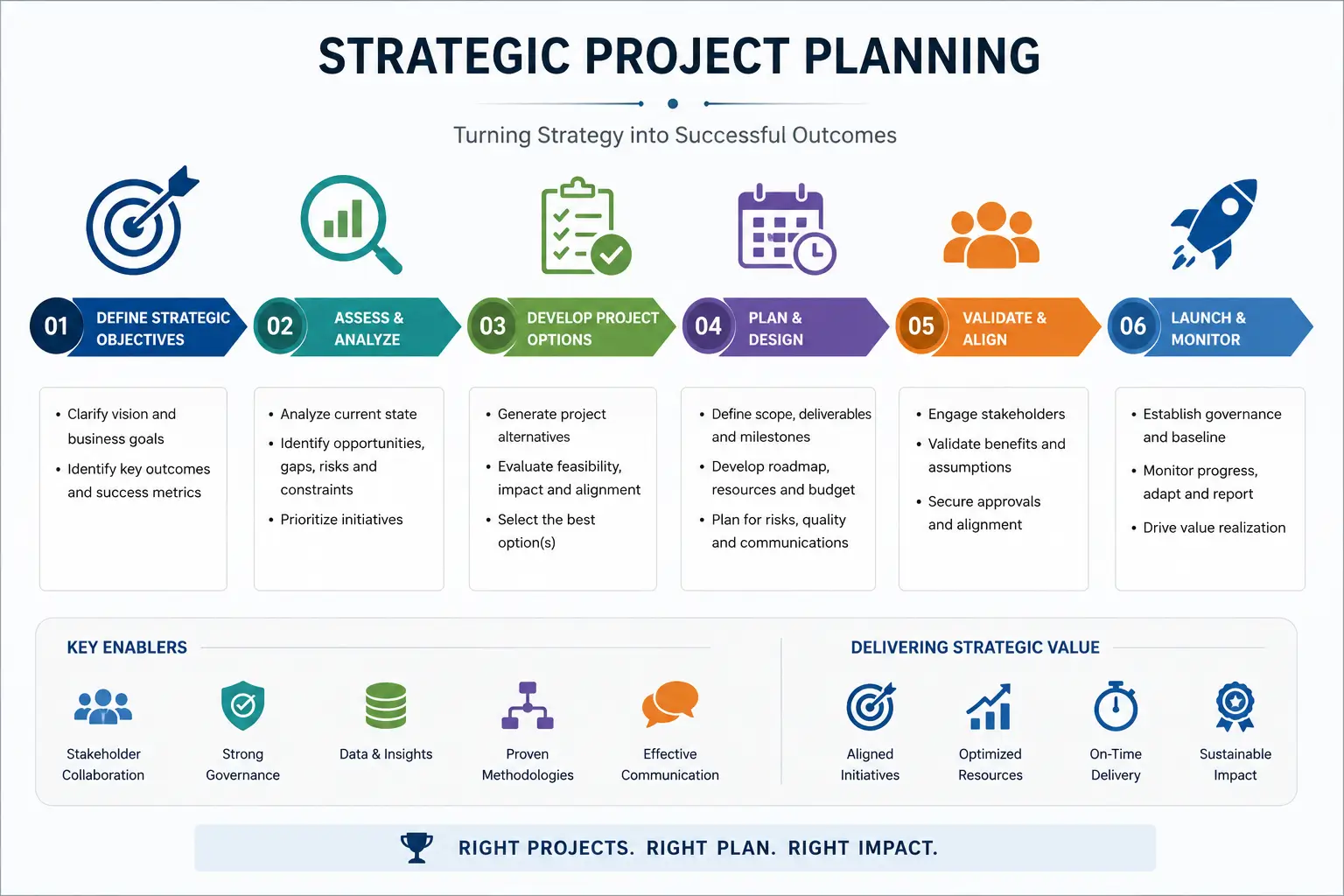
Successful projects require clear goals, proper planning, and effective coordination. However, poor planning can lead to delays, budget issues, resource problems, and unsuccessful outcomes. Therefore, strategic project planning is essential for achieving project success.
The Strategic Project Planning Course introduces learners to the principles and methods required to create effective project plans. The course explains how organizations define objectives, allocate resources, manage risks, and execute projects successfully.
Moreover, strategic project planning connects project activities with broader business goals. A well-designed project strategy helps teams improve efficiency, make better decisions, and deliver valuable results.
Throughout this course, learners explore project planning frameworks, scope definition, scheduling techniques, resource management, risk planning, stakeholder communication, and performance measurement. Additionally, they understand how strategic approaches improve project execution.
The course also develops practical skills such as leadership, problem-solving, communication, and decision-making. These abilities help professionals manage projects with greater confidence.
By completing this course, learners will gain a strong foundation in strategic project planning and understand how effective planning supports successful project delivery.
Course Overview
The Strategic Project Planning Course provides comprehensive training on project strategy, planning methods, resource management, risk control, scheduling, and project execution practices. Furthermore, the course helps learners understand how to create structured project plans.
Fundamentals of Strategic Project Planning
The course begins with project planning concepts, strategic alignment, project objectives, and the importance of effective planning.
Project Strategy Development
Learners explore methods for defining project goals, creating strategies, and aligning projects with organizational priorities.
Scope Planning and Management
This section explains scope definition, requirement analysis, deliverables, and methods for preventing scope-related challenges.
Resource Planning and Allocation
Learners understand resource identification, team planning, budget management, and efficient resource utilization.
Project Scheduling Techniques
The course covers timeline development, task sequencing, milestone planning, and methods for managing project schedules.
Risk Assessment and Management
Learners explore risk identification, impact analysis, mitigation planning, and strategies for reducing project uncertainties.
Stakeholder Planning and Communication
This section explains stakeholder identification, communication methods, collaboration, and engagement strategies.
Project Budget Planning
Learners understand cost estimation, financial planning, budget control, and resource cost management.
Project Performance Monitoring
The course covers progress tracking, performance measurement, reporting methods, and improvement strategies.
Technology in Project Planning
Learners explore project management software, digital tools, automation, and modern technologies supporting project planning.
Overall, this course combines project management principles with strategic planning methods. Therefore, learners develop the skills required to design effective project plans and achieve successful outcomes.
What You Will Learn
The Strategic Project Planning Course equips learners with practical knowledge and skills required to plan and manage projects effectively.
Understand Project Planning Principles
Learners will understand project planning concepts, frameworks, and strategies used in professional environments.
Develop Project Strategies
Participants will learn how to create project approaches aligned with business objectives.
Define Project Scope
Learners will understand methods for managing requirements, deliverables, and project boundaries.
Manage Project Resources
The course teaches resource planning, team coordination, and efficient utilization methods.
Create Project Schedules
Learners will develop knowledge of timelines, milestones, and task management techniques.
Identify Project Risks
Participants will learn risk assessment methods and approaches for managing uncertainties.
Improve Stakeholder Communication
Learners will understand how to engage stakeholders and maintain effective project communication.
Monitor Project Performance
The course helps learners track progress, evaluate results, and improve project outcomes.
Skills You Will Gain
After completing the Strategic Project Planning Course, learners will develop valuable project management and strategic planning skills.
Project Planning Skills
Develop the ability to create structured and effective project plans.
Strategic Thinking Skills
Learn how to align project goals with organizational objectives.
Resource Management Skills
Understand how to allocate and manage project resources effectively.
Risk Management Skills
Gain knowledge of identifying and controlling project risks.
Scheduling Skills
Develop abilities in timeline planning and project coordination.
Leadership Skills
Improve team management, communication, and decision-making abilities.
Analytical Skills
Learn how to evaluate project information and make informed decisions.
Problem-Solving Skills
Develop the ability to handle project challenges and create effective solutions.
Benefits of the Course
The Strategic Project Planning Course helps learners understand how to create effective project strategies, manage resources, and improve project success rates. Moreover, the course develops practical skills required to plan and execute projects efficiently.
Improve Project Planning Skills
First, learners understand how to create structured project plans with clear goals and objectives. As a result, they can support better project preparation and execution.
Enhance Strategic Thinking
Successful projects require proper alignment with business goals. Therefore, this course helps learners develop strategic thinking and planning abilities.
Improve Resource Management
Effective resource utilization improves project performance. Additionally, learners gain knowledge of resource allocation, team planning, and budget management.
Reduce Project Risks
Projects often face uncertainties and challenges. Furthermore, learners understand risk identification, analysis, and mitigation techniques.
Strengthen Decision-Making Skills
Project decisions impact final outcomes. Consequently, learners develop analytical skills to evaluate situations and make informed decisions.
Improve Project Communication
Clear communication supports project success. Moreover, learners understand stakeholder coordination, reporting, and collaboration methods.
Increase Project Efficiency
Better planning reduces delays and improves productivity. Therefore, learners gain knowledge of scheduling, monitoring, and project control techniques.
Develop Leadership Skills
Project leaders need strong management abilities. In addition, learners improve teamwork, coordination, and leadership skills.
Learn Modern Project Practices
The course introduces digital tools, planning techniques, and modern approaches used in professional project environments.
Expand Career Opportunities
Project planning skills are valuable across industries. Therefore, this course helps learners prepare for project management and leadership roles.
Who Should Enroll
The Strategic Project Planning Course is suitable for individuals who want to develop skills in project strategy, planning, execution, and management.
Project Managers
Project managers can improve their ability to create plans, manage resources, and deliver successful projects.
Team Leaders
Team leaders can learn methods for organizing tasks, managing teams, and improving project coordination.
Business Professionals
Business professionals can understand how strategic planning improves project outcomes and organizational performance.
Operations Managers
Operations professionals can apply project planning techniques to improve business activities and resource management.
Entrepreneurs and Business Owners
Entrepreneurs can learn how effective planning supports business projects and growth initiatives.
Project Coordinators
Project coordinators can strengthen their knowledge of scheduling, communication, and project monitoring.
Students and Graduates
Students interested in management, business, or leadership can gain practical project planning skills.
Consultants
Consultants can develop knowledge of project strategy and planning methods for client projects.
Career Opportunities
Strategic project planning skills are highly valuable because organizations need professionals who can manage projects effectively and achieve business objectives. Therefore, learners with project planning knowledge can explore various career opportunities.
Potential career roles include:
- Project Manager
- Project Planner
- Project Coordinator
- Program Manager
- Business Analyst
- Operations Manager
- Project Management Consultant
- Project Control Specialist
- Planning Analyst
- Portfolio Manager
- Risk Management Specialist
- Resource Manager
- Business Transformation Specialist
- Team Leader
- Management Consultant
Professionals can find opportunities in:
- Information technology companies
- Construction industries
- Manufacturing organizations
- Healthcare companies
- Financial institutions
- Consulting firms
- Government projects
- Logistics businesses
- Education organizations
- Global enterprises
Furthermore, this course provides a strong foundation for advanced learning in project management, operations management, business strategy, leadership, and organizational development.
Certification
After successfully completing the Strategic Project Planning Course, learners will receive a Course Completion Certificate that recognizes their knowledge of project strategy, planning methods, resource management, risk assessment, scheduling, and project execution practices.
Moreover, the certificate demonstrates your commitment to developing professional project management skills. It can strengthen your resume and highlight your ability to support successful project delivery.
Additionally, the certification validates your understanding of project planning frameworks, stakeholder management, performance tracking, and strategic decision-making. Consequently, it supports career growth in project management, operations, and leadership roles.
Conclusion
Strategic project planning is essential for organizations that want to complete projects successfully, manage resources effectively, and achieve business goals. Without proper planning, projects may face delays, increased costs, and performance challenges. Therefore, skilled project planners play an important role in organizational success.
The Strategic Project Planning Course provides comprehensive knowledge of project strategy, scope planning, resource management, scheduling, risk control, and performance monitoring. Moreover, learners develop practical skills required to manage projects efficiently.
Throughout the course, participants improve their understanding of planning techniques, leadership, communication, and problem-solving. In addition, they learn how strategic planning helps teams deliver projects with better quality and efficiency.
Whether your goal is to start a career in project management, improve your planning abilities, manage business projects, or enhance leadership skills, this course provides the foundation required for success. Ultimately, it prepares learners to create effective project strategies and contribute to successful project outcomes.
Frequently Asked Questions (FAQs)
1. What is the Strategic Project Planning Course?
The Strategic Project Planning Course teaches learners how to create project strategies, develop plans, manage resources, and improve project delivery.
2. Who should enroll in this course?
This course is suitable for project managers, team leaders, business professionals, entrepreneurs, students, and project coordinators.
3. Do I need prior project management experience?
No. The course is suitable for beginners as well as professionals who want to improve their project planning skills.
4. What topics are covered in this course?
The course covers project strategy, scope planning, scheduling, resource management, risk assessment, communication, and performance monitoring.
5. What skills will I gain after completing this course?
You will develop skills in project planning, strategic thinking, resource management, risk control, communication, and leadership.
6. Why is strategic project planning important?
It helps organizations define goals, manage resources, reduce risks, and achieve successful project outcomes.
7. What career opportunities are available after completing this course?
Learners can pursue careers as Project Managers, Project Coordinators, Business Analysts, Planning Specialists, and Project Consultants.
8. Will I receive a certificate after completing this course?
Yes. Learners who successfully complete the course will receive a Course Completion Certificate validating their strategic project planning knowledge.
9. How does planning improve project success?
Planning helps teams organize tasks, manage resources, identify risks, and complete projects effectively.
10. How can this course benefit my career?
This course improves your project management and planning skills, strengthens your professional profile, and prepares you for project-focused roles.



Reviews
There are no reviews yet.