
Introduction
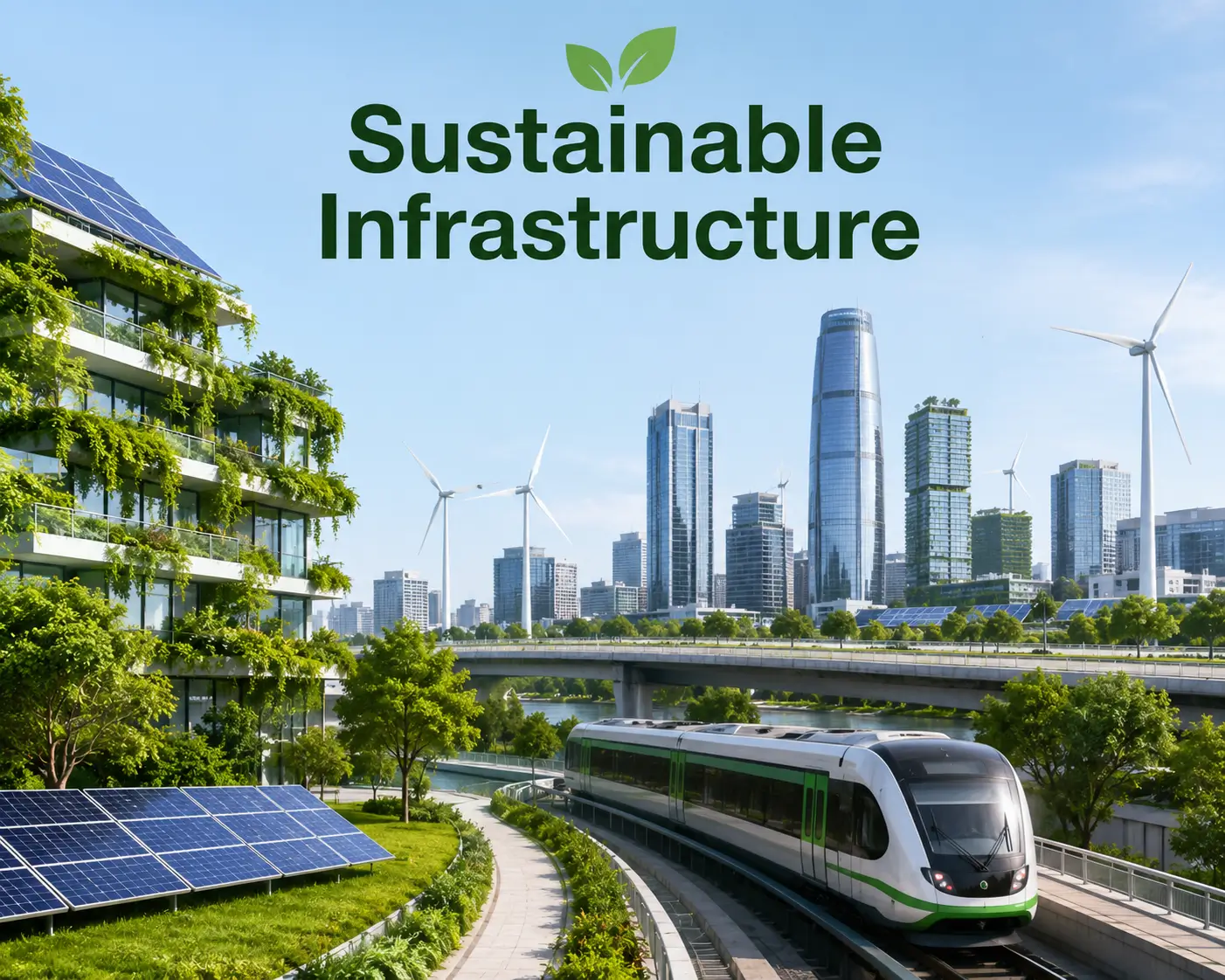
The Sustainable Infrastructure Course is a comprehensive program designed to help learners understand how modern infrastructure systems can be developed in a way that supports environmental sustainability, economic efficiency, and social well-being. In a rapidly urbanizing world, traditional infrastructure systems often contribute to pollution, resource depletion, and climate change. Sustainable infrastructure provides a solution by integrating environmental responsibility into every stage of planning, design, construction, and operation.
Sustainable infrastructure refers to the development of physical systems such as roads, bridges, buildings, water supply systems, energy networks, and public transportation that minimize environmental impact while maximizing efficiency and resilience. It focuses on long-term performance, resource conservation, and climate adaptability.
This course provides learners with practical knowledge of sustainable infrastructure by combining engineering principles, environmental science, urban planning, renewable energy integration, and sustainability frameworks. Whether you are an engineering student, urban planner, construction professional, or sustainability enthusiast, this course provides essential knowledge for building a sustainable future.
Course Overview
Infrastructure plays a critical role in shaping economic development and quality of life. However, conventional infrastructure systems often consume large amounts of energy and natural resources.
First, learners explore the importance of sustainable infrastructure in addressing climate change, urbanization challenges, and resource limitations. Next, they understand how infrastructure development impacts the environment and society.
Additionally, the course explains green building concepts, sustainable construction materials, energy-efficient systems, water resource infrastructure, waste management systems, and renewable energy integration. Learners also gain knowledge of climate-resilient infrastructure design and smart city development.
Furthermore, the curriculum combines engineering concepts with sustainability principles, helping learners understand how infrastructure projects are planned, designed, and implemented in a sustainable manner.
What You Will Learn
The Sustainable Infrastructure Course covers a wide range of engineering, environmental, and sustainability topics.
First, learners study the fundamentals of sustainable infrastructure and understand its role in modern development.
Next, participants learn green building design principles, including energy efficiency, eco-friendly materials, and sustainable construction methods.
Additionally, the course introduces sustainable transportation systems, including public transit, electric mobility, and low-carbon transport solutions.
Furthermore, participants study water infrastructure systems, including sustainable water supply, wastewater treatment, and conservation strategies.
The course also explains energy infrastructure, including renewable energy integration, smart grids, and energy-efficient systems.
Moreover, learners gain knowledge of waste management infrastructure, including recycling systems and circular economy applications.
In addition, the curriculum covers climate-resilient infrastructure design, including flood protection, heat-resistant materials, and disaster preparedness.
Participants also study environmental impact assessment (EIA) for infrastructure projects.
Additionally, learners explore lifecycle assessment (LCA) of infrastructure systems to evaluate long-term environmental impact.
Furthermore, the course explains smart city infrastructure and digital technologies used in sustainable urban development.
Finally, participants analyze real-world case studies of sustainable infrastructure projects worldwide.
Skills You Will Gain
Upon successful completion of the course, learners will develop valuable professional skills, including:
- Sustainable infrastructure planning
- Green building principles
- Energy-efficient system design
- Sustainable transportation concepts
- Water resource infrastructure knowledge
- Waste management system understanding
- Climate-resilient design
- Environmental impact assessment (EIA)
- Lifecycle analysis (LCA)
- Smart infrastructure awareness
- Renewable energy integration concepts
- Sustainability analysis
- Problem-solving skills
- Engineering design thinking
- Urban infrastructure understanding
These skills are highly valuable across construction companies, engineering firms, urban development authorities, government agencies, environmental consultancies, and infrastructure development organizations.
Benefits of the Course
The Sustainable Infrastructure Course provides learners with essential knowledge for designing and managing environmentally responsible infrastructure systems.
First, the course helps learners understand how infrastructure impacts the environment and how sustainability can reduce negative effects.
Additionally, participants gain awareness of green building practices, renewable energy integration, and climate-resilient design.
Furthermore, learners develop practical skills in infrastructure planning, environmental assessment, and sustainable engineering.
The course also enhances analytical thinking, technical understanding, and problem-solving abilities.
As global infrastructure demand increases, professionals with sustainable infrastructure expertise are in high demand.
Finally, learners gain the ability to contribute to future-ready, eco-friendly development projects.
Who Should Enroll?
This course is ideal for:
- Civil engineering students
- Architecture students
- Urban planners
- Construction professionals
- Environmental engineers
- Government infrastructure officers
- Sustainability professionals
- Project managers
- Researchers
- Anyone interested in sustainable development and infrastructure
No prior experience is required. Beginners can easily understand the concepts.
Career Opportunities
After completing the course, learners may pursue opportunities such as:
- Sustainable Infrastructure Engineer
- Green Building Consultant
- Urban Infrastructure Planner
- Environmental Engineer
- Construction Project Manager
- Renewable Energy Infrastructure Analyst
- Climate Resilience Specialist
- Water Resource Engineer
- Transportation Planner
- Sustainability Consultant
- Smart City Project Assistant
- Infrastructure Development Officer
- Environmental Impact Analyst
- Civil Engineering Technician
- ESG Infrastructure Analyst
Additionally, learners can work across construction firms, government departments, consulting agencies, infrastructure companies, and international development organizations.
Certification
Upon successful completion of the Sustainable Infrastructure Course, participants receive a certification recognizing their understanding of green building principles, climate-resilient design, environmental impact assessment, renewable energy integration, and sustainable infrastructure systems. This certification supports careers in engineering, construction, and sustainability sectors.
Why Choose This Course?
The Sustainable Infrastructure Course combines engineering, environmental science, and sustainability principles to prepare learners for future infrastructure challenges.
First, learners develop strong knowledge of eco-friendly infrastructure design and planning.
Additionally, the curriculum focuses on energy efficiency, climate resilience, and green construction practices.
Furthermore, participants gain real-world insights into sustainable infrastructure development.
Whether your goal is to work in engineering, urban development, or sustainability, this course provides the knowledge, skills, and confidence needed to succeed.
Enroll today and build a strong foundation in sustainable infrastructure development.
FAQ Section
1. What is the Sustainable Infrastructure Course?
It teaches how infrastructure systems are designed and built sustainably with environmental considerations.
2. Is this course suitable for beginners?
Yes. It is designed for students and beginners in engineering and planning fields.
3. What topics are covered?
Topics include green buildings, transport systems, water infrastructure, and climate-resilient design.
4. Will I receive a certificate?
Yes. A certificate is provided upon completion.
5. Do I need engineering experience?
No. The course starts from basic concepts.
6. Who should enroll in this course?
Students, engineers, planners, and sustainability professionals.
7. Is the course online?
Yes. It is available online with flexible learning.
8. What skills will I gain?
You will gain skills in sustainable infrastructure design, planning, and environmental assessment.
9. Can this course help my career?
Yes. Sustainable infrastructure skills are in high demand globally.
10. Why is sustainable infrastructure important?
It reduces environmental impact while supporting long-term economic and social development.





Reviews
There are no reviews yet.