
Introduction
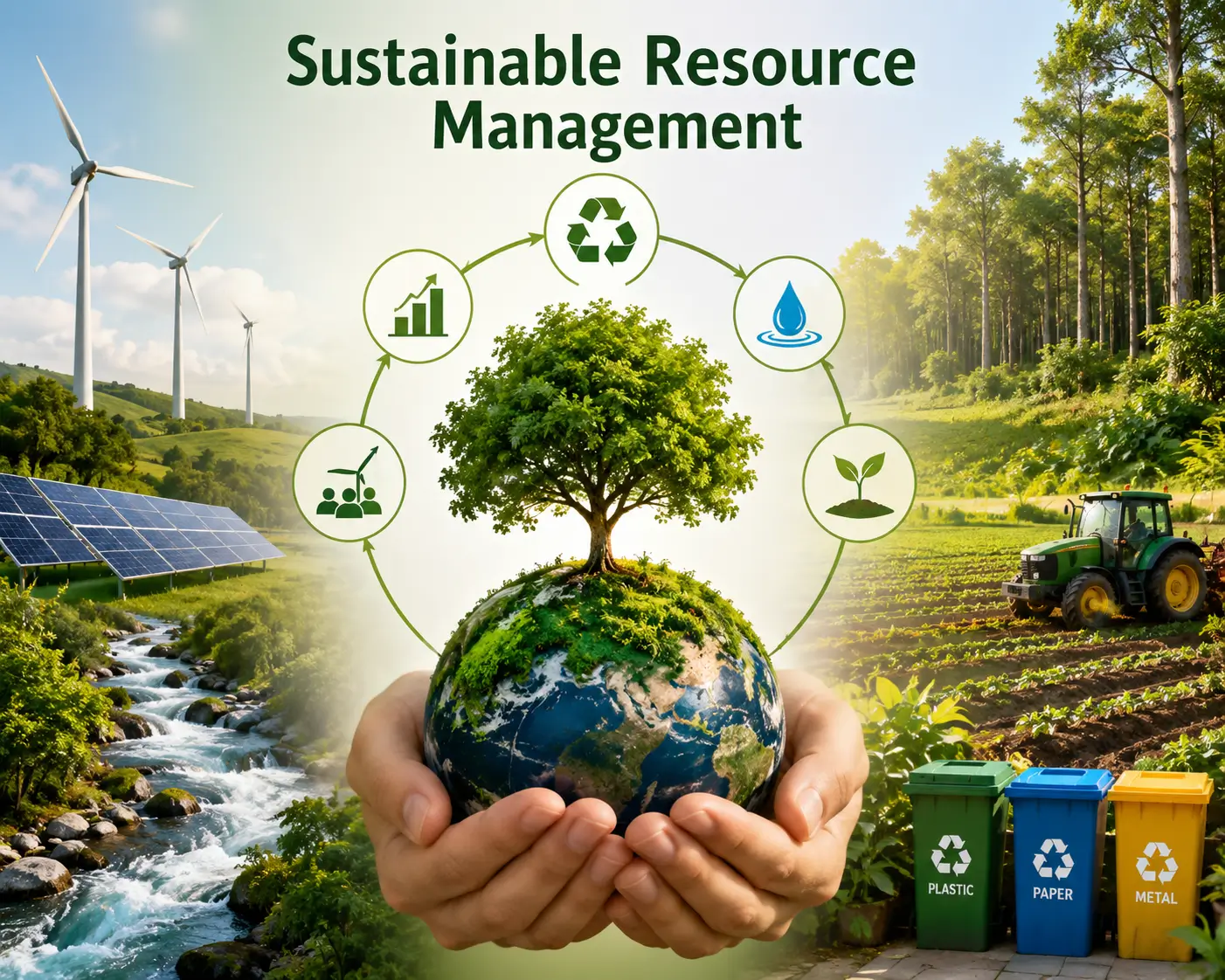
The Sustainable Resource Management Course is a comprehensive training program designed to help learners develop the knowledge and practical skills required to manage resources responsibly while supporting environmental sustainability, economic development, and social well-being. As global populations grow and demand for natural resources continues to increase, organizations, governments, and communities face greater challenges in balancing economic progress with environmental protection. Therefore, sustainable resource management has become an essential discipline for achieving long-term resilience and responsible development.
Sustainable resource management focuses on using resources efficiently, minimizing waste, conserving ecosystems, reducing environmental impacts, and promoting responsible consumption. Instead of relying on unsustainable extraction and excessive resource use, organizations adopt practices that improve efficiency, encourage conservation, and protect valuable natural assets for future generations.
This course provides learners with a practical understanding of sustainable resource management by combining environmental management principles, resource conservation strategies, sustainability planning, circular economy concepts, environmental policies, climate resilience, and performance improvement. Whether you are an environmental professional, sustainability manager, engineer, policymaker, project manager, student, consultant, or business leader, this course provides valuable knowledge that supports professional development and sustainable decision-making.
Course Overview
Sustainable resource management focuses on planning, using, monitoring, and conserving resources in ways that balance environmental, social, and economic priorities. Rather than maximizing short-term resource use, sustainable management encourages long-term efficiency, resilience, and environmental responsibility.
First, learners explore the importance of sustainable resource management in addressing environmental challenges such as climate change, resource depletion, biodiversity loss, pollution, and waste generation. Next, they understand how responsible resource management contributes to sustainable development and organizational success.
Additionally, the course explains natural resource conservation, water management, energy efficiency, waste reduction, circular economy principles, environmental compliance, sustainable procurement, biodiversity conservation, and environmental performance measurement. Learners also gain practical knowledge of ESG concepts, environmental management systems, climate adaptation, sustainability reporting, stakeholder engagement, and digital technologies that support sustainable resource management.
Furthermore, the curriculum combines sustainability theory with practical applications, helping learners implement responsible resource management strategies across different industries.
What You Will Learn
The Sustainable Resource Management Course covers a broad range of topics related to responsible resource planning, conservation, and sustainability.
First, learners study the fundamentals of sustainable resource management and understand why responsible resource use is essential for environmental protection, economic resilience, and social development. They also explore the relationship between sustainability, conservation, and long-term organizational performance.
Next, participants learn about natural resource management. They understand how land, forests, minerals, water, soil, biodiversity, and ecosystems are managed responsibly to maintain environmental balance while supporting human development.
Additionally, the course introduces water resource management. Learners discover methods for improving water efficiency, conserving freshwater resources, reducing water pollution, managing wastewater, and supporting sustainable water use.
Furthermore, participants study energy management strategies. They learn about energy efficiency, renewable energy sources, energy conservation techniques, energy performance monitoring, and strategies for reducing carbon emissions.
The course also explains waste management principles, including waste prevention, recycling, reuse, composting, resource recovery, and circular economy practices that reduce landfill waste and improve resource efficiency.
Moreover, learners explore sustainable procurement practices. They understand how organizations make environmentally responsible purchasing decisions, collaborate with sustainable suppliers, and reduce environmental impacts throughout supply chains.
In addition, the curriculum covers life cycle thinking and environmental impact assessment. Learners study how products and services affect the environment throughout their lifecycle and how organizations can reduce environmental impacts through better planning and design.
Participants also gain knowledge of biodiversity conservation, habitat protection, ecosystem restoration, responsible land use, and environmental stewardship practices that support ecological sustainability.
Additionally, the course explains environmental regulations, sustainability policies, ESG principles, environmental management systems (EMS), and compliance requirements that guide responsible organizational practices.
The curriculum also introduces climate resilience, climate adaptation strategies, greenhouse gas reduction initiatives, carbon footprint management, sustainability reporting, and organizational performance indicators.
Furthermore, learners explore stakeholder engagement, environmental communication, sustainability leadership, organizational change, innovation, digital resource management tools, and continuous improvement strategies that strengthen sustainability performance.
Finally, participants study performance measurement, resource monitoring, environmental audits, reporting systems, data analysis, and strategic planning techniques that support long-term sustainable resource management.
Skills You Will Gain
Upon successful completion of the course, learners will develop valuable professional skills, including:
- Sustainable resource management
- Natural resource conservation
- Water resource management
- Energy management
- Waste reduction planning
- Circular economy implementation
- Sustainable procurement
- Environmental impact assessment
- ESG fundamentals
- Sustainability reporting
- Environmental compliance
- Resource efficiency analysis
- Environmental performance monitoring
- Stakeholder engagement
- Continuous improvement
These skills are highly valued across environmental consulting firms, manufacturing companies, government agencies, renewable energy organizations, engineering firms, nonprofit organizations, construction companies, utilities, and corporate sustainability departments.
Benefits of the Course
The Sustainable Resource Management Course provides learners with practical knowledge and sustainability strategies that support responsible resource use.
First, the course helps learners understand how sustainable resource management improves environmental protection, operational efficiency, regulatory compliance, and long-term organizational resilience.
Additionally, participants strengthen their ability to conserve natural resources, reduce waste, improve resource efficiency, and support environmental sustainability initiatives.
Furthermore, learners develop practical skills in environmental planning, sustainability reporting, climate resilience, circular economy implementation, performance monitoring, and compliance management.
The course also enhances analytical thinking, communication, leadership, collaboration, strategic planning, and problem-solving skills that support sustainability careers.
As governments and organizations continue investing in sustainable development and environmental responsibility, professionals with sustainable resource management expertise remain in strong demand.
Finally, learners gain the confidence to contribute to responsible resource management while supporting environmental conservation and sustainable economic growth.
Who Should Enroll?
This course is ideal for:
- Sustainability professionals
- Environmental managers
- Environmental consultants
- Engineers
- Project managers
- Operations managers
- ESG professionals
- Government employees
- Policy professionals
- Renewable energy specialists
- Manufacturing professionals
- Construction professionals
- Environmental science students
- Corporate sustainability teams
- Anyone interested in sustainable resource management
No prior sustainability experience is required. Therefore, beginners and experienced professionals can both benefit from this course.
Career Opportunities
After completing the course, learners may pursue opportunities such as:
- Sustainable Resource Manager
- Sustainability Officer
- Environmental Consultant
- ESG Coordinator
- Environmental Compliance Officer
- Resource Efficiency Specialist
- Sustainability Analyst
- Environmental Program Manager
- Climate Resilience Coordinator
- Environmental Planner
- Sustainability Project Manager
- Natural Resource Officer
- Environmental Advisor
- Sustainability Coordinator
- Corporate Sustainability Executive
Additionally, learners can apply these skills across manufacturing, energy, utilities, construction, agriculture, mining, environmental consulting, nonprofit organizations, government agencies, and corporate sustainability departments.
Certification
Upon successful completion of the Sustainable Resource Management Course, participants receive a certification recognizing their understanding of sustainable resource management, environmental conservation, water and energy management, waste reduction, sustainability planning, environmental compliance, ESG concepts, and performance improvement. This certification strengthens professional credibility and supports career advancement in sustainability, environmental management, engineering, and corporate responsibility.
Why Choose This Course?
The Sustainable Resource Management Course combines sustainability principles with practical environmental management strategies to provide a comprehensive learning experience.
First, learners develop a strong understanding of responsible resource management, conservation, environmental planning, and sustainability leadership.
Additionally, the curriculum focuses on water and energy management, circular economy principles, waste reduction, sustainable procurement, environmental compliance, ESG concepts, climate resilience, and continuous improvement.
Furthermore, participants gain industry-relevant knowledge that supports career development in environmental management, sustainability, engineering, government, corporate responsibility, and resource conservation.
Whether your goal is to become a sustainability manager, environmental consultant, ESG specialist, resource manager, environmental planner, or corporate sustainability professional, this course provides the knowledge, practical skills, and confidence needed to succeed.
Enroll today and build a strong foundation in sustainable resource management, environmental stewardship, resource conservation, and long-term sustainability.
FAQ Section
1. What is the Sustainable Resource Management Course?
The course teaches how to manage natural and organizational resources responsibly while supporting sustainability, conservation, and long-term environmental protection.
2. Is this course suitable for beginners?
Yes. The course is designed for beginners as well as professionals who want to improve their sustainability and resource management knowledge.
3. What topics are covered?
Topics include natural resource conservation, water and energy management, waste reduction, circular economy, sustainable procurement, ESG concepts, environmental compliance, sustainability reporting, and climate resilience.
4. Will I receive a certificate?
Yes. Participants receive a certificate upon successfully completing the course.
5. Do I need prior sustainability experience?
No. The course introduces sustainable resource management concepts in a simple and beginner-friendly format.
6. Who should enroll in this course?
Environmental professionals, engineers, sustainability managers, project managers, consultants, policymakers, government employees, students, and corporate sustainability teams can benefit from this course.
7. Is the course fully online?
Yes. The course offers flexible online learning, allowing participants to study at their own pace.
8. What skills will I gain?
You will gain skills in sustainable resource management, environmental planning, resource conservation, ESG fundamentals, sustainability reporting, environmental compliance, waste reduction, and performance monitoring.
9. Can this course help my career?
Yes. Sustainable resource management skills are highly valued across manufacturing, engineering, construction, environmental consulting, renewable energy, government agencies, nonprofit organizations, and corporate sustainability departments.
10. Why is sustainable resource management important?
Sustainable resource management helps organizations conserve resources, reduce environmental impacts, improve operational efficiency, support regulatory compliance, strengthen climate resilience, and promote long-term sustainable development.



Reviews
There are no reviews yet.