
Introduction
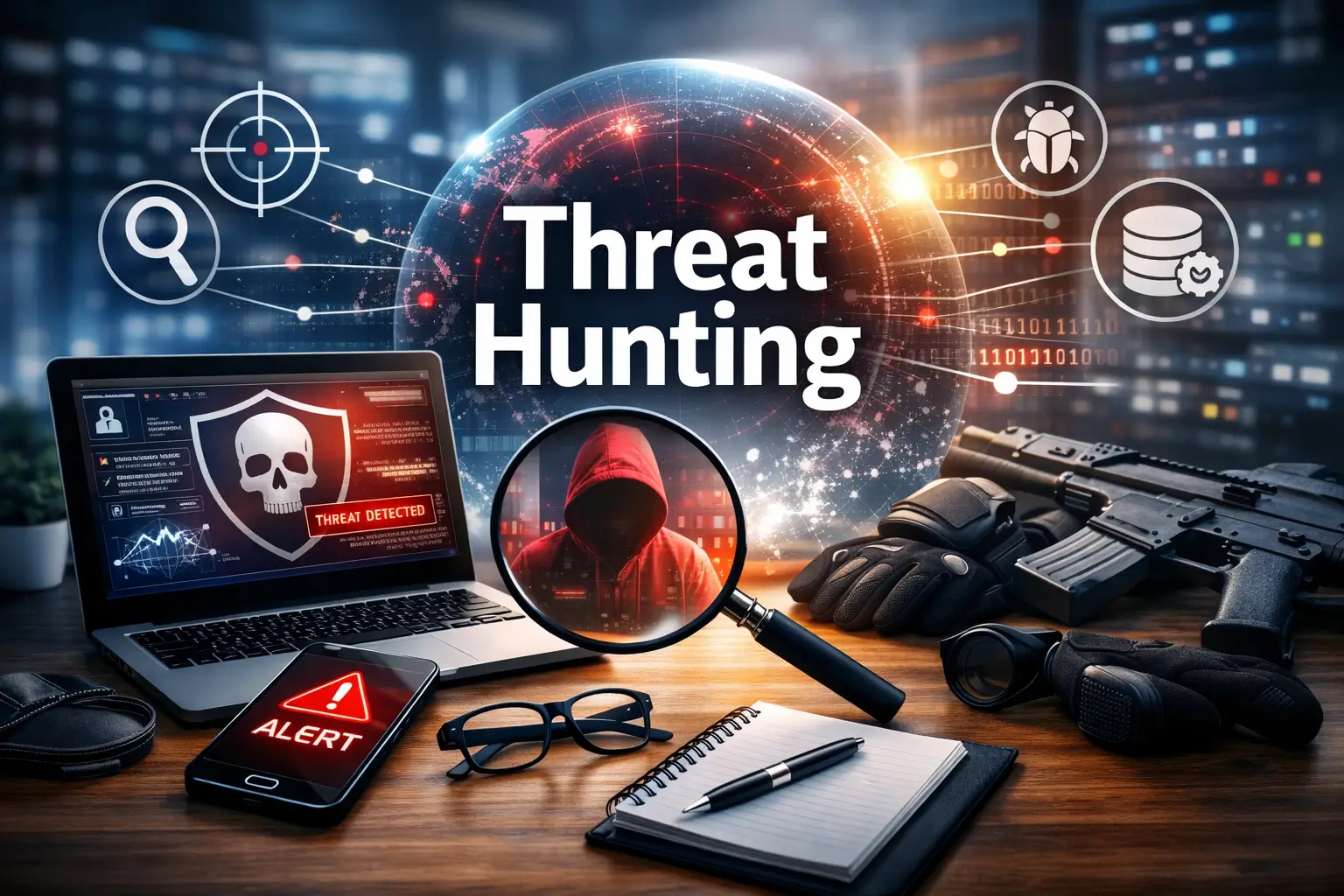
The Threat Hunting Course is a specialized cybersecurity program designed to help learners understand how to proactively search for hidden cyber threats inside networks and systems. Unlike traditional security methods, threat hunting focuses on identifying attacks before they are detected by automated systems.
In today’s digital world, cyber attacks are becoming more advanced and persistent. Therefore, organizations need skilled professionals who can actively hunt and neutralize threats.
This course introduces learners to threat intelligence, security monitoring, SIEM tools, log analysis, and malware detection techniques. Moreover, participants gain practical understanding of real-world cyber attack patterns.
Whether you are a student, cybersecurity beginner, or IT professional, this course provides essential skills for threat hunting.
Course Overview
Threat hunting is the process of actively searching for cyber threats that bypass traditional security defenses. Consequently, it strengthens an organization’s ability to detect and respond to attacks early.
The Threat Hunting Course provides learners with a structured understanding of SOC operations, SIEM platforms, threat intelligence frameworks, and behavioral analysis techniques. Additionally, participants explore how cyber attackers operate and how to identify their activities.
The course combines cybersecurity analysis, network monitoring, and incident response to help learners understand advanced defense strategies.
What You Will Learn
The Threat Hunting Course covers a wide range of cybersecurity and defensive topics. First, learners study the fundamentals of threat hunting and cyber defense strategies.
Next, participants explore SIEM tools, log analysis, intrusion detection, and malware behavior analysis. Furthermore, the course explains threat intelligence gathering, attack pattern recognition, and incident response workflows.
In addition, learners gain knowledge of SOC operations, endpoint monitoring, and advanced persistent threats (APT) detection. These topics provide a complete understanding of threat hunting.
Moreover, learners also study real-world cyber attack investigations and security case studies.
Skills You Will Gain
Upon successful completion of the course, learners will develop valuable skills, including:
- Threat hunting fundamentals
- Cyber threat detection
- SIEM tool usage
- Log analysis and monitoring
- Malware behavior analysis
- Incident response skills
- Threat intelligence analysis
- SOC operations understanding
- Network security monitoring
- Advanced cybersecurity defense
Moreover, these skills are highly valuable across cybersecurity companies, SOC teams, government security agencies, and IT organizations.
Benefits of the Course
The Threat Hunting Course offers numerous benefits for learners interested in cybersecurity defense. First, it builds strong understanding of advanced threat detection techniques.
Additionally, the course improves analytical and investigation skills. Furthermore, participants gain practical knowledge that helps detect and prevent cyber attacks.
Because cyber threats are increasing globally, professionals with threat hunting skills are highly in demand. As a result, learners can improve career opportunities in cybersecurity and SOC environments.
The course also develops critical thinking, problem-solving, and technical analysis skills.
Who Should Enroll?
This course is ideal for:
- Cybersecurity analysts
- SOC beginners
- IT professionals
- Ethical hacking learners
- Network security students
- Security engineers
- Digital forensics beginners
- Blue team learners
- Computer science students
- Tech enthusiasts
Basic cybersecurity knowledge is helpful but not mandatory.
Career Opportunities
After completing the course, learners may pursue opportunities such as:
- Threat Hunter Analyst
- SOC Analyst
- Cybersecurity Analyst Assistant
- Incident Response Trainee
- Security Operations Assistant
- Threat Intelligence Analyst
- Blue Team Security Analyst
- Malware Analyst Assistant
- Network Security Monitor
- Cyber Defense Associate
Additionally, learners can work in cybersecurity firms, SOC centers, IT companies, government agencies, and security consulting organizations.
Certification
Upon successful completion of the Threat Hunting Course, participants receive a certification recognizing their understanding of threat detection, cybersecurity analysis, SIEM tools, and incident response techniques.
This certification can strengthen professional credibility and support career growth in cybersecurity and defense roles.
Why Choose This Course?
The Threat Hunting Course combines cybersecurity analysis, threat intelligence, and incident response to provide a practical learning experience. Moreover, it equips learners with skills essential for modern cyber defense teams.
The curriculum focuses on SIEM tools, malware analysis, and SOC operations. Furthermore, learners gain insights into real-world cyber attack scenarios.
Whether your goal is to work in cybersecurity, SOC operations, or digital defense, this course provides the knowledge and confidence needed to succeed.
Conclusion
The Threat Hunting Course provides a strong foundation in proactive cybersecurity defense, threat detection, and incident response. Through topics such as SIEM analysis, malware behavior tracking, and SOC operations, learners gain valuable knowledge applicable across modern cybersecurity industries.
Moreover, as cyber threats become more sophisticated, professionals with threat hunting skills are becoming highly valuable. Therefore, this course serves as an excellent starting point for individuals seeking careers in cybersecurity and digital defense.
FAQ SECTION
1. What is Threat Hunting?
Threat hunting is the process of actively searching for hidden cyber threats in networks and systems.
2. What will I learn in this course?
You will learn SIEM tools, malware analysis, log monitoring, and cyber threat detection.
3. Is this course suitable for beginners?
Yes, beginners can start, but basic cybersecurity understanding is helpful.
4. Do I need coding skills?
No, coding is not mandatory, but basic technical knowledge helps.
5. What skills will I gain from this course?
You will gain skills in threat detection, SIEM analysis, and incident response.
6. What are the job opportunities after this course?
You can work as a SOC analyst, threat hunter, or cybersecurity analyst.
7. Is threat hunting used in real companies?
Yes, it is widely used in SOC teams and cybersecurity organizations.
8. Does this course include practical examples?
Yes, it includes real-world cyber attack and defense scenarios.
9. Who should enroll in this course?
Cybersecurity learners, IT professionals, and SOC beginners should enroll.
10. Why is threat hunting important?
It helps detect hidden cyber threats before they cause serious damage.





Reviews
There are no reviews yet.