
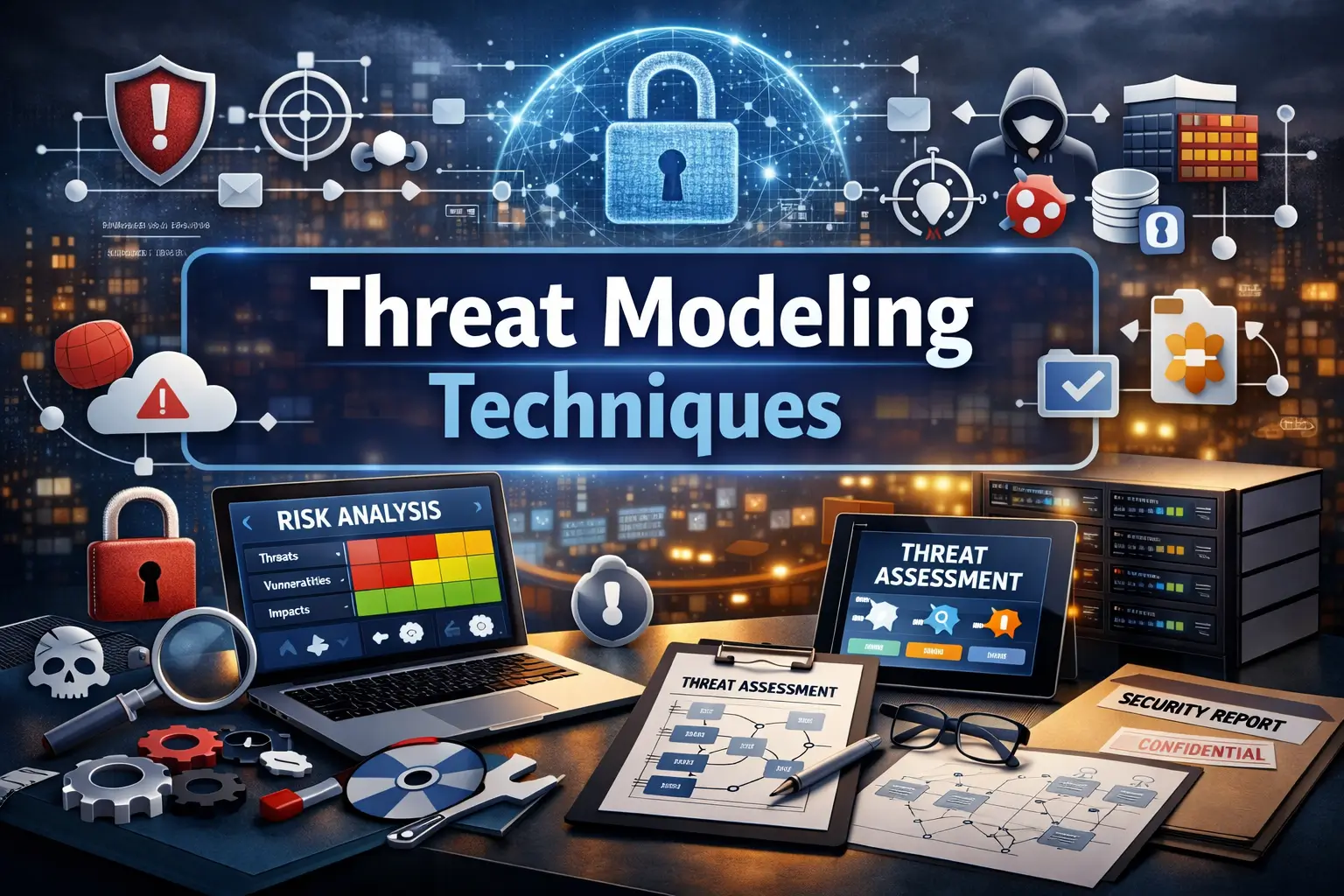
Threat Modeling Techniques Course
The Threat Modeling Techniques Course is designed for professionals, students, developers, software engineers, and cyber security enthusiasts who want to build secure systems by identifying and reducing security risks before they become real threats. Threat modeling is a proactive cyber security practice that helps organizations understand potential vulnerabilities, prioritize risks, and implement effective security controls during the software development lifecycle.
As cyber attacks become more advanced, organizations increasingly rely on threat modeling to strengthen their security posture. This course provides a practical understanding of industry-recognized methodologies such as STRIDE, DREAD, attack surface analysis, and security risk assessment. By completing this course, learners will gain the knowledge and confidence to identify threats, evaluate risks, and design secure applications.
Whether you are new to cyber security or already working in software development, this course offers structured learning with practical examples, real-world scenarios, and industry best practices.
Course Overview
This online course introduces the principles of threat modeling and demonstrates how security professionals analyze systems before deployment. Students will learn how to identify valuable assets, understand trust boundaries, analyze application architecture, create data flow diagrams, and evaluate potential attack vectors.
The course emphasizes practical implementation, enabling learners to integrate threat modeling into Secure Software Development Lifecycle (Secure SDLC) processes.
What You Will Learn
Throughout the course, you will learn how to:
- Understand the fundamentals of threat modeling.
- Identify application assets and security objectives.
- Build effective data flow diagrams.
- Analyze system architecture.
- Apply the STRIDE threat modeling methodology.
- Perform DREAD risk assessments.
- Conduct attack surface analysis.
- Identify common cyber threats.
- Prioritize security risks.
- Design mitigation strategies.
- Improve software security during development.
- Integrate threat modeling into DevSecOps practices.
- Follow industry-standard security frameworks.
- Document security findings professionally.
- Apply best practices using real-world case studies.
Course Curriculum
The curriculum is carefully organized to provide both theoretical knowledge and practical skills.
Students begin by understanding cyber security fundamentals before progressing to threat modeling concepts. They then learn about assets, trust boundaries, attack surfaces, and system architecture. Advanced modules cover STRIDE, DREAD, risk prioritization, mitigation planning, Secure SDLC integration, and modern threat modeling tools. Finally, learners explore real-world case studies to understand how organizations apply these techniques in enterprise environments.
Skills You Will Gain
After completing this course, you will be able to:
- Threat Modeling
- Cyber Security Analysis
- Risk Assessment
- Security Architecture
- Secure Software Design
- STRIDE Methodology
- DREAD Analysis
- Attack Surface Analysis
- Vulnerability Identification
- Security Documentation
- Secure SDLC
- Application Security
- Risk Mitigation
- DevSecOps Fundamentals
- Security Best Practices
Benefits of the Course
This course offers numerous advantages for learners seeking careers in cyber security and secure software development. You will gain practical knowledge that can be applied immediately in software projects. Understanding threat modeling helps reduce security risks early, saving organizations significant time and resources.
The course also enhances your ability to collaborate with development, operations, and security teams. Employers highly value professionals who understand proactive security planning and secure application design. By mastering these techniques, you can contribute to building resilient systems that withstand evolving cyber threats.
Who Should Enroll
This course is ideal for:
- Software Developers
- Web Developers
- Application Developers
- Cyber Security Beginners
- Security Analysts
- DevSecOps Engineers
- Security Architects
- Cloud Engineers
- IT Professionals
- Ethical Hackers
- Penetration Testers
- Computer Science Students
- Information Security Professionals
- Technology Consultants
- Anyone interested in secure software development
Career Opportunities
Completing the Threat Modeling Techniques Course can help prepare you for roles such as:
- Cyber Security Analyst
- Application Security Engineer
- Security Consultant
- DevSecOps Engineer
- Software Security Engineer
- Cloud Security Engineer
- Security Architect
- Risk Analyst
- Information Security Specialist
- Security Engineer
These roles are in demand across technology companies, financial institutions, healthcare organizations, government agencies, and enterprises focused on secure software development.
Certification
Upon successfully completing the course, learners receive a Certificate of Completion demonstrating their knowledge of threat modeling methodologies, security analysis, risk assessment, and secure application design. The certificate can strengthen your professional profile and showcase your commitment to cyber security best practices.
If you are looking to build expertise in secure software development and cyber security risk assessment, this Threat Modeling Techniques Course provides the practical knowledge and industry-relevant skills needed to identify threats, reduce vulnerabilities, and contribute to secure digital systems.
9. FAQ SECTION
1. What is the Threat Modeling Techniques Course?
This course teaches how to identify, analyze, and mitigate security threats during software design and development.
2. Is this course suitable for beginners?
Yes. It starts with the basics before progressing to advanced threat modeling techniques.
3. What methodologies are covered?
The course covers STRIDE, DREAD, attack surface analysis, risk assessment, and secure SDLC practices.
4. Do I need programming experience?
Basic knowledge of software development is helpful but not mandatory.
5. Is the course completely online?
Yes, the course is available online and can be completed at your own pace.
6. Will I receive a certificate?
Yes, a certificate is awarded after successfully completing the course.
7. Who should take this course?
Developers, security analysts, DevSecOps engineers, students, IT professionals, and anyone interested in application security.
8. What skills will I gain?
You will learn threat identification, risk assessment, secure software design, STRIDE, DREAD, and security architecture analysis.
9. Can this course help my cyber security career?
Yes. Threat modeling is a valuable skill for application security, DevSecOps, and cyber security roles.
10. Why is threat modeling important?
Threat modeling helps identify vulnerabilities early, reduces security risks, improves software quality, and supports secure application development.




Reviews
There are no reviews yet.