
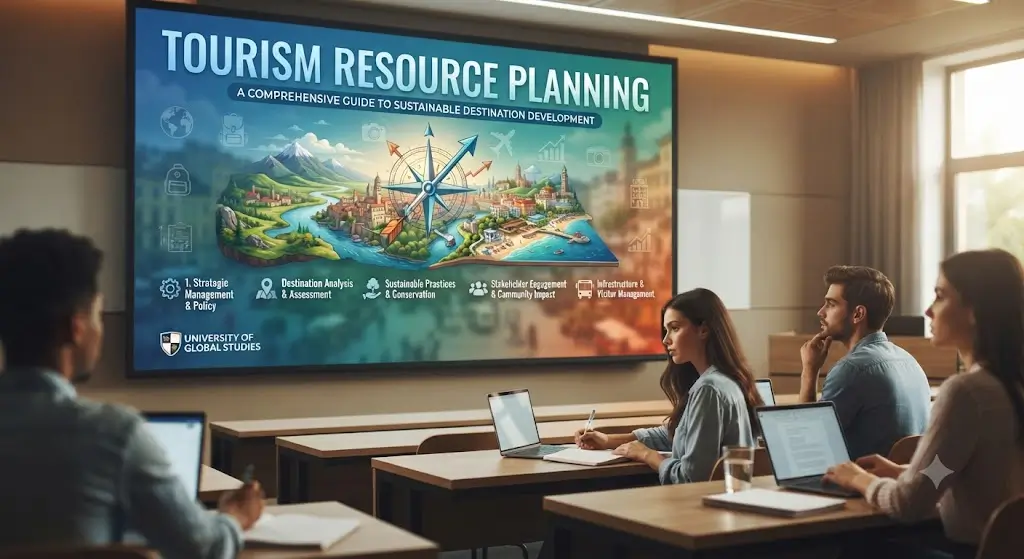
Introduction to Tourism Resource Planning
The Tourism Resource Planning Course is a comprehensive professional training program designed to prepare learners to plan, manage, and optimize tourism resources for sustainable destination development. Tourism resources—including natural attractions, cultural heritage, historical landmarks, wildlife, landscapes, festivals, recreational facilities, and supporting infrastructure—form the foundation of successful tourism destinations.
Effective tourism resource planning ensures these valuable assets are protected while remaining accessible and attractive to visitors. It requires careful assessment, long-term planning, stakeholder collaboration, environmental stewardship, infrastructure development, and policy implementation to balance tourism growth with conservation.
This course combines tourism planning, environmental management, destination development, strategic decision-making, and sustainable tourism principles to provide learners with practical knowledge applicable across tourism boards, government agencies, destination management organizations (DMOs), consulting firms, and hospitality businesses.
Why Tourism Resource Planning Matters
Tourism destinations depend on well-managed resources to remain competitive and sustainable. Poor planning can lead to overcrowding, environmental degradation, loss of cultural heritage, inadequate infrastructure, and reduced visitor satisfaction. In contrast, strategic tourism resource planning helps preserve natural ecosystems, protect cultural assets, improve tourism infrastructure, and support local communities.
Effective planning also enables destinations to respond to changing tourism trends, climate challenges, and increasing visitor expectations. It ensures tourism development benefits both visitors and local residents while maintaining long-term environmental and economic sustainability.
The Tourism Resource Planning Course helps learners understand how integrated planning supports responsible tourism growth and destination resilience.
Course Overview
The Tourism Resource Planning Course introduces learners to the principles, tools, and techniques used to evaluate and manage tourism resources.
Participants begin by studying tourism resource classification, destination planning principles, tourism policies, and sustainable development concepts. The course explores resource inventory, environmental impact assessment, land-use planning, tourism infrastructure development, visitor management, GIS applications, community engagement, tourism regulations, and project planning.
Learners also study tourism analytics, customer relationship management (CRM), digital planning tools, leadership, communication, budgeting, monitoring systems, and continuous improvement.
Practical case studies demonstrate how destinations successfully manage tourism resources while supporting conservation, economic development, and exceptional visitor experiences.
Topics Covered
Throughout the Tourism Resource Planning Course, learners will study:
Tourism Resource Fundamentals
Understand natural, cultural, historical, recreational, and built tourism resources and their role in destination development.
Tourism Resource Assessment
Learn resource inventory techniques, destination evaluation, tourism potential analysis, carrying capacity assessment, and tourism demand forecasting.
Destination Planning
Study tourism master planning, land-use planning, zoning, destination design, infrastructure planning, and long-term tourism development strategies.
Environmental Management
Explore environmental conservation, biodiversity protection, climate adaptation, waste management, water conservation, and sustainable tourism practices.
Cultural Heritage Management
Understand heritage conservation, cultural tourism planning, community participation, interpretation strategies, and preservation of historical resources.
Tourism Infrastructure Planning
Learn transportation planning, visitor facilities, accommodation development, public amenities, accessibility, utilities, and tourism support services.
Visitor Management
Study visitor flow analysis, crowd management, experience enhancement, safety planning, information services, and destination quality standards.
Tourism Technology and GIS
Explore Geographic Information Systems (GIS), tourism mapping, digital planning tools, destination analytics, smart tourism technologies, and data-driven planning.
Tourism Policy and Governance
Understand tourism regulations, destination governance, stakeholder collaboration, investment planning, funding mechanisms, and public-private partnerships.
Leadership and Project Management
Develop leadership, communication, project planning, budgeting, teamwork, negotiation, monitoring, evaluation, and strategic decision-making skills.
Skills You Will Gain
After completing the Tourism Resource Planning Course, learners will develop valuable professional skills including:
- Tourism resource planning
- Destination development
- Tourism resource assessment
- Sustainable tourism management
- Environmental planning
- Cultural heritage conservation
- Tourism infrastructure planning
- GIS applications
- Visitor management
- Tourism policy analysis
- Leadership
- Communication
- Project management
- Strategic planning
- Problem-solving
These competencies are valuable across tourism boards, destination management organizations, government agencies, consulting firms, hospitality businesses, environmental organizations, and tourism development projects.
Benefits of the Course
The Tourism Resource Planning Course provides practical knowledge for planning and managing tourism resources while balancing economic growth, environmental sustainability, and cultural preservation.
Participants gain confidence in conducting tourism resource assessments, developing destination plans, managing visitor experiences, implementing sustainable tourism practices, using GIS technologies, and supporting tourism development initiatives. The course also strengthens leadership, analytical thinking, communication, and strategic planning skills.
As destinations worldwide prioritize responsible tourism and sustainable development, professionals with expertise in tourism resource planning are increasingly valued across the tourism and hospitality sectors.
Who Should Enroll?
This course is suitable for:
- Tourism management students
- Destination planners
- Tourism consultants
- Government tourism officials
- Hospitality professionals
- Environmental planners
- Urban and regional planners
- Destination management professionals
- Tourism entrepreneurs
- Individuals interested in sustainable tourism development
No previous tourism planning experience is required.
Career Opportunities
After completing the Tourism Resource Planning Course, learners may pursue careers such as:
- Tourism Resource Planner
- Destination Planning Officer
- Tourism Development Manager
- Sustainable Tourism Consultant
- Destination Management Specialist
- Tourism Policy Analyst
- Environmental Tourism Planner
- Heritage Tourism Coordinator
- Tourism Project Manager
- Tourism Infrastructure Planner
- Tourism Research Analyst
- Government Tourism Officer
- Tourism Development Consultant
- Visitor Management Specialist
- Destination Strategy Manager
Certification
Upon successful completion of the Tourism Resource Planning Course, learners receive a professional certificate recognizing their expertise in tourism resource assessment, destination planning, sustainable tourism development, environmental management, cultural heritage conservation, GIS applications, tourism infrastructure planning, and strategic leadership. This certification supports career advancement across tourism boards, government agencies, destination management organizations, hospitality businesses, consulting firms, and sustainable tourism initiatives.
Frequently Asked Questions (FAQs)
1. What is the Tourism Resource Planning Course?
The course teaches how to identify, evaluate, develop, and manage tourism resources to support sustainable destination development and enhance visitor experiences.
2. Who should enroll in this course?
Tourism students, destination planners, tourism consultants, government officials, hospitality professionals, environmental planners, and entrepreneurs can benefit from this course.
3. Do I need previous tourism planning experience?
No. The course is suitable for beginners as well as professionals seeking to strengthen their tourism planning expertise.
4. What topics are covered?
Topics include tourism resource assessment, destination planning, environmental management, cultural heritage conservation, tourism infrastructure, visitor management, GIS, tourism policy, sustainability, and leadership.
5. Will I receive a certificate after completing the course?
Yes. Participants receive a professional certificate upon successful completion of the course.
6. What skills will I develop?
You will develop skills in destination planning, tourism resource management, GIS applications, sustainable tourism, visitor management, project management, leadership, communication, and strategic decision-making.
7. Is this course suitable for tourism professionals?
Yes. The course is highly relevant for tourism boards, destination management organizations, hospitality businesses, consulting firms, government agencies, and tourism planners.
8. Can this course improve my tourism career?
Yes. It prepares learners for careers in tourism planning, destination management, sustainable tourism consulting, tourism policy, infrastructure planning, and resource management.
9. Does the course include planning technologies?
Yes. The course covers Geographic Information Systems (GIS), digital planning tools, tourism analytics, destination mapping, smart tourism technologies, and data-driven planning methods.
10. Why is tourism resource planning important?
Tourism resource planning helps protect natural and cultural assets, improve tourism infrastructure, manage visitor experiences, support sustainable development, strengthen destination competitiveness, and create long-term economic and environmental benefits.





Reviews
There are no reviews yet.