
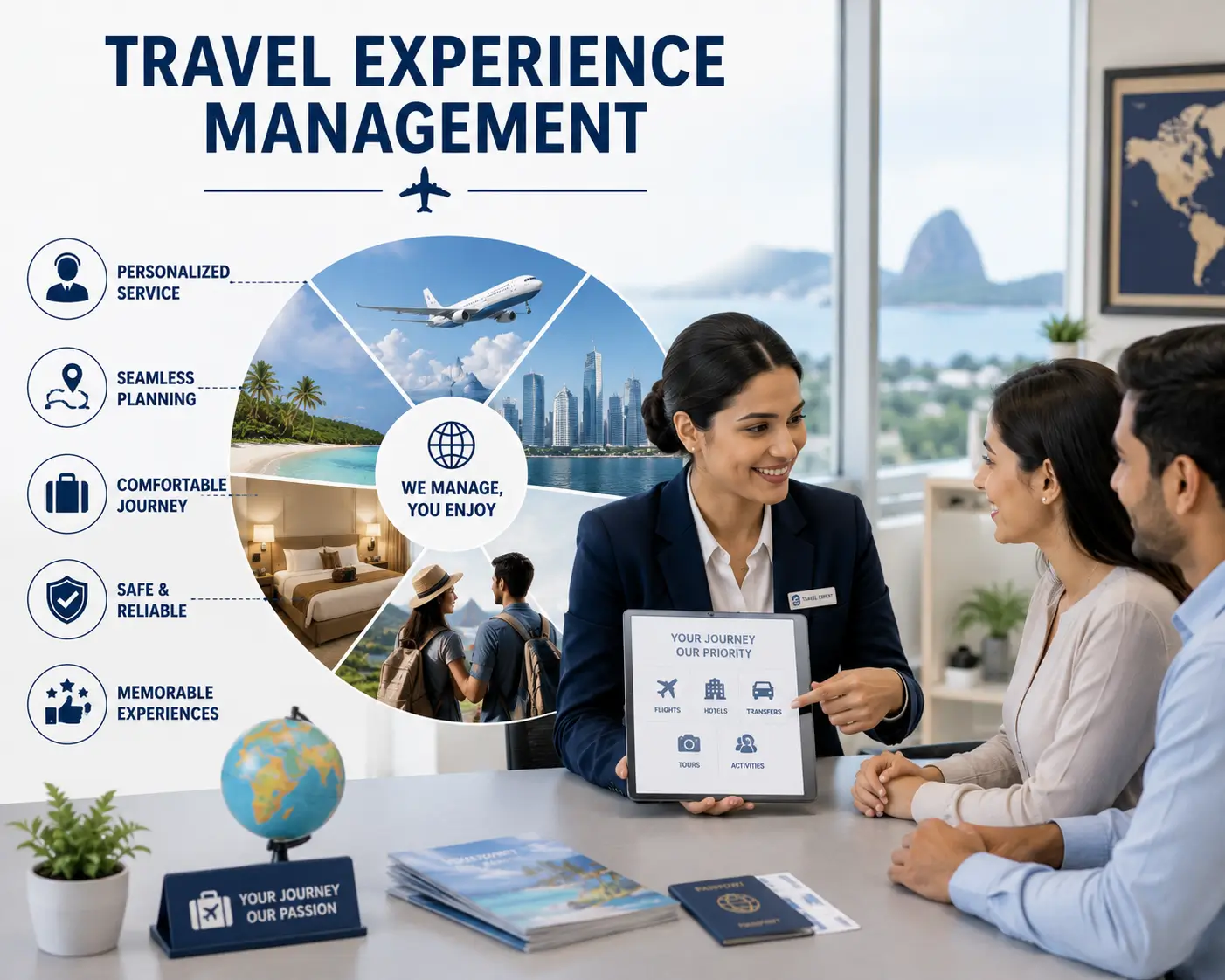
Introduction to Travel Experience Management
The Travel Experience Management Course is a comprehensive professional training program designed to prepare learners to deliver exceptional travel experiences by focusing on every stage of the customer journey. In today’s competitive tourism industry, travelers expect more than transportation and accommodation—they seek meaningful, personalized, and memorable experiences.
Travel experience management involves understanding traveler preferences, designing engaging itineraries, delivering quality service, and continuously improving customer satisfaction through effective planning and innovation. Organizations that prioritize customer experiences build stronger reputations, encourage repeat business, and create lasting relationships with travelers.
This course combines tourism management, customer experience strategies, destination planning, digital technologies, and service excellence to provide practical knowledge applicable across travel agencies, tour operators, hospitality businesses, airlines, cruise companies, and destination management organizations.
Why Travel Experience Management Matters
Customer expectations continue to evolve as travelers seek personalized, seamless, and authentic experiences. Businesses that deliver outstanding travel experiences enjoy higher customer satisfaction, stronger brand loyalty, positive reviews, and increased revenue.
Effective travel experience management helps organizations anticipate customer needs, improve communication, manage feedback, resolve service issues efficiently, and create unique travel products that stand out in competitive markets.
The Travel Experience Management Course enables learners to understand how customer-focused strategies improve business performance while delivering unforgettable travel experiences.
Course Overview
The Travel Experience Management Course introduces learners to the principles, strategies, and technologies used to design and manage outstanding travel experiences.
Participants begin by studying customer journey mapping, travel behavior, and destination experience planning. The course explores personalized itinerary development, customer engagement, service quality management, digital communication, complaint handling, loyalty programs, and operational coordination.
Learners also study tourism marketing, customer relationship management (CRM), travel analytics, sustainable tourism practices, leadership, teamwork, and continuous service improvement.
Practical case studies demonstrate how successful travel organizations create memorable experiences, manage customer expectations, and improve long-term business performance.
Topics Covered
Throughout the Travel Experience Management Course, learners will study:
Customer Journey Mapping
Understand every stage of the traveler experience from trip planning to post-travel engagement.
Travel Experience Design
Learn how to create personalized travel experiences based on customer preferences and expectations.
Destination Experience Planning
Study destination selection, local attractions, cultural experiences, and activity coordination.
Customer Service Excellence
Explore communication techniques, hospitality standards, service recovery, and complaint resolution.
Digital Customer Engagement
Understand CRM systems, mobile travel applications, social media engagement, and online communication.
Travel Technology
Learn digital booking platforms, itinerary management systems, AI-enabled travel solutions, and customer analytics.
Feedback and Quality Management
Study customer feedback collection, satisfaction measurement, quality improvement, and performance monitoring.
Loyalty Programs and Relationship Management
Explore customer retention strategies, membership programs, personalized services, and repeat business development.
Sustainable Travel Experiences
Understand responsible tourism practices, community engagement, and environmentally conscious travel planning.
Leadership and Innovation
Develop leadership, teamwork, creativity, communication, and strategic decision-making skills.
Skills You Will Gain
After completing the Travel Experience Management Course, learners will develop valuable professional skills including:
- Customer experience management
- Travel experience design
- Customer journey mapping
- Destination planning
- Personalized travel planning
- Customer relationship management (CRM)
- Service quality management
- Complaint resolution
- Digital customer engagement
- Travel technology utilization
- Leadership and teamwork
- Communication skills
- Problem-solving
- Innovation in tourism
- Sustainable tourism practices
These competencies are valuable across travel agencies, tour operators, airlines, hotels, resorts, cruise operators, destination management companies, and tourism organizations.
Benefits of the Course
The Travel Experience Management Course provides practical knowledge for designing and delivering exceptional travel experiences that exceed customer expectations.
Participants gain confidence in managing customer interactions, creating personalized travel services, improving operational quality, and using digital tools to enhance engagement. The course also strengthens leadership, analytical thinking, communication, and customer service capabilities.
As experience-driven tourism continues to grow, professionals skilled in travel experience management are increasingly sought after by employers worldwide.
Who Should Enroll?
This course is suitable for:
- Travel agents
- Tour operators
- Tourism students
- Hospitality professionals
- Destination managers
- Customer service executives
- Travel consultants
- Tourism entrepreneurs
- Airline customer service staff
- Individuals interested in travel and tourism careers
No previous experience is required.
Career Opportunities
After completing the Travel Experience Management Course, learners may pursue careers such as:
- Travel Experience Manager
- Travel Consultant
- Customer Experience Executive
- Tour Operations Manager
- Destination Experience Coordinator
- Tourism Product Manager
- Guest Experience Manager
- Customer Relationship Manager
- Travel Services Executive
- Hospitality Operations Manager
- Travel Agency Manager
- Tourism Marketing Executive
- Destination Management Specialist
- Travel Experience Designer
- Tourism Business Consultant
Certification
Upon successful completion of the Travel Experience Management Course, learners receive a professional certificate recognizing their expertise in customer experience management, destination planning, travel service excellence, digital engagement, customer relationship management, and tourism operations. This certification supports career advancement across travel agencies, tourism organizations, hospitality businesses, airlines, and destination management companies.
Frequently Asked Questions (FAQs)
1. What is the Travel Experience Management Course?
The course teaches how to design, manage, and improve travel experiences through customer-focused service, destination planning, and operational excellence.
2. Who should enroll in this course?
Travel agents, tourism professionals, hospitality staff, destination managers, students, and aspiring travel consultants can benefit from this course.
3. Do I need prior experience?
No. The course is suitable for beginners as well as professionals looking to enhance their expertise.
4. What topics are covered?
Topics include customer journey mapping, destination planning, service quality, CRM, travel technology, digital engagement, and sustainable tourism.
5. Will I receive a certificate after completion?
Yes. Participants receive a professional certificate after successfully completing the course.
6. What skills will I develop?
You will develop skills in customer experience management, travel planning, communication, leadership, CRM, service recovery, and tourism operations.
7. Is this course suitable for travel and hospitality careers?
Yes. It is highly relevant for careers in travel agencies, tour operations, hospitality, destination management, and customer experience.
8. Can this course improve my career opportunities?
Yes. It prepares learners for management, operations, customer service, and tourism consulting roles across the travel industry.
9. Does the course include digital travel tools?
Yes. The course introduces learners to CRM platforms, online booking systems, customer analytics, and digital engagement technologies.
10. Why is travel experience management important?
It helps businesses deliver memorable customer experiences, improve satisfaction, encourage repeat travel, strengthen brand loyalty, and achieve sustainable business growth.





Reviews
There are no reviews yet.