
Introduction
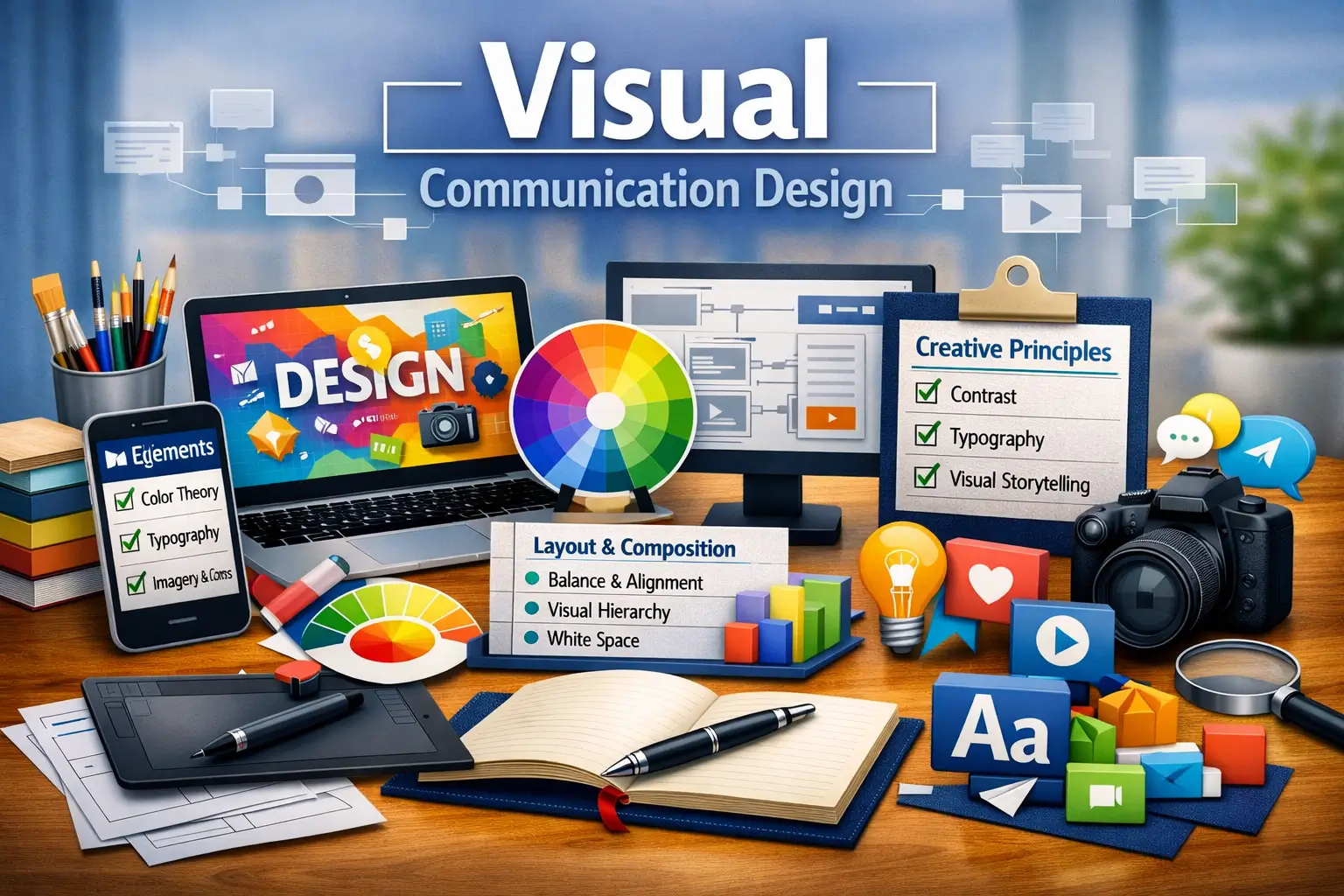
The Visual Communication Design Course is a comprehensive training program designed to equip learners with the knowledge and practical skills required to communicate ideas through compelling visual content. Visual communication combines design, creativity, psychology, and communication strategies to present information in ways that are engaging, memorable, and easy to understand.
As businesses increasingly rely on digital platforms, visual communication has become essential for branding, marketing, advertising, education, user experience, and corporate communication. Effective visual design helps organizations attract attention, improve customer engagement, strengthen brand recognition, simplify complex information, and influence decision-making.
Whether you are a student, aspiring graphic designer, marketing professional, entrepreneur, content creator, UI/UX designer, social media manager, or business professional, this course provides practical knowledge to create professional visual communication solutions for both print and digital environments.
Why Visual Communication Design is Important
Visual communication helps organizations present information clearly while creating engaging experiences for their audiences.
Key benefits of visual communication design include:
- Improves communication effectiveness
- Strengthens brand identity
- Enhances customer engagement
- Simplifies complex information
- Supports marketing and advertising
- Improves user experience
- Increases visual consistency
- Encourages creativity and innovation
- Enhances business communication
- Contributes to professional career growth
For example, businesses that use strong visual communication create more memorable brands, improve customer understanding, and increase audience engagement across digital and traditional platforms.
Course Overview
This course provides a structured understanding of visual communication principles and professional design techniques.
Learners will explore:
- Introduction to visual communication
- Design principles and composition
- Typography fundamentals
- Color theory and psychology
- Layout and grid systems
- Branding and visual identity
- Visual storytelling
- Infographic design
- Illustration basics
- Digital graphics creation
- Marketing and advertising design
- User-centered visual design
- Accessibility in design
- Design thinking and creative problem-solving
- Best practices in visual communication
What You Will Learn
By the end of this course, learners will be able to:
- Understand visual communication principles
- Apply design principles effectively
- Create visually appealing layouts
- Use typography and color strategically
- Develop strong brand communication materials
- Design engaging digital and print content
- Communicate ideas through visual storytelling
- Improve audience engagement through design
- Create professional communication assets
- Strengthen creative and design thinking skills
Key Components of Visual Communication Design
1. Design Principles
Learn the core principles of balance, contrast, hierarchy, alignment, repetition, proximity, and visual harmony to create effective designs.
2. Typography and Color Theory
Understand how typography, fonts, colors, and visual hierarchy influence communication, readability, branding, and audience perception.
3. Branding and Visual Identity
Explore techniques for designing logos, brand elements, marketing materials, and consistent visual identities that strengthen organizational recognition.
4. Visual Storytelling
Learn how to combine graphics, images, icons, illustrations, and layouts to communicate messages that engage and influence audiences.
5. Digital Design Applications
Understand how visual communication supports websites, social media, presentations, advertising, mobile applications, digital marketing, and business communication.
Skills You Will Gain
After completing this course, learners will develop valuable professional skills, including:
- Visual communication
- Graphic design fundamentals
- Typography
- Color theory
- Layout design
- Branding
- Visual storytelling
- Creative thinking
- Infographic design
- Composition
- Digital graphics
- Design strategy
- Marketing design
- User-centered communication
- Professional design presentation
Benefits of This Course
Completing this course offers several professional advantages, including:
- Strong understanding of visual communication principles
- Better career opportunities in creative industries
- Improved graphic design and communication skills
- Practical understanding of branding and marketing design
- Better creative problem-solving abilities
- Enhanced confidence in visual content creation
- Increased employability in design, marketing, and media industries
- Competitive advantage in graphic design, digital marketing, branding, UI/UX, and advertising careers
- Strong foundation for advanced graphic design, branding, multimedia, and user experience certifications
Who Should Enroll?
This course is suitable for:
- Students
- Graphic Designers
- Digital Marketers
- UI/UX Designers
- Content Creators
- Branding Professionals
- Entrepreneurs
- Marketing Executives
- Advertising Professionals
- Anyone interested in visual communication design
No previous graphic design experience is required, making this course suitable for beginners as well as experienced professionals.
Career Opportunities
After completing this course, learners can strengthen their skills for roles such as:
- Visual Communication Designer
- Graphic Designer
- Brand Designer
- Marketing Designer
- UI Designer
- Digital Content Designer
- Creative Designer
- Advertising Designer
- Social Media Designer
- Presentation Designer
- Multimedia Designer
Certification
Upon successful completion of the Visual Communication Design Course, learners receive a professional certificate recognizing their knowledge of visual communication, graphic design principles, typography, color theory, branding, visual storytelling, layout design, digital graphics, creative communication, and professional design practices. This certification enhances career opportunities across advertising agencies, digital marketing companies, branding firms, media organizations, publishing houses, software companies, e-commerce businesses, educational institutions, startups, and creative design studios.
Conclusion
The Visual Communication Design Course provides learners with practical knowledge and professional skills to communicate ideas through impactful visual design. By mastering design principles, typography, color theory, branding, layout design, visual storytelling, digital graphics, and creative problem-solving, learners will be well prepared to create compelling visual experiences for modern businesses and digital platforms.
Whether your goal is to become a graphic designer, strengthen your branding skills, improve marketing communication, or build a successful creative career, this course provides a strong foundation for long-term professional success.
FAQ
1. What is the Visual Communication Design Course?
It is a course that teaches how to communicate ideas effectively using graphic design, typography, color theory, branding, layout design, and visual storytelling.
2. Who should enroll in this course?
Students, graphic designers, digital marketers, UI/UX designers, branding professionals, entrepreneurs, content creators, advertising professionals, and anyone interested in visual communication.
3. Do I need prior graphic design experience?
No. The course is beginner-friendly and suitable for learners at all experience levels.
4. What topics are covered in this course?
The course covers design principles, typography, color theory, branding, layout design, visual storytelling, infographics, digital graphics, accessibility, and creative communication techniques.
5. Will I learn branding and visual identity design?
Yes. The course includes logo concepts, brand identity development, visual consistency, marketing materials, and strategies for creating memorable brand communication.
6. Does this course include digital design applications?
Yes. You will learn how visual communication is applied to websites, social media, presentations, advertisements, digital marketing campaigns, and business communication.
7. Will I receive a certificate after completing the course?
Yes. A professional course completion certificate is awarded upon successful completion.
8. Why is visual communication important?
Visual communication improves audience engagement, simplifies complex information, strengthens branding, enhances user experience, supports marketing efforts, and makes communication more memorable and effective.
9. How does visual communication benefit businesses?
It improves brand recognition, increases customer engagement, enhances marketing effectiveness, supports sales, improves user experiences, and strengthens overall business communication.
10. What career opportunities are available after this course?
This course prepares learners for roles such as Visual Communication Designer, Graphic Designer, Brand Designer, Marketing Designer, Creative Designer, UI Designer, Multimedia Designer, Social Media Designer, Advertising Designer, Digital Content Designer, and Presentation Designer.




Reviews
There are no reviews yet.