
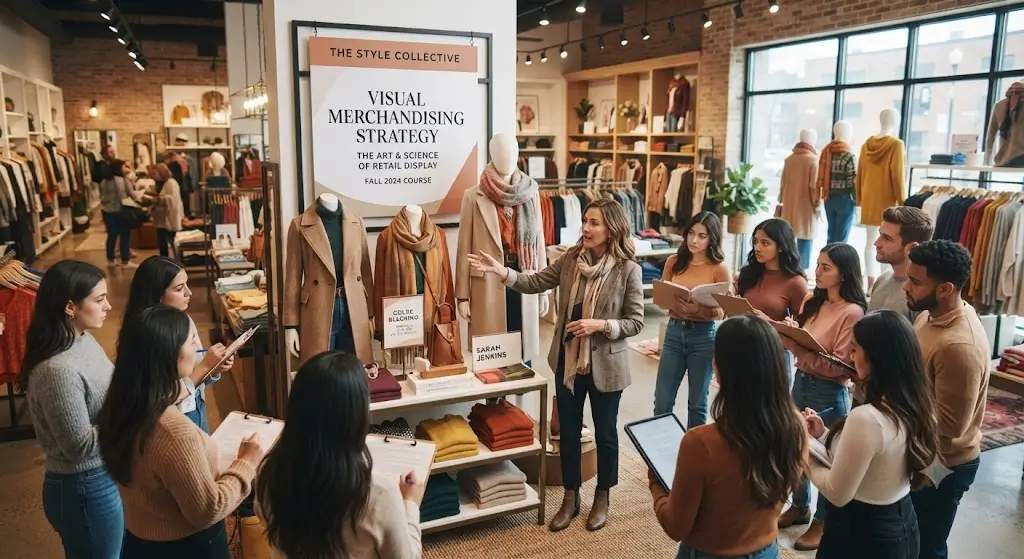
Introduction to Visual Merchandising Strategy
The Visual Merchandising Strategy Course is a comprehensive professional training program designed to prepare learners to design and implement effective retail visual experiences. Visual merchandising plays a critical role in shaping customer perceptions, enhancing product appeal, and increasing sales through strategic store presentation.
Visual merchandising professionals combine creativity, marketing knowledge, and retail psychology to design store layouts, product displays, window arrangements, and promotional setups that attract and engage customers. Their work directly influences customer behavior and purchasing decisions.
This course combines retail design, branding, consumer psychology, marketing strategy, product presentation, and store operations to provide practical knowledge applicable across fashion retail, supermarkets, department stores, luxury brands, shopping malls, and lifestyle retail environments.
Why Visual Merchandising Strategy Matters
In competitive retail environments, customers often make purchasing decisions based on visual appeal and in-store experience. Strong visual merchandising increases foot traffic, improves product visibility, strengthens brand identity, and enhances customer engagement.
Effective merchandising strategies help retailers highlight key products, promote seasonal campaigns, improve store navigation, and create memorable shopping experiences. It also supports marketing campaigns and boosts overall sales performance.
The Visual Merchandising Strategy Course enables learners to understand how design, psychology, and strategy combine to influence customer behavior and retail success.
Course Overview
The Visual Merchandising Strategy Course introduces learners to the principles, tools, and techniques used to design effective retail visual experiences.
Participants begin by studying retail fundamentals and consumer behavior. The course explores store layout planning, window display design, product placement strategies, lighting techniques, color psychology, signage design, branding integration, and seasonal merchandising.
Learners also study retail storytelling, digital merchandising integration, visual communication, leadership, and continuous improvement practices.
Practical case studies demonstrate how leading retail brands use visual merchandising to enhance customer engagement and increase sales.
Topics Covered
Throughout the Visual Merchandising Strategy Course, learners will study:
Visual Merchandising Fundamentals
Understand principles of design, retail psychology, customer behavior, and visual communication.
Store Layout and Space Planning
Learn store zoning, traffic flow design, product placement, and space optimization techniques.
Window Display Design
Study creative window displays, seasonal themes, promotional setups, and brand storytelling.
Product Presentation Techniques
Explore product grouping, color coordination, shelving techniques, and merchandising hierarchy.
Lighting and Color Psychology
Learn how lighting and color influence customer emotions, attention, and buying decisions.
Branding and Retail Identity
Understand brand consistency, visual identity development, and storytelling in retail spaces.
Seasonal and Promotional Merchandising
Study festival displays, sales campaigns, product launches, and promotional strategies.
Digital and Omnichannel Merchandising
Explore online product presentation, e-commerce visual strategy, and integrated retail experiences.
Customer Experience Design
Learn in-store engagement strategies, customer journey mapping, and experiential retail design.
Leadership and Creative Strategy
Strengthen leadership, creativity, communication, teamwork, and strategic retail planning skills.
Skills You Will Gain
After completing the Visual Merchandising Strategy Course, learners will develop valuable professional skills including:
- Visual merchandising design
- Retail space planning
- Product display strategy
- Store layout optimization
- Customer psychology understanding
- Branding and storytelling
- Lighting and color application
- Window display design
- Omnichannel merchandising
- Creative retail strategy
- Communication skills
- Leadership and teamwork
- Problem-solving
- Strategic retail planning
- Customer experience design
These competencies are valuable across fashion retail, supermarkets, department stores, luxury brands, shopping malls, lifestyle stores, and e-commerce businesses.
Benefits of the Course
The Visual Merchandising Strategy Course provides practical knowledge for designing engaging retail environments that attract customers and increase sales.
Participants gain confidence in creating impactful store layouts, designing attractive product displays, applying retail psychology, and building strong brand experiences. The course also strengthens creativity, analytical thinking, communication, and strategic planning skills.
As retail competition increases, professionals with strong visual merchandising expertise are highly valued across global retail industries.
Who Should Enroll?
This course is suitable for:
- Visual merchandisers
- Retail managers
- Store designers
- Fashion professionals
- Brand managers
- Marketing professionals
- Entrepreneurs
- Retail staff
- Business students
- Individuals interested in retail design careers
No previous experience is required.
Career Opportunities
After completing the Visual Merchandising Strategy Course, learners may pursue careers such as:
- Visual Merchandiser
- Retail Designer
- Store Display Manager
- Brand Visual Executive
- Fashion Merchandiser
- Retail Experience Designer
- Window Display Designer
- Retail Marketing Specialist
- Store Layout Planner
- Omnichannel Merchandising Executive
- Creative Retail Consultant
- Brand Strategy Executive
- Retail Operations Designer
- Customer Experience Designer
- Visual Branding Specialist
Certification
Upon successful completion of the Visual Merchandising Strategy Course, learners receive a professional certificate recognizing their expertise in retail design, visual merchandising, store layout planning, product presentation, branding, customer psychology, and retail strategy. This certification supports career advancement across fashion brands, retail chains, luxury stores, shopping malls, and global retail organizations.
Frequently Asked Questions (FAQs)
1. What is the Visual Merchandising Strategy Course?
The course teaches how to design attractive retail displays and store layouts that improve customer engagement and increase sales.
2. Who should enroll in this course?
Retail professionals, visual merchandisers, fashion designers, brand managers, and students interested in retail design can benefit.
3. Do I need prior experience?
No. The course is suitable for beginners as well as experienced professionals.
4. What topics are covered?
Topics include store design, window displays, product presentation, lighting, color psychology, branding, and customer experience design.
5. Will I receive a certificate after completion?
Yes. Participants receive a professional certificate after successfully completing the course.
6. What skills will I develop?
You will develop skills in visual merchandising, retail design, branding, customer psychology, and store layout planning.
7. Is this course suitable for fashion and retail careers?
Yes. It is highly relevant for careers in fashion retail, luxury brands, department stores, and lifestyle retail environments.
8. Can this course improve my career opportunities?
Yes. It prepares learners for roles in visual merchandising, retail design, brand presentation, and retail marketing.
9. Does the course include digital merchandising?
Yes. The course also covers e-commerce visual presentation and omnichannel merchandising strategies.
10. Why is visual merchandising important?
It enhances product visibility, improves customer experience, strengthens brand identity, and directly increases retail sales performance.




Reviews
There are no reviews yet.